
Catalogue Search | MBRL


Are you sure you want to remove the book from the shelf?

{{itemTitle}}
383
result(s) for
"Neuberger, M."
Sort by:

Kidney donation after circulatory death (DCD): state of the art
The use of kidneys from controlled donation after circulatory death (DCD) donors has the potential to markedly increase kidney transplants performed. However, this potential is not being realized because of concerns that DCD kidneys are inferior to those from donation after brain-death (DBD) donors. The United Kingdom has developed a large and successful controlled DCD kidney transplant program that has allowed for a substantial increase in kidney transplant numbers. Here we describe recent trends in DCD kidney donor activity in the United Kingdom, outline aspects of the donation process, and describe donor selection and allocation of DCD kidneys. Previous UK Transplant Registry analyses have shown that while DCD kidneys are more susceptible to cold ischemic injury and have a higher incidence of delayed graft function, short- and medium-term transplant outcomes are similar in recipients of kidneys from DCD and DBD donors. We present an updated, extended UK registry analysis showing that longer-term transplant outcomes in DCD donor kidneys are also similar to those for DBD donor kidneys, and that transplant outcomes for kidneys from expanded-criteria DCD donors are no less favorable than for expanded-criteria DBD donors. Accordingly, the selection criteria for use of kidneys from DCD donors should be the same as those used for DBD donors. The UK experience suggests that wider international development of DCD kidney transplantation programs will help address the global shortage of deceased donor kidneys for transplantation.
Journal Article

Screening for prostate cancer: systematic review and meta-analysis of randomised controlled trials
Objective To examine the evidence on the benefits and harms of screening for prostate cancer.Design Systematic review and meta-analysis of randomised controlled trials.Data sources Electronic databases including Medline, Embase, CENTRAL, abstract proceedings, and reference lists up to July 2010.Review methods Included studies were randomised controlled trials comparing screening by prostate specific antigen with or without digital rectal examination versus no screening. Data abstraction and assessment of methodological quality with the GRADE approach was assessed by two independent reviewers and verified by the primary investigator. Mantel-Haenszel and inverse variance estimates were calculated and pooled under a random effects model expressing data as relative risks and 95% confidence intervals.Results Six randomised controlled trials with a total of 387 286 participants that met inclusion criteria were analysed. Screening was associated with an increased probability of receiving a diagnosis of prostate cancer (relative risk 1.46, 95% confidence interval 1.21 to 1.77; P<0.001) and stage I prostate cancer (1.95, 1.22 to 3.13; P=0.005). There was no significant effect of screening on death from prostate cancer (0.88, 0.71 to 1.09; P=0.25) or overall mortality (0.99, 0.97 to 1.01; P=0.44). All trials had one or more substantial methodological limitations. None provided data on the effects of screening on participants’ quality of life. Little information was provided about potential harms associated with screening.Conclusions The existing evidence from randomised controlled trials does not support the routine use of screening for prostate cancer with prostate specific antigen with or without digital rectal examination.
Journal Article

Liver Transplantation for Primary Sclerosing Cholangitis (PSC) With or Without Inflammatory Bowel Disease (IBD)—A European Society of Organ Transplantation (ESOT) Consensus Statement
Primary sclerosing cholangitis (PSC) is the classical hepatobiliary manifestation of inflammatory bowel disease (IBD) and a lead indication for liver transplantation (LT) in the western world. In this article, we present a Consensus Statement on LT practice, developed by a dedicated Guidelines’ Taskforce of the European Society of Organ Transplantation (ESOT). The overarching goal is to provide practical guidance on commonly debated topics, including indications and timing of LT, management of bile duct stenosis in patients on the transplant waiting list, technical aspects of transplantation, immunosuppressive strategies post-transplant, timing and extension of intestinal resection and futility criteria for re-transplantation.
Journal Article

The cosmic muon-induced background for the LEGEND-1000 alternative site at LNGS
The in-situ production of long-lived radio-isotopes by cosmic muon interactions may generate a non-negligible background for rare event searches in the deep subsurface. The delayed decay of 77(m) Ge has been identified as the dominant in-situ cosmogenic contributor for a neutrinoless double-beta decay search with 76 Ge. The future ton-scale LEGEND-1000 experiment requires a total background of ≤ 10 −5 cts/(keV-kg-yr). Dedicated Monte Carlo studies of the 77(m) Ge background at the alternative LNGS site were performed. The addition of passive neutron moderators, in combination with a delayed coincidence strategy, results in a background contribution of 8.6 × 10 −7 cts/(keV.kg.yr) with an additional dead time of < 9%.
Journal Article

B cells acquire antigen from target cells after synapse formation
Soluble antigen binds to the B-cell antigen receptor and is internalized for subsequent processing and the presentation of antigen-derived peptides to T cells
1
. Many antigens are not soluble, however, but are integral components of membrane; furthermore, soluble antigens will usually be encountered
in vivo
in a membrane-anchored form, tethered by Fc or complement receptors
2
,
3
,
4
. Here we show that B-cell interaction with antigens that are immobilized on the surface of a target cell leads to the formation of a synapse and the acquisition, even, of membrane-integral antigens from the target. B-cell antigen receptor accumulates at the synapse, segregated from the CD45 co-receptor which is excluded from the synapse, and there is a corresponding polarization of cytoplasmic effectors in the B cell. B-cell antigen receptor mediates the gathering of antigen into the synapse and its subsequent acquisition, thereby potentiating antigen processing and presentation to T cells with high efficacy. Synapse formation and antigen acquisition will probably enhance the activation of B cells at low antigen concentration, allow context-dependent antigen recognition and enhance the linking of B- and T-cell epitopes.
Journal Article

Peritoneal flap for lymphocele prophylaxis following robotic-assisted laparoscopic radical prostatectomy with pelvic lymph node dissection: study protocol and trial update for the randomized controlled PELYCAN study
Background
Data from interventional studies suggest that a peritoneal flap after pelvic lymph node dissection (LND) during laparoscopic, robotic-assisted radical prostatectomy (RARP) may reduce the rate of symptomatic lymphoceles in transperitoneal approach. However, most of these studies are not conducted in a randomized controlled fashion, thus limiting their scientific value. A recent prospective, randomized, controlled trial (RCT) did not show superiority of a peritoneal flap while further trials are lacking. Therefore, the aim of the presented RCT will be to show that creating a peritoneal flap decreases the rate of symptomatic lymphoceles compared to the current standard procedure without creation of a flap.
Methods/design
PELYCAN is a parallel-group, patient- and assessor-blinded, phase III, adaptive randomized controlled superiority trial. Men with histologically confirmed prostate cancer who undergo transperitoneal RARP with pelvic LND will be randomly assigned in a 1:1 ratio to two groups—either with creating a peritoneal flap (PELYCAN) or without creating a peritoneal flap (control). Sample size calculation yielded a sample size of 300 with a planned interim analysis after 120 patients, which will be performed by an independent statistician. This provides a possibility for early stopping or sample size recalculation.
Patients will be stratified for contributing factors for the development of postoperative lymphoceles. The primary outcome measure will be the rate of symptomatic lymphoceles in both groups within 6 months postoperatively. Patients and assessors will be blinded for the intervention until the end of the follow-up period of 6 months. The surgeon will be informed about the randomization result after performance of vesicourethral anastomosis. Secondary outcome measures include asymptomatic lymphoceles at the time of discharge and within 6 months of follow-up, postoperative complications, mortality, re-admission rate, and quality of life assessed by the EORTC QLQ-C30 questionnaire.
Discussion
The PELYCAN study is designed to assess whether the application of a peritoneal flap during RARP reduces the rate of symptomatic lymphoceles, as compared with the standard operation technique. In case of superiority of the intervention, this peritoneal flap may be suggested as a new standard of care.
Trial registration
German Clinical Trials Register
DRKS00016794
. Registered on 14 May 2019.
Journal Article

A Bioartificial Liver: State of the Art
End-stage liver disease is treated by liver transplantation, but donor organ shortages remain a serious problem. This has prompted the design of bioartificial liver devices to \"bridge\" patients until they either recover or receive a liver transplant. In these devices, patient plasma is circulated extracorporeally through a bioreactor that houses liver cells (hepatocytes) sandwiched between artificial plates or capillaries.
Journal Article

Genome-wide association study identifies 12 new susceptibility loci for primary biliary cirrhosis
Carl Anderson and colleagues report a genome-wide association study identifying 13 new susceptibility loci for primary biliary cirrhosis, a chronic autoimmune liver disease.
In addition to the
HLA
locus, six genetic risk factors for primary biliary cirrhosis (PBC) have been identified in recent genome-wide association studies (GWAS). To identify additional loci, we carried out a GWAS using 1,840 cases from the UK PBC Consortium and 5,163 UK population controls as part of the Wellcome Trust Case Control Consortium 3 (WTCCC3). We followed up 28 loci in an additional UK cohort of 620 PBC cases and 2,514 population controls. We identified 12 new susceptibility loci (at a genome-wide significance level of
P
< 5 × 10
−8
) and replicated all previously associated loci. We identified three further new loci in a meta-analysis of data from our study and previously published GWAS results. New candidate genes include
STAT4
,
DENND1B
,
CD80
,
IL7R
,
CXCR5
,
TNFRSF1A
,
CLEC16A
and
NFKB1
. This study has considerably expanded our knowledge of the genetic architecture of PBC.
Journal Article
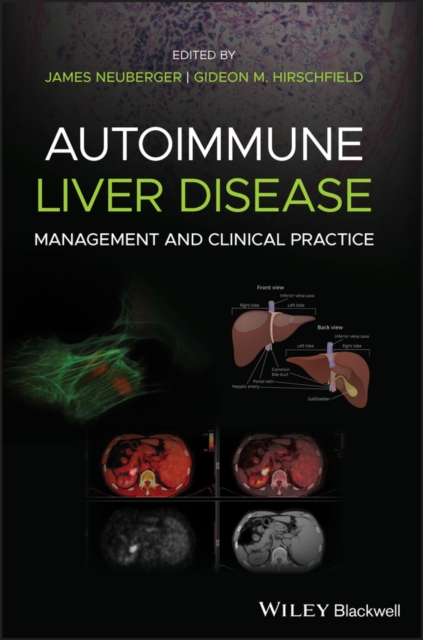
Autoimmune Liver Disease
A practical guide to autoimmune liver diseases through pathogenesis, diagnosis, and management
In Autoimmune Liver Disease Management and Clinical Practice, practitioners will learn about the current state of autoimmune liver disease and how to focus on their diagnosis and treatment. The four-part book begins with a thorough investigation of current immunological thinking as it relates to the autoimmunity of the liver. It also covers the four major hepatic autoimmune liver diseases in both adults and children, their management and the role of liver transplantation, and learned approaches to patient management and empowerment.
Expert authors in the field have come together to provide a thorough examination of autoimmune liver disease to help support clinicians assisting patients. The text provides an in-depth look at topics including:
? The four major hepatic autoimmune liver diseases, their diagnosis, and potential disease management
? The use (and misuse) of autoantibodies in diagnosis and treatment
? The role and timing of liver transplantation and the impact of recurrent autoimmune liver disease as well as de novo autoimmune hepatitis
? Optimal approaches to managing patients and keeping care personalised
With breadth, depth and current-day relevance, Autoimmune Liver Disease sheds light on recent developments in management of liver disease for practitioners, nurses, and health care professionals.
eBook

Signs of malnutrition and starvation—Reconstruction of nutritional life histories by serial isotopic analyses of hair
The diagnosis of starvation in children or adults is an important topic in paediatric and geriatric medicine, and in law assessment. To date, few reliable techniques are available to reconstruct the onset and duration of undernourishment, especially in cases of wilful neglect or abuse. The intention of this research project is to introduce a method based on isotopic analysis to reconstruct nutritional life histories and to detect starvation. For this purpose the specific signature of stable carbon and nitrogen isotopes in human hair samples is investigated and measured in the course of serious nutritional deprivation. Previous study of our research group on anorectic patients has shown that incremental hair analyses can monitor the individual nutritional status of each patient. Increasing δ15N-values indicate the catabolism of bodily protein and are associated with a very low BMI. In contrast, the changes of the δ13C values and BMI were in phase, which can be linked to the lack of energy in the consumed diet and the break down of body fat deposits. These findings were now applied to various forensic cases, in which severe starvation occurred recently prior to death. We are aiming at establishing an unbiased biomarker to identify the individual timeframe of nutritional deprivation to detect and prevent starvation.
Journal Article