
Catalogue Search | MBRL


Are you sure you want to remove the book from the shelf?

{{itemTitle}}
189
result(s) for
"Newton, Richard W"
Sort by:

Safety and effectiveness of hormonal treatment versus hormonal treatment with vigabatrin for infantile spasms (ICISS): a randomised, multicentre, open-label trial
Infantile spasms constitutes a severe infantile epilepsy syndrome that is difficult to treat and has a high morbidity. Hormonal therapies or vigabatrin are the most commonly used treatments. We aimed to assess whether combining the treatments would be more effective than hormonal therapy alone.
In this multicentre, open-label randomised trial, 102 hospitals (Australia [three], Germany [11], New Zealand [two], Switzerland [three], and the UK [83]) enrolled infants who had a clinical diagnosis of infantile spasms and a hypsarrhythmic (or similar) EEG no more than 7 days before enrolment. Participants were randomly assigned (1:1) by a secure website to receive hormonal therapy with vigabatrin or hormonal therapy alone. If parents consented, there was an additional randomisation (1:1) of type of hormonal therapy used (prednisolone or tetracosactide depot). Block randomisation was stratified for hormonal treatment and risk of developmental impairment. Parents and clinicians were not masked to therapy, but investigators assessing electro-clinical outcome were masked to treatment allocation. Minimum doses were prednisolone 10 mg four times a day or intramuscular tetracosactide depot 0·5 mg (40 IU) on alternate days with or without vigabatrin 100 mg/kg per day. The primary outcome was cessation of spasms, which was defined as no witnessed spasms on and between day 14 and day 42 from trial entry, as recorded by parents and carers in a seizure diary. Analysis was by intention to treat. The trial is registered with The International Standard Randomised Controlled Trial Number (ISRCTN), number 54363174, and the European Union Drug Regulating Authorities Clinical Trials (EUDRACT), number 2006-000788-27.
Between March 7, 2007, and May 22, 2014, 766 infants were screened and, of those, 377 were randomly assigned to hormonal therapy with vigabatrin (186) or hormonal therapy alone (191). All 377 infants were assessed for the primary outcome. Between days 14 and 42 inclusive no spasms were witnessed in 133 (72%) of 186 patients on hormonal therapy with vigabatrin compared with 108 (57%) of 191 patients on hormonal therapy alone (difference 15·0%, 95% CI 5·1–24·9, p=0·002). Serious adverse reactions necessitating hospitalisation occurred in 33 infants (16 on hormonal therapy alone and 17 on hormonal therapy with vigabatrin). The most common serious adverse reaction was infection occurring in five infants on hormonal therapy alone and four on hormonal therapy with vigabatrin. There were no deaths attributable to treatment.
Hormonal therapy with vigabatrin is significantly more effective at stopping infantile spasms than hormonal therapy alone. The 4 week period of spasm cessation required to achieve a primary clinical response to treatment suggests that the effect seen might be sustained, but this needs to be confirmed at the 18 month follow-up.
The Castang Foundation, Bath Unit for Research in Paediatrics, National Institute of Health Research, the Royal United Hospitals Bath NHS Foundation Trust, the BRONNER-BENDUNG Stifung/Gernsbach, and University Children's Hospital Zurich.
Journal Article

Mapping the impacts of farmed Scottish salmon from a life cycle perspective
PurposeThe European Union relies on seafood imports to supply growing demand that European production has failed to meet. Politically motivated media reports have denigrated competing imports in favour of local production. While life cycle assessment (LCA) measures global impact of value chains, it often fails to contextualise them. Using LCA, this article takes farmed Scottish Atlantic salmon as a case study of “local” production to identify and map the contributions to global environmental impact.MethodsData on the Scottish salmon value chain were collected by structured survey from a large international feed mill, six farms and a major processor. Secondary data were collected from available literature on feed ingredients and background data from EcoInvent2.2. A mid-point CML2001 approach was adopted focussing on global warming potential (GWP), acidification potential (AP), eutrophication potential, ozone depletion potential, photo-chemical oxidation potential, consumptive water use and land use. Results were displayed as contribution analyses of materials and processes and mapped geographically using area plots.Results and discussionFar from being a “locally” produced commodity, nearly 50% of the feed ingredients were sourced from South America and less than 25% originated in the UK. It was found that over 90% of the impact to farm-gate was embodied in feed, apart from eutrophication potential which was high at the farm from direct nitrogenous emissions into the marine environment. The majority of impacts do not occur in Scotland, particularly for land and water use, which occur at a more geographically significant level than GWP or AP, which are more global or regional impacts, respectively. High GWP emissions from vegetable-based ingredients were related to soil management and energy intensive processes such as wet milling to produce gluten from wheat and maize, sunflower and rapeseed oil processing.ConclusionsThe results show that in an age of globalised commodity trading, concerns around “local” production are often misleading. As consumers try to make more responsible purchase choices, they may be misled over the global impacts their choices are having. There are clearly trade-offs between different feed ingredients, especially regarding substitution of marine ingredients with those of vegetable origin. While marine ingredients perform comparatively well, they are highly limited, and biodiversity impacts of different ingredients are less clear and difficult to compare.
Journal Article
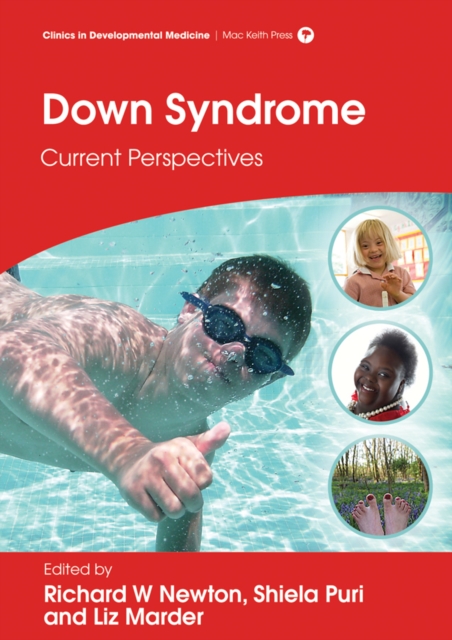
Down syndrome : current perspectives
Down syndrome remains the most common recognisable form of intellectual disability. The challenge for doctors today is how to capture the rapidly expanding body of scientific knowledge and devise models of care to meet the needs of individuals and their families. This book provides doctors and other health professionals with the information they need to address the challenges that can present in the management of the syndrome.Chapters written by internationally-respected paediatricians with a special interest in Down syndrome cover Down syndrome comorbidities, such as hearing problems, gastrointestinal disorders, congenital heart diseases, as well as the underlying biology and new developments in molecular genetics. Each chapter is illustrated with informative case scenarios and answers to FAQs from parents and carers.
eBook

Global Seafood Trade: Insights in Sustainability Messaging and Claims of the Major Producing and Consuming Regions
Seafood supply chains are complex, not least in the diverse origins of capture fisheries and through aquaculture production being increasingly shared across nations. The business-to-business (B2B) seafood trade is supported by seafood shows that facilitate networking and act as fora for signaling of perceptions and values. In the Global North, sustainability related certifications and messaging have emerged as an important driver to channel the demands of consumers, institutions, and lead firms. This study investigates which logos, certifications, and claims were presented at the exhibitor booths within five seafood trade shows in China, Europe, and USA. The results indicate a difference in the way seafood is advertised. Messaging at the Chinese shows had less of an emphasis on sustainability compared to that in Europe and the USA, but placed a greater emphasis on food safety and quality than on environmental concerns. These findings suggest cultural differences in the way seafood production and consumption is communicated through B2B messaging. Traders often act as choice editors for final consumers. Therefore, it is essential to convey production processes and sustainability issues between traders and the market. An understanding of culture, messaging strategies, and interpretation could support better communication of product characteristics such as sustainability between producers, traders, and consumers.
Journal Article
The United Kingdom Infantile Spasms Study (UKISS) comparing hormone treatment with vigabatrin on developmental and epilepsy outcomes to age 14 months: a multicentre randomised trial
Infantile spasms is a severe infantile seizure disorder that is difficult to treat and has a high morbidity. Absence of spasms on days 13 and 14 after randomisation is more common in infants allocated hormone treatments than in those allocated vigabatrin. We sought to assess whether early control of spasms is associated with improved developmental or epilepsy outcomes.
Infants enrolled in the United Kingdom Infantile Spasms Study (UKISS) were randomly assigned hormone treatment (n=55) or vigabatrin (n=52) and were followed up until clinical assessment at 12–14 months of age. We assessed neurodevelopment with the Vineland adaptive behaviour scales (VABS) at 14 months of age on an intention to treat basis.
Of 107 infants enrolled, five died and 101 survivors reached both follow-up assessments. Absence of spasms at final clinical assessment (hormone 41/55 [75%]
vs vigabatrin 39/51 [76%]) was similar in each treatment group (difference 1·9%, 95% CI −18·3% to 14·4%; χ
2=0·05; p=0·82). Mean VABS score did not differ significantly (hormone 78·6 [SD 16·8]
vs vigabatrin 77·5 [SD 12·7]; difference 1·0, 95% CI −4·9 to 7·0;
t
99
=0·35, p=0·73). In infants with no identified underlying aetiology, the mean VABS score was higher in those allocated hormone treatment than in those allocated vigabatrin (88·2 [17·3]
vs 78·9 [14·3]; difference 9·3, 95% CI 1·2 to 17·3;
t
95
=2·28, p=0·025).
Hormone treatment controls spasms better than does vigabatrin initially, but not at 12–14 months of age. Better initial control of spasms by hormone treatment in those with no identified underlying aetiology may lead to improved developmental outcome.
Journal Article

Developmental and epilepsy outcomes at age 4 years in the UKISS trial comparing hormonal treatments to vigabatrin for infantile spasms: a multi-centre randomised trial
Background Infantile spasms is the name given to a difficult to treat, severe infantile epilepsy with high morbidity. The United Kingdom Infantile Spasms Study (UKISS) showed that absence of spasms on days 13 and 14 after randomisation was more common in infants allocated hormonal treatments than vigabatrin. At 12–14 months, those with no identified aetiology allocated hormonal treatment had better development. However, epilepsy outcome was not affected by treatment allocated. It is not known if the difference in development persists as the infants grow. Methods Infants in UKISS were followed up blind to treatment allocation by telephone at a mean age of 4 years using the Vineland Adaptive Behaviour Scales (VABS) and an epilepsy questionnaire. Findings 9 of 107 enrolled infants had died. 77 were traced and consented to take part. The median (quartile) VABS scores were 60 (42, 97) for the 39 allocated hormonal treatment and 50 (36, 67) for the 38 allocated vigabatrin (Mann–Whitney U=575; p=0.091; median difference (95% CI): 8 (−1 to 19)). For those with no identified aetiology, VABS scores were 96 (52, 102) for the 21 allocated hormonal treatment and 63 (37, 92) for the 16 allocated vigabatrin (U=98.5; p=0.033; median difference (95% CI): 14 (1 to 42)).The proportions in each treatment group with epilepsy were similar. Interpretation For all 77 infants, development and epilepsy outcomes were not significantly different between the two treatment groups. The better development seen at 14 months in those with no identified aetiology allocated hormonal treatment was seen again at 4 years in this study.
Journal Article

The United Kingdom Infantile Spasms Study comparing vigabatrin with prednisolone or tetracosactide at 14 days: a multicentre, randomised controlled trial
Infantile spasms, which comprise a severe infantile seizure disorder, have a high morbidity and are difficult to treat. Hormonal treatments (adrenocorticotropic hormone and prednisolone) have been the main therapy for decades, although little evidence supports their use. Vigabatrin has been recorded to have a beneficial effect in this disorder. We aimed to compare the effects of vigabatrin with those of prednisolone and tetracosactide in the treatment of infantile spasms.
The United Kingdom Infantile Spasms Study assessed these treatments in a multicentre, randomised controlled trial in 150 hospitals in the UK. The primary outcome was cessation of spasms on days 13 and 14. Minimum doses were vigabatrin 100 mg/kg per day, oral prednisolone 40 mg per day, or intramuscular tetracosactide depot 0·5 mg (40 IU) on alternate days. Analysis was by intention to treat.
Of 208 infants screened and assessed, 107 were randomly assigned to vigabatrin (n=52) or hormonal treatments (prednisolone n=30, tetracosactide n=25). None was lost to follow-up. Proportions with no spasms on days 13 and 14 were: 40 (73%) of 55 infants assigned hormonal treatments (prednisolone 21/30 [70%], tetracosactide 19/25 [76%]) and 28 (54%) of 52 infants assigned vigabatrin (difference 19%, 95% CI 1%–36%, p=0·043). Two infants allocated tetracosactide and one allocated vigabatrin received prednisolone. Adverse events were reported in 30 (55%) of 55 infants on hormonal treatments and 28 (54%) of 52 infants on vigabatrin. No deaths were recorded.
Cessation of spasms was more likely in infants given hormonal treatments than those given vigabatrin. Adverse events were common with both treatments.
Journal Article


Childhood encephalopathy: viruses, immune response, and outcome
This study examined children with an acute encephalopathy illness for evidence of viral infection, disordered blood–brain barrier function, intrathecal immunoglobulin synthesis, and interferon (IFN) production, and related their temporal occurrence to outcome. A prospective study of 22 children (13 males, 9 females; age range 1mo to 13y, median 2y 4mo), recorded clinical details, with serum and cerebrospinal fluid (CSF) analysis near presentation and then on convalescent specimens taken up to day 39 of the neurological illness. Outcome was assessed with standard scales between 18 months and 3 years after presentation. A history consistent with viral infection was given in 17 children but laboratory evidence of viral infection was found in only 7 (7/17). In 18 out of 21 children, an elevated CSF:serum albumin ratio indicative of impairment of the blood–CSF and blood–brain barriers was detected at some stage of the illness. In 14 of the 15 children with a raised immunoglobulin G index, and in 12 of the 14 children where the CSF was positive for oligoclonal bands, this was preceded by, or was observed at the same time as, an abnormal albumin ratio. Sixteen children (16/18) had elevated IFN-α levels in serum, or CSF, or in both. We conclude that these findings indicate an initial disruption of the blood–brain barrier followed by intrathecal antibody production by activated lymphocytes, clonally restricted to a few antigens. This is the first in vivo study to show this as an important pathogenetic mechanism of encephalitis in children. Poor outcome was associated with young age, a deteriorating electroencephalogram pattern from grade 1 to grade 2, and the degree of blood–brain barrier impairment, particularly when prolonged, but not with Glasgow Coma Scale score. The persistence of IFN-α was associated with a good prognosis.
Journal Article