
Catalogue Search | MBRL


Are you sure you want to remove the book from the shelf?

{{itemTitle}}
25
result(s) for
"Ngũgĩ wa Thiongʼo, 1938-"
Sort by:

Devil on the cross
\"The great Kenyan writer and Nobel Prize nominee Ngũgĩ wa Thiongʼo's powerful fictional critique of capitalism One of the cornerstones of Ngũgĩ wa Thiongʼo's fame, Devil on the Cross was written in secret, on toilet paper, while Ngũgĩ wa Thiongʼo was in prison. It tells the tragic story of Wariinga, a young woman who moves from a rural Kenyan town to the capital, Nairobi, only to be exploited by her boss and later by a corrupt businessman. As she struggles to survive, Wariinga begins to realize that her problems are only symptoms of a larger societal malaise and that much of the misfortune stems from the Western, capitalist influences on her country. An impassioned cry for a Kenya free of dictatorship and for African writers to work in their own local dialects, Devil on the Cross has had a profound influence on Africa and on post-colonial African literature\"-- Provided by publisher.
Book
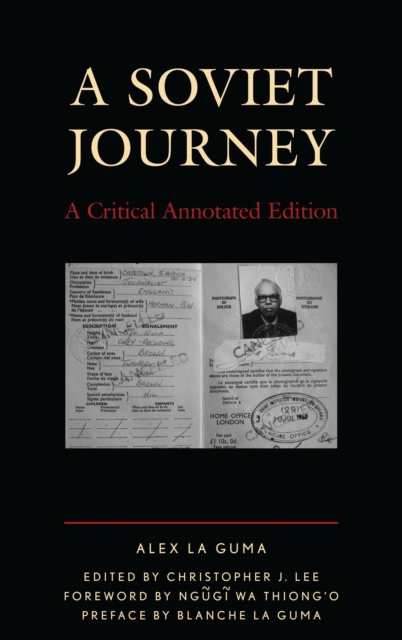
A Soviet Journey
In 1978, the South African activist and novelist Alex La Guma (1925-1985) published A Soviet Journey , a memoir of his travels in the Soviet Union.Today it stands as one of the longest and most substantive first-hand accounts of the USSR by an African writer.
eBook

Dreams in a time of war : a childhood memoir
\"In dreams in a time of was, Ngũgĩ wa deftly etches a bygone era, bearing witness to the social and political vicissitudes of life under colonialism and war. Speaking to the human right to dream even in the worst of times, this rich memoir of an African childhood abounds in delicate and powerful subtleties and complexities that are movingly told\"--Cover.
BOOK

Writers in Politics
Ngugi has put together a new collection under an old title, rewriting most of the pieces that appeared in the original 1981 edition, and adding completely new essays, such as 'Freedom of Expression', written for the campaign to try to save Ken Saro-Wiwa and other Niger Delta activists and writers from execution in Nigeria. Kenya: EAEP
eBook

In the house of the interpreter : a memoir
\"From the world-renowned Kenyan novelist, poet, playwright, and literary critic, the second volume of his memoirs, spanning 1955-1959, the author's high school years during the tumultuous Mau Mau Uprising. In the House of the Interpreter evokes a haunting childhood at the end of British colonial rule in Africa, and the formative experiences of a political dissident\"-- Provided by publisher.
Book
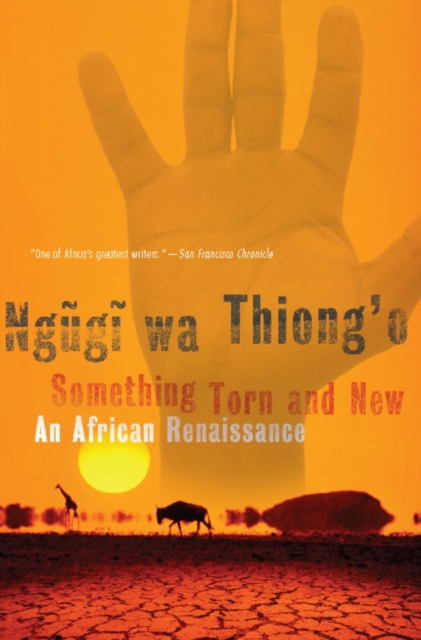
Something Torn and New
Novelist Ngugi wa Thiong'o has been a force in African literature for decades: Since the 1970s, when he gave up the English language to commit himself to writing in African languages, his foremost concern has been the critical importance of language to culture. InSomething Torn and New, Ngugi explores Africa's historical, economic, and cultural fragmentation by slavery, colonialism, and globalization. Throughout this tragic history, a constant and irrepressible force was Europhonism: the replacement of native names, languages, and identities with European ones. The result was the dismemberment of African memory.Seeking to remember language in order to revitalize it, Ngugi's quest is for wholeness. Wide-ranging, erudite, and hopeful,Something Torn and Newis acri de coeurto save Africa's cultural future.
eBook

Wrestling with the devil : a prison memoir
\"[This book] ... begins literally half an hour before [the author's release from prison] on December 12, 1978. In one extended flashback he recalls the night, a year earlier, when armed police pulled him from his home and jailed him in Kenya's ... [maximum security prisons]. There, he lives in a prison block with eighteen other political prisoners, quarantined from the general prison population. In a conscious effort to fight back the humiliation and the intended degradation of the spirit, [the author] ... decides to write a novel on toilet paper, the only paper to which he has access, a book that will become his classic, Devil on the cross. Written in the early 1980s and never before published in America, [this book is an account of the author's] drama and the challenges of writing the novel under twenty-four-hour surveillance. He captures not only the excruciating pain that comes from being cut off from his wife and children, but also the spirit of defiance that defines hope. Ultimately, [this book] is a testimony to the power of imagination to help humans break free of confinement, which is truly the story of all art\"-- Dust jacket.
Book

