
Catalogue Search | MBRL


Are you sure you want to remove the book from the shelf?

{{itemTitle}}
80
result(s) for
"Niblock, Tim"
Sort by:

Security dynamics of East Asia in the Gulf region
The Gulf region's primary economic relationships are rapidly shifting from West to East. Relations with China, Japan and South Korea are becoming increasingly strategic in nature: based on a degree of mutual dependence far greater than is present in Gulf-Western relations. The balance of global politics will be critically affected by this powerful emerging relationship. This book provides documentation of the trend and examines some of the political and strategic issues which follow from it.
Book

The Gulf States, Asia and the Indian Ocean: Ensuring the Security of the Sea Lanes
Among the many strategic and economic issues facing the Gulf in the coming years, those relating to the Indian Ocean are set to be among the most challenging. In the re-ordering of global economic and political power which is currently underway, the Indian Ocean constitutes a key arena for regional and global competition and rivalry. With the leading Asian powers playing a more pro-active role in the region, sometimes with conflicting ambitions, and the United States intent on maintaining its established maritime hegemony there, the potential dangers for the Gulf states are considerable. Gulf economic interests and perhaps regime stability would be severely affected by conflict. This book contends that the Gulf states need to play an active part in the promotion of Indian Ocean stability and security, working with other Indian Ocean states to develop institutional structures and practices which encourage cooperation and provide avenues for conflict resolution. They have everything to gain from such a strategy.
eBook
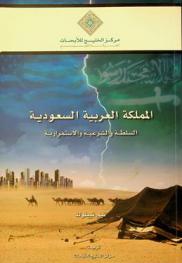
المملكة العربية السعودية : السلطة والشرعية والاستمرارية
يقدم هذا الكتاب فهما شاملا وفريدا لهذه الدولة في هذه الحقبة المهمة من التاريخ. وهو يعد من الدراسات الحيوية بالنسبة للمهتمين بشؤون المملكة العربية السعودية ودورها في سياسات الشرق الأوسط وفي الأحداث العالمية. يمتد تطور الدولة في هذا الكتاب على ثلاث مراحل، هي : مرحلة التأسيس التي تنتهي مع عام 1962، ثم مرحلة مركزية الدولة وإعلان انطلاق التنمية الاقتصادية المكثفة بين عامي 1962 و 1979، ثم إعادة رسم شكل الدولة على امتداد الفترة من عام 1979 وحتى يومنا هذا. وقد ركز المؤلف على الحقبة المعاصرة مع توجيه اهتمام خاص لمشكلات السياسة الخارجية والسياسة الاقتصادية والعلاقة بين المملكة العربية السعودية والإسلام الأصولي، إضافة إلى العلاقات والصراعات مع تنظيم القاعدة منذ أحداث أفغانستان في الثمانينيات، كما أحداث الحادي عشر من سبتمبر وحرب الخليج في عام 2003، فضلا عن المشكلات الأساسية التي تواجه الدولة المعاصرة. يرى المؤلف أن البعض يستنتج خطا أنه لا يمكن حل المشكلات التي تواجهها المملكة إلا بواسطة الإصلاح البنيوي، لكنه يخلص في النهاية إلى أن اعتلاء الملك عبد الله العرش قد يمكن من تأمين الوسائل والدوافع الضرورية لدعم خطى الإصلاح بيد أن تغيير مسلكيات السلطة السياسية في السعودية لا يمكن أن يقوم في النهاية من أعلى فقط، بل هو يتطلب انخراطا نشطا من جانب الشعب الذي يحمل آراء تحتاج إلى تنظيمات سياسية تتمتع بالشرعية للتعبير عنها.
Book

The United States and the Gulf
The Gulf region’s relations with the outside world are changing radically. The Gulf’s major trading partners are now no longer predominantly Western. China, in particular, now has a significant stake and highly critical interests in the region. The United States still dominates the security field, yet its Gulf allies have come to doubt the strength of US commitment. Meanwhile the Arab monarchies of the Gulf are struggling to cope with multiple divisions, problems and threats: the radical forces of change unleashed by the Arab Spring, the rising power of ISIS, and the destabilising impact of their unsettled relations with Iran. This book examines the range of security issues which this situation has given rise to: the nature and scope of US power, and the likely directions of future policy; the options open to Asian powers with interests in the region; the concerns, strategies and dynamics of the regional states; and the feasibility of European states assuming a security role in the region.
eBook


Security Dynamics of East Asia in the Gulf Region
The Gulf region’s primary economic relationships are rapidly shifting from West to East. Relations with China, Japan and South Korea are becoming increasingly strategic in nature: based on a degree of mutual dependence far greater than is present in Gulf-Western relations. The balance of global politics will be critically affected by this powerful emerging relationship. This book provides documentation of the trend and examines some of the political and strategic issues which follow from it.
eBook


Conflict Resolution and Creation of a Security Community in the Gulf Region
The bitter confrontation between Saudi Arabia and Iran is not only stoking conflicts in Syria, Iraq and Yemen, but now threatens the stability, security and well-being of the whole Gulf region. All the major global powers have significant interests in this area, and the pursuit of these interests adds further layers of division and conflict. This book goes to the heart of this issue, examining the critical modalities whereby the \"Gulf Cold War\" can be brought to an end. What is needed, the contributors argue, is the creation of a security community among the states of the Gulf. The processes through which this could be achieved are carefully examined. All those interested in the future and well-being of the Gulf region should give consideration to the perspectives advanced.
eBook

Introduction
Among the many strategic and economic issues facing the Gulf in the coming years, those relating to the Indian Ocean are likely to be among the most important and perhaps the most challenging. In the re-ordering of global economic and political power which is currently underway, the Indian Ocean constitutes a key arena for regional and global competition and rivalry. It could also, in a more hopeful scenario, become the setting for effective conflict-resolution and regional/international cooperation. The economic interests and perhaps stability of the Gulf states will be affected by which of the scenarios holds sway.
The Gulf states,
Book Chapter