
Catalogue Search | MBRL


Are you sure you want to remove the book from the shelf?

{{itemTitle}}
3,474
result(s) for
"Nicholson, John"
Sort by:


Enhancing the Mechanical Properties of Glass-Ionomer Dental Cements: A Review
This paper reviews the strategies that have been reported in the literature to attempt to reinforce glass-ionomer dental cements, both conventional and resin-modified. These cements are widely used in current clinical practice, but their use is limited to regions where loading is not high. Reinforcement might extend these applications, particularly to the posterior dentition. A variety of strategies have been identified, including the use of fibres, nanoparticles, and larger particle additives. One problem revealed by the literature survey is the limited extent to which researchers have used International Standard test methods. This makes comparison of results very difficult. However, it does seem possible to draw conclusions from this substantial body of work and these are (1) that powders with conventional particle sizes do not reinforce glass-ionomer cements, (2) certain fibres and certain nanoparticles give distinct improvements in strength, and (3) in the case of the nanoparticles these improvements are associated with differences in the morphology of the cement matrix, in particular, a reduction in the porosity. Despite these improvements, none of the developments has yet been translated into clinical use.
Journal Article
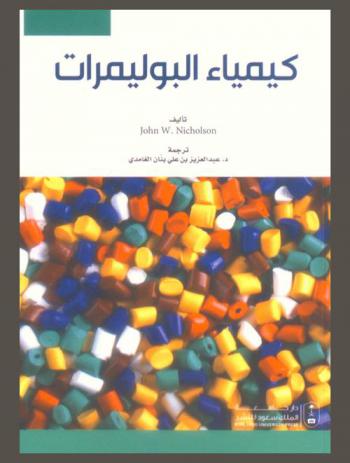
كيمياء البوليمرات
يقدم كتاب كيمياء البوليمرات إلي تعريف القراء بكيميات البوليمرات ويستهدف بشكل أساسي الخريجين الجدد الذين لم يدرسوا سابقا كيمياء البوليمرات كجزء من دراستهم للحصول علي درجة عملية والباحثين الي كل ما يحتاجه إلى نظرة عامة واسعة حيث يقدم الكتاب مقدمة مبسطة في كيمياء البوليمرات ويؤكد على الجوانب التطبيقية لعلوم البوليمرات.
BOOK

Stannous Fluoride in Toothpastes: A Review of Its Clinical Effects and Likely Mechanisms of Action
This article reviews the topic of stannous fluoride as an anti-caries additive in toothpastes. It is based on a literature survey carried out using Science Direct, supplemented by information from PubMed. The keywords used were stannous fluoride, toothpaste, clinical effects, caries, hypersensitivity, gingival health, structure and aqueous solutions. The initial searches covered the period 2015–2024 and identified 57 references. Older references cited in these papers, and also papers already known to the author, were also included. The information thus obtained shows that stannous fluoride has three main effects, namely, reduction in the viability of the oral biofilm, increase in remineralisation of the hydroxyapatite tooth mineral and occlusion of dentinal tubules leading to reduced hypersensitivity. Stannous fluoride was shown to be the most effective of all the fluoride additives used in toothpastes. In much of the dental literature, this is attributed to the effects of Sn2+ ions. However, as has been shown extensively in the wider scientific literature, free Sn2+ ions do not occur in aqueous systems. Rather, the initial products of the dissolution of SnF2 is undissociated, hydrated SnF2 and SnF+ ions. These gradually exchange fluoride to form Sn(OH)2 and Sn(OH)+. Their likely mechanism of action based on their toxicity towards oral micro-organisms and their interaction with hydroxyapatite is discussed.
Journal Article


Ytterbium (III) Fluoride in Dental Materials
(1) Background: The compound ytterbium trifluoride is used as a component of several dental materials, and this is reviewed in the current article. (2) Methods: Published articles on this substance were identified initially from PubMed, and then from Science Direct and Google Scholar. The publications identified in this way showed that ytterbium trifluoride has been included in a variety of dental restorative materials, including composite resins, glass polyalkenoate cements, and calcium trisilicate cements. (3) Results: Ytterbium trifluoride is reported to be insoluble in water. Despite this, its presence is associated with fluoride release from dental materials. There is evidence that it reacts with the components of calcium trisilicate cements to form small amounts of a variety of compounds, including ytterbium oxide, Yb2O3, and calcium–ytterbium fluoride, CaYbF5. In nanoparticulate form, it has been shown to reinforce glass polyalkenoates and it also provides high contrast in X-ray images. (4) Conclusions: Ytterbium trifluoride is a useful component of dental materials, though some of the published findings suggest that there are aspects of its chemistry which are poorly understood.
Journal Article


Periodontal Therapy Using Bioactive Glasses: A Review
This paper reviews the use of bioactive glasses as materials for periodontal repair. Periodontal disease causes bone loss, resulting in tooth loosening and eventual tooth loss. However, it can be reversed using bioactive glass, typically the original 45S5 formulation (Bioglass®) at the defect site. This is done either by plcing bioactive glass granules or a bioactive glass putty at the defect. This stimulates bone repair and causes the defect to disappear. Another use of bioactive glass in periodontics is to repair so-called furcation defects, i.e., bone loss due to infection at the intersection of the roots in multi-rooted teeth. This treatment also gives good clinical outcomes. Finally, bioactive glass has been used to improve outcomes with metallic implants. This involves either placing bioactive glass granules into the defect prior to inserting the metal implant, or coating the implant with bioactive glass to improve the likelihood of osseointegration. This needs the glass to be formulated so that it does not crack or debond from the metal. This approach has been very successful, and bioactive glass coatings perform better than those made from hydroxyapatite.
Journal Article

A midsummer night's dream : the graphic novel : original text version
The entire Shakespeare play as a graphic novel.
BOOK

Kinetics of ion release from a conventional glass-ionomer cement
Release kinetics for sodium, silicon, aluminium, calcium and phosphorus from conventional glass-ionomer dental cement has been studied in neutral and acid conditions. Specimens (6 mm height × 4 mm diameter) were made from AquaCem (Dentsply, Konstanz, Germany), 6 per experiment. They were matured (37 °C, 1 h), then placed in 5 cm3 storage solution at 20–22 °C. In the first experiment, deionised water, changed daily for 28 days, was used. In the second, deionised water, changed monthly for 21 months, was used. In the third, lactic acid (20 mmol dm−3, pH: 2.7 ± 0.1), changed monthly for 21 months was used. After storage each solution was analyzed by inductively coupled plasma-optical emission spectroscopy (ICP-OES). Results showed that in neutral conditions, no calcium was released, but in acid, significant amounts were released. The other elements (Na, Al, Si and P) were released in neutral as well as acid conditions, with greater amounts in acid. More frequent changes of water gave greater release. In neutral conditions, release over 21 months followed the equation: [E]c = [E]1t/(t + t½) + β√t ([E]c is the cumulative release of the element). In acid conditions, this became: [E]c = [E]1t/(t + t½) + αt. Hence release of all elements was shown to occur in two steps, a rapid initial one (half-life: 12–18 h) and a longer second one. In neutral conditions, the longer step involves diffusion; in acid it involves erosion. These patterns influence the material’s bioactivity.
Journal Article