
Catalogue Search | MBRL


Are you sure you want to remove the book from the shelf?

{{itemTitle}}
113
result(s) for
"Niditch, Susan"
Sort by:

The wiley blackwell companion to ancient israel
The Companion to Ancient Israel offers an innovative overview of ancient Israelite culture and history, richly informed by a variety of approaches and fields. Distinguished scholars provide original contributions that explore the tradition in all its complexity, multiplicity and diversity.
* A methodologically sophisticated overview of ancient Israelite culture that provides insights into political and social history, culture, and methodology
* Explores what we can say about the cultures and history of the people of Israel and Judah, but also investigates how we know what we know
* Presents fresh insights, richly informed by a variety of approaches and fields
* Delves into 'religion as lived,' an approach that asks about the everyday lives of ordinary people and the material cultures that they construct and experience
* Each essay is an original contribution to the subject
eBook


Folklore and the Hebrew Bible: Interdisciplinary Engagement and New Directions
This essay explores the rich interactions between the fields of folklore and biblical studies over the course of the 20th century until the present. The essay argues for the continued relevance of folklore and related fields to an appreciation of ancient Israelite cultures and their artistic inventions. It concludes with several case studies that underscore the fruitful realizations that emerge from this sort of interdisciplinary humanistic work.
Journal Article

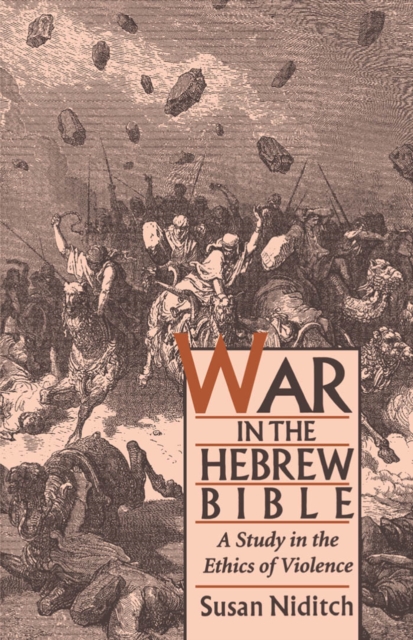
War in the Hebrew Bible
Texts about war pervade the Hebrew Bible, raising challenging questions in religious and political ethics.The war passages that readers find most disquieting are those in which God demands the total annihilation of the enemy without regard to gender, age, or military status.
eBook
Judges : a commentary
Susan Niditch's commentary on the book of Judges pays careful attention to the literary and narrative techniques of the text and yields fresh readings of the book's difficult passages: stories of violence, ethnic conflict, and gender issues. Niditch aptly and richly conveys the theological impact and enduring significance of these stories.
The Old Testament Library provides fresh and authoritative treatments of important aspects of Old Testament study through commentaries and general surveys. The contributors are scholars of international standing.
eBook
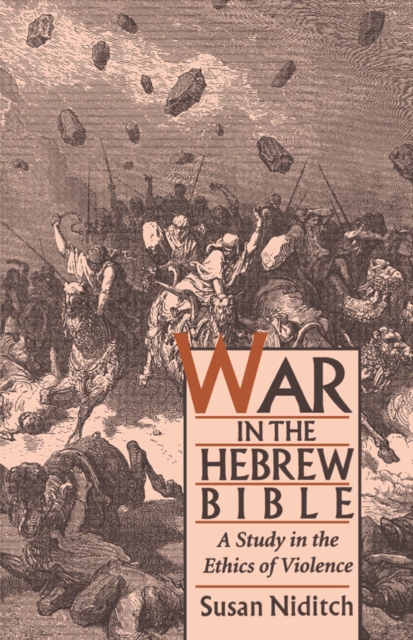
War in the Hebrew Bible: A Study in the Ethics of Violence: A Study in the Ethics of Violence
Texts about war pervade the Hebrew Bible, raising challenging questions in religious and political ethics. The war passages that readers find most disquieting are those in which God demands the total annihilation of the enemy without regard to gender, age, or military status. The ideology of the ban, however, is only one among a range of attitudes towards war preserved in the ancient Israelite literary tradition. Applying insights from anthropology, comparative literature, and feminist studies, Niditch considers a wide spectrum of war ideologies in the Hebrew Bible, seeking in each case to discover why and how these views might have made sense to biblical writers, who themselves can be seen to wrestle with the ethics of violence. The study of war thus also illuminates the social and cultural history of Israel, as war texts are found to map the world views of biblical writers from various periods and settings. Reviewing ways in which modern scholars have interpreted this controversial material, Niditch sheds further light on the normative assumptions that shape our understanding of ancient Israel. More widely, this work explores how human beings attempt to justify killing and violence while concentrating on the tones, textures, meanings, and messages of a particular corpus in the Hebrew Scriptures.
eBook


Good Blood, Bad Blood: Multivocality, Metonymy, and Mediation in Zechariah 9
Abstract
A number of scholars have pointed to the ways in which Zechariah 9 convincingly functions as a literary and conceptual whole. Approaching Zechariah 9 as a unity, however, raises important questions concerning a recurring motif in the chapter that has especially deep cultural connotations: blood.Blood is forbidden as food and unclean-rendering in Zech 9:7, blood is intimately involved in the covenantal relationship between Yahweh and Israel in 9:11 and it is part of the Israelites' post-victory feast in several important Septuagintal traditions in 9:15. A study of the blood motif in Zechariah 9 through the lenses of a variety of anthropological and literary approaches reveals the ways in which blood operates as a symbolically rich, multivalent motif not only in this chapter but in the larger Israelite tradition.
Journal Article
