
Catalogue Search | MBRL


Are you sure you want to remove the book from the shelf?

{{itemTitle}}
183
result(s) for
"Nigel Ashton"
Sort by:

King Hussein of Jordan : a political life
A towering figure in the history of Jordan, King Hussein reigned for nearly half a century, from his grandfather's assassination in 1953 to his own death in 1999. In this biography, Ashton recounts the eventful life of the king who not only survived but flourished amidst crisis after crisis.
Book

For King and Country: Jack O'Connell, the CIA, and the Arab-Israeli Conflict, 1963-71
Jack O’Connell, who served as CIA Station Chief in Jordan between 1963 and 1971, was a unique and remarkable figure in the contemporary history of United States involvement in the Middle East. He established a closer personal relationship with King Hussein than any other foreigner before or since. Subsequently he went on to serve as the King's attorney‐at‐law in the United States and as his informal diplomatic adviser. This article explores O’Connell's role as CIA Station Chief, focusing in particular on his account of the events leading up to the outbreak of the 1967 war and of the covert diplomacy which followed it. It concludes that if O’Connell's claims are sustained, the United States must bear a greater share of responsibility for failing to prevent the outbreak of war and for the failure to secure a diplomatic settlement in its aftermath than has hitherto been acknowledged.
Journal Article
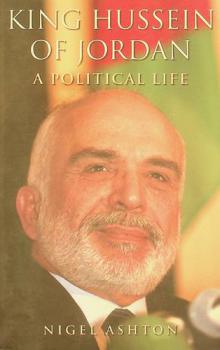
King Hussein of Jordan : a political life
A towering figure, King Hussein reigned for nearly half a century, from his grandfather's assassination in 1953 to his own death in 1999. In this biography, Nigel Ashton recounts the eventful life of the king who not only survived but flourished amidst crisis after crisis as ruler of a poor desert nation surrounded by powerful and hostile neighbors. Hussein skillfully navigated complicated relationships with the British, his fellow Arab leaders, the new bordering state of Israel, masses of dispossessed Palestinians within his kingdom, every U.S. president from Eisenhower to Clinton, and every British prime minister from Churchill to Blair. This book illuminates the private man, his key relationships, and his achievements and disappointments as a central player in the tough world of Middle Eastern politics.--From publisher description.
BOOK
Taking Friends for Granted
The Framework for Peace in the Middle East Agreed at Camp David in September 1978 assigned crucial responsibilities to Jordan. The failure of this framework was due to Jordan's refusal to cooperate. That refusal in turn was a consequence of longer-term problems and short-term tensions in U.S.-Jordanian relations.
Journal Article

The Iran-Iraq War
This volume offers a wide-ranging examination of the Iran-Iraq War (1980-88), featuring fresh regional and international perspectives derived from recently available new archival material.
Three decades ago Iran and Iraq became embroiled in a devastating eight-year war which served to re-define the international relations of the Gulf region. The Iran-Iraq War stands as an anomaly in the Cold War era; it was the only significant conflict in which the interests of the United States and Soviet Union unwittingly aligned, with both superpowers ultimately supporting the Iraqi regime.
The Iran-Iraq War re-assesses not only the superpower role in the conflict but also the war's regional and wider international dimensions by bringing to the fore fresh evidence and new perspectives from a variety of sources. It focuses on a number of themes including the economic dimensions of the war and the roles played by a variety of powers, including the Gulf States, Turkey, France, the Soviet Union and the United States. The contributions to the volume serve to underline that the Iran-Iraq war was a defining conflict, shaping the perspectives of the key protagonists for a generation to come.
This book will be of much interest to students of international and Cold War history, Middle Eastern politics, foreign policy, and International Relations in general.
eBook
Harold Macmillan and the “Golden Days” of Anglo-American Relations Revisited, 1957–63
Historians of Anglo-American relations have had little difficulty in characterizing the premiership of Harold Macmillan between Jan 1957 and Oct 1963 as an era of renewed closeness between London and Washington. The struggle between different agencies in Washington worked against Macmillan.
Journal Article

Searching for a Just and Lasting Peace? Anglo-American Relations and the Road to United Nations Security Council Resolution 242
United Nations Security Council Resolution 242 of 22 November 1967 continues to rank as a key point of reference for the Arab-Israeli peace process. The resolution laid down a 'land for peace' formula for the resolution of the Arab-Israeli conflict, under which Israel would withdraw from territories occupied during the June 1967 Arab-Israeli War in exchange for full peace agreements with its Arab neighbours. This article analyses the Anglo-American diplomacy at the United Nations which led to the passing of the resolution. It argues that the policy-making of the Johnson administration was rendered incoherent by internal rivalries and disorganisation. US Ambassador to the UN, Arthur Goldberg, was perceived as excessively sympathetic to Israel by the Arab delegations. The British approach, by contrast, was perceived by all parties as more even-handed. The clear position adopted by Foreign Secretary George Brown on Israeli withdrawal from the occupied territories, together with the skilful diplomacy of the Ambassador to the UN, Lord Caradon, explains the British success in sponsoring Resolution 242. The episode holds broader lessons for the conduct of Anglo-American relations showing that Britain was better placed to achieve diplomatic success when it retained its freedom of manoeuvre in relations with the United States.
Journal Article
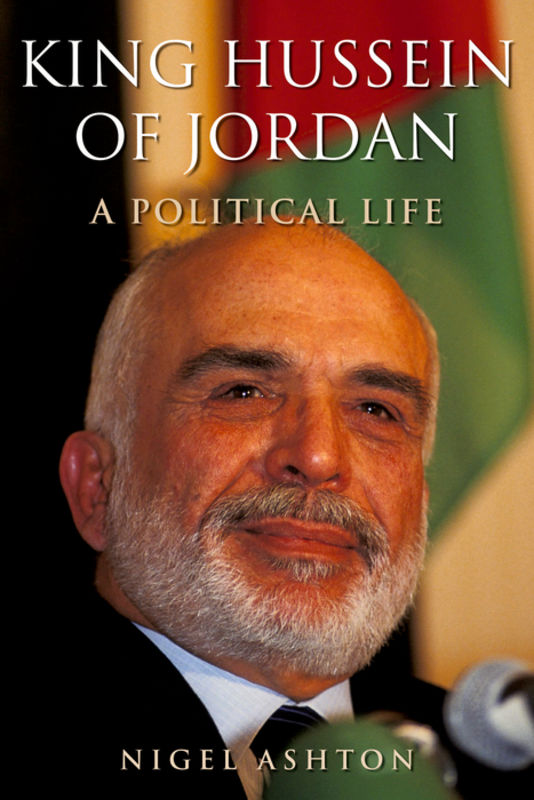
King Hussein of Jordan
A towering figure in the history of Jordan, King Hussein reigned for nearly half a century, from his grandfather's assassination in 1953 to his own death in 1999. In this fascinating biography, Nigel Ashton recounts the eventful life of the king who not only survived but flourished amidst crisis after crisis as ruler of a poor desert nation surrounded by powerful and hostile neighbors. Hussein skillfully navigated complicated relationships with the British, his fellow Arab leaders, the new bordering state of Israel, masses of dispossessed Palestinians within his kingdom, every U.S. president from Eisenhower to Clinton, and every British prime minister from Churchill to Blair. This book illuminates the private man, his key relationships, and his achievements and disappointments as a central player in the tough world of Middle Eastern politics.
Ashton has had unique access to King Hussein's private papers, including his secret correspondence with U.S., British, and Israeli leaders, and he has also conducted numerous interviews with members of Hussein's circle and immediate family. The resulting book brings new depth to our understanding of the popular and canny king while also providing new information about the wars of 1967 and 1973, President Reagan's role in the Iran-Contra affair, the evolution of the Middle East peace process, and much more.
eBook

Extending the balance metaphor
The emphasis on directly associating a sign (negative) with an object (balloon) through the metaphor of buoyancy, can assist in the successful manipulation of negative numbers by some pupils and inhibits the \"detachment of the minus sign\" reported as a persistent error as part of the standard balance model (Linchevski and Herscovics, 1996). Conclusions Based on my classroom practice, the extended balance-metaphor model, which provides an extension for the inclusion of embodied negative numbers into linear equations, does work successfully for pupils. Learners who have not yet become proficient with algebraic manipulation may benefit more from this approach, utilising the extended balancemetaphor model to enhance their mathematical skills by developing more secure algebraic proficiency with negative numbers.
Trade Publication Article