
Catalogue Search | MBRL


Are you sure you want to remove the book from the shelf?

{{itemTitle}}
2,665
result(s) for
"Nolan, Mary"
Sort by:

The transatlantic century : Europe and America, 1890-2010
\"This is a fascinating new overview of European-American relations during the long twentieth century. Ranging from economics, culture and consumption to war, politics and diplomacy, Mary Nolan charts the rise of American influence in Eastern and Western Europe, its mid-twentieth century triumph and its gradual erosion since the 1970s. She reconstructs the circuits of exchange along which ideas, commodities, economic models, cultural products and people moved across the Atlantic, capturing the differing versions of modernity that emerged on both sides of the Atlantic and examining how these alternately produced co-operation, conflict and ambivalence toward the other. Attributing the rise and demise of American influence in Europe not only to economics but equally to wars, the book locates the roots of many transatlantic disagreements in very different experiences and memories of war. This is an unprecedented account of the American Century in Europe that recovers its full richness and complexity\"-- Provided by publisher.
Book

Acotiamide: First Global Approval
Acotiamide (Acofide
®
), an oral first-in-class prokinetic drug, is under global development by Zeria Pharmaceutical Co. Ltd and Astellas Pharma Inc. for the treatment of patients with functional dyspepsia. The drug modulates upper gastrointestinal motility to alleviate abdominal symptoms resulting from hypomotility and delayed gastric emptying. It exerts its activity in the stomach via muscarinic receptor inhibition, resulting in enhanced acetylcholine release and inhibition of acetylcholinesterase activity. Unlike other prokinetic drugs that are utilized in the management of functional dyspepsia, acotiamide shows little/no affinity for serotonin or dopamine D
2
receptors. Acotiamide is the world’s first approved treatment for functional dyspepsia diagnosed by Rome III criteria, with its first approval occurring in Japan. Phase III trials in this patient population are in preparation in Europe, with phase II trials completed in the USA and Europe. This article summarizes the milestones in the development of acotiamide, leading to its first approval for use in patients with functional dyspepsia.
Journal Article

Defining human mesenchymal stem cell efficacy in vivo
Allogeneic human mesenchymal stem cells (hMSCs) can suppress graft versus host disease (GvHD) and have profound anti-inflammatory and regenerative capacity in stroke, infarct, spinal cord injury, meniscus regeneration, tendinitis, acute renal failure, and heart disease in human and animal models of disease. There is significant clinical hMSC variability in efficacy and the ultimate response
in vivo
. The challenge in hMSC based therapy is defining the efficacy of hMSC
in vivo
. Models which may provide insight into hMSC bioactivity
in vivo
would provide a means to distinguish hMSCs for clinical utility. hMSC function has been described as both regenerative and trophic through the production of bioactive factors. The regenerative component involves the multi-potentiality of hMSC progenitor differentiation. The secreted factors generated by the hMSCs are milieu and injury specific providing unique niches for responses
in vivo
. These bioactive factors are anti-scarring, angiogenic, anti-apoptotic as well as regenerative. Further, from an immunological standpoint, hMSC's can avoid host immune response, providing xenographic applications. To study the
in vivo
immuno-regulatory effectiveness of hMSCs, we used the ovalbumin challenge model of acute asthma. This is a quick 3 week
in vivo
pulmonary inflammation model with readily accessible ways of measuring effectiveness of hMSCs. Our data show that there is a direct correlation between the traditional ceramic cube score to hMSCs attenuation of cellular recruitment due to ovalbumin challenge. The results from these studies verify the
in vivo
immuno-modulator effectiveness of hMSCs and support the potential use of the ovalbumin model as an
in vivo
model of hMSC potency and efficacy. Our data also support future directions toward exploring hMSCs as an alternative therapeutic for the treatment of airway inflammation associated with asthma.
Journal Article

Teaching the History of Human Rights and “Humanitarian” Interventions
This article explores how I teach about human rights and so-called humanitarian interventions to MA and Ph.D. students. The course has three main themes or foci. First, what are human rights and why have the social and economic human rights laid out in the Universal Declaration of Human Rights been so neglected or rejected, especially by the U.S. Second, how has American foreign policy used and abused human rights. Third, why have liberal or humanitarian interventions of a militarized sort become so prevalent since the end of the Cold War and why are they so damaging. The goal is to get students to look critically at the meaning and uses of human rights, about which many display a naive enthusiasm.
Journal Article

A Model Mentor
Inside the academy and out, there is much talk of the importance of mentoring, of why younger students, faculty, and employees need it, of the potential benefits that will accrue to them from it, and of the rarity of dedicated and effective mentors. In the academy, mentorship takes two forms. One involves senior faculty helping junior colleagues learn the quirks of their department and institution and the often-opaque requirements for achieving tenure. It is a time-limited relationship of near equals that focuses on how to help junior colleagues work successfully within the given system. The other involves faculty and graduate students. If done well, such mentoring is a project extending not only over the years when a student is taking courses and writing a dissertation but well beyond them to a time when they are working and publishing. A good mentor imparts their own knowledge and skills, helps young scholars find their own interests and voice, and aids them in navigating the ever-more precarious job market and work–life balance. A good mentor needs to both acknowledge the enormous power differentials between faculty and graduate students and treat the latter as equal adults. A good mentor both helps a mentee understand the system as it exists and offers alternative values and visions of how the academy can be a more humane and just environment. Finally, a good mentor should expect no monetary rewards or recognition from colleagues for the time and intellectual and emotional energy put into mentoring. The ever-more corporate university pays only lip service to mentoring and teaching.
Journal Article


Information Giving and Education in Pregnancy: A Review of Qualitative Studies
Studies of childbirth education have universally failed to take into account the quality of the education provided to women and their families and whether its style of delivery meets women's preferences and needs. The present study sought to determine which educational approaches are most welcomed by women and most helpful to them in learning about labor, birth, and early parenting. A systematic survey of peer-reviewed studies on antenatal education, published in English from 1996-2006 and which sought women's views and experiences, was conducted. Findings confirm women's preference for a small-group learning environment in which they can talk to each other as well as the educator and can relate information to their individual circumstances.
Journal Article

Establishing the safety of waterbirth for mothers and babies: a cohort study with nested qualitative component: the protocol for the POOL study
IntroductionApproximately 60 000 (9/100) infants are born into water annually in the UK and this is likely to increase. Case reports identified infants with water inhalation or sepsis following birth in water and there is a concern that women giving birth in water may sustain more complex perineal trauma. There have not been studies large enough to show whether waterbirth increases these poor outcomes. The POOL Study (ISRCTN13315580) plans to answer the question about the safety of waterbirths among women who are classified appropriate for midwifery-led intrapartum care.Methods and analysisA cohort study with a nested qualitative component. Objectives will be answered using retrospective and prospective data captured in electronic National Health Service (NHS) maternity and neonatal systems. The qualitative component aims to explore factors influencing pool use and waterbirth; data will be gathered via discussion groups, interviews and case studies of maternity units.Ethics and disseminationThe protocol has been approved by NHS Wales Research Ethics Committee (18/WA/0291) the transfer of identifiable data has been approved by Health Research Authority Confidentiality Advisory Group (18CAG0153).Study findings and innovative methodology will be disseminated through peer-reviewed journals, conferences and events. Results will be of interest to the general public, clinical and policy stakeholders in the UK and will be disseminated accordingly.
Journal Article
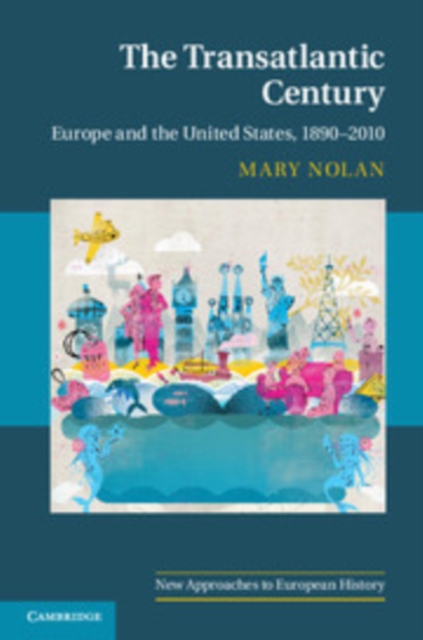
The Transatlantic Century: Europe and the United States, 1890-2010
This is a fascinating new overview of European-American relations during the long twentieth century. Ranging from economics, culture and consumption to war, politics and diplomacy, Mary Nolan charts the rise of American influence in Eastern and Western Europe, its mid-twentieth century triumph and its gradual erosion since the 1970s. She reconstructs the circuits of exchange along which ideas, commodities, economic models, cultural products and people moved across the Atlantic, capturing the differing versions of modernity that emerged on both sides of the Atlantic and examining how these alternately produced co-operation, conflict and ambivalence toward the other. Attributing the rise and demise of American influence in Europe not only to economics but equally to wars, the book locates the roots of many transatlantic disagreements in very different experiences and memories of war. This is an unprecedented account of the American Century in Europe that recovers its full richness and complexity.
eBook
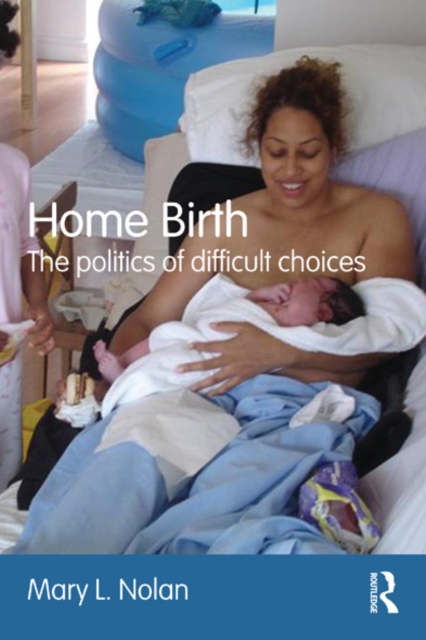
Home Birth
The rhetoric of choice is much used in UK health policy and home birth is one of the three options that women are entitled to choose between when deciding where to have their baby. However, many women making this choice run into considerable opposition from the maternity service.
Home Birth: the politics of difficult choices focuses on the experiences of women whose choices were opposed by health professionals during their pregnancy journey. It confronts why and how women are being denied home birth and raises some challenging issues for current midwifery practice. Using ten women’s narratives, this important volume explores why women might want to give birth at home and considers ideas of risk and informed choice in pregnancy and birth. The book includes chapters on communication and language; fear and stress; advocacy and autonomy; fathers’ experience of contested place of birth and free birthing.
Pointers to best practice are presented whilst the text incorporates women’s narratives throughout, making this a practical and relevant read for midwifery students as well as practising midwives and childbirth educators, all of whom have a duty to make home birth a real option for women.
Mary L. Nolan is Professor of Perinatal Education at the University of Worcester, UK. She is also Senior Tutor at the National Childbirth Trust.
1. Policy – does it mean what it says? 2. Choosing Home Birth Against Medical Advice 3. Fear and Risk 4. Choice, Bullying and Coercion 5. Communication and Language 6. Avoidance, Subversion and Confrontation 7. Stress in Pregnancy and Birth 8. Men’s Experience of Home Birth Against Medical Advice 9. Free Birth: the end of the choice continuum 10. Advocacy, Empathy and Autonomy 11. The Dialectic between Possibilities and Limits
'This remains an invaluable resource for any student midwife learning how to best understnad and serve women, any midwife who wants to improve the pregnancy, birthing and mothering exerience of the women under their care...This book feeds fantastically into homebirth and service provision debates around the world and should not be overlooked by any health professional dedicated to supporting women and their families throughout pregnancy, birth and parenthood.' – Midwifery News
'Why do women choose to give birth at home, even in situations defined as medically risky? Are they ignorant? Irresponsible? Risking their babies' lives for their own good experience? Mary L. Nolan explores this uncharted territory with respect and intelligence, creating a fascinating and invaluable resource for carers involved with home birth and/or women with \"high risk\" pregnancies. Women and families choosing home birth will especially enjoy the voices of strong-minded women who are making their own choices.' – Dr Sarah J. Buckley, author of Gentle Birth, Gentle Mothering, www.sarahjbuckley.com
'I would strongly recommend it to anyone working in maternity services...These stories need to be heard if normality and choice in childbirth is to remain a real option' – MIDIRS
eBook