
Catalogue Search | MBRL


Are you sure you want to remove the book from the shelf?

{{itemTitle}}
10
result(s) for
"Noland, Marcus, 1959-"
Sort by:

From stress to growth : strengthening Asia's financial systems in a post-crisis world
\"Asian financial systems, which serve the most economically dynamic region of the world, survived the global economic crisis of the last several years. In this book scholars argue in separate essays that Asian systems must strengthen their quality, diversity, and resilience to future shocks in order to deliver growth in coming years. The book examines such phenomena as the dominance of state-owned banks, the growth of nonbank lending (the so-called shadow banks), and the need to develop local bond markets, new financial centers, and stronger supervisory tools to prevent dangerous real estate asset bubbles. China's large financial system is discussed at length, with emphasis on concerns that China's system has grown too fast, that it is overly tilted toward corporate borrowing, and that state domination has led to overly easy credit to state-owned actors. Asia needs investment to improve its infrastructure and carry out technological innovation, but the book argues that the region's financial systems face challenges in meeting that need\"-- Provided by publisher.
Book

Witness to transformation : refugee insights into North Korea
Despite its nuclear capability, in certain respects North Korea resembles a failed state sitting uneasily atop a shifting internal foundation. This instability is due in part to the devastating famine of the 1990s and the state's inability to fulfill the economic obligations that it had assumed, forcing institutions, enterprises, and households to cope with the ensuing challenges of maintaining stability with limited cooperation between the Korean government and the international community. The ineffective response to the humanitarian crisis triggered by the famine resulted in the outflow of perhaps tens of thousands of refugees whose narratives are largely overlooked in evaluating the efficacy of the humanitarian aid program. Witness to Transformation: Refugee Insights into North Korea uses extensive surveys with refugees who now reside in China or South Korea to provide extraordinary insight into the changing pathways to power, wealth, and status within North Korea. These refugee testimonies provide an invaluable interpretation of the regime, its motivations, and its capabilities and assess the situation on the ground with the rise of inequality, corruption, and disaffection in the decade since the famine. Through the lens of these surveys, preeminent North Korean experts Stephan Haggard and Marcus Noland carefully document the country's transition from a centrally planned economy to a highly distorted market economy, characterized by endemic corruption and widening inequality. The authors chart refugees' reactions to the current conditions and consider the disparity between the perceived and real benefit of the international humanitarian aid program experienced by this displaced population. Finally, the book examines these refugees' future prospects for integration into a new society.
eBook

The Arab economies in a changing world
\"Compared to other regions of the world, the Middle East was once unique in its combination of authoritarianism and stultifying stability: No longer. Beginning in Tunisia, a wave of political upheaval has rolled across the region, reaching Egypt, Bahrain, Libya, and other countries caught between rising expectations and their antediluvian political systems, abetted by pan-Arab news channels and social networking media. This book examines the economics of the Middle East, with the aim of identifying changes to economic policy that could address at least the economic component of the challenges facing this part of the globe. The authors analyze the interaction of trade, productivity growth, and the political difficulties that may ensue as these countries move towards greater openness. Relevant comparisons are drawn from the experience of the transition economies and India on potentially successful policies and those likely to exacerbate existing problems. This new second edition contains a new introduction from Mohamed A. El-Erian and a new postscript\"--Provided by publisher.
Book
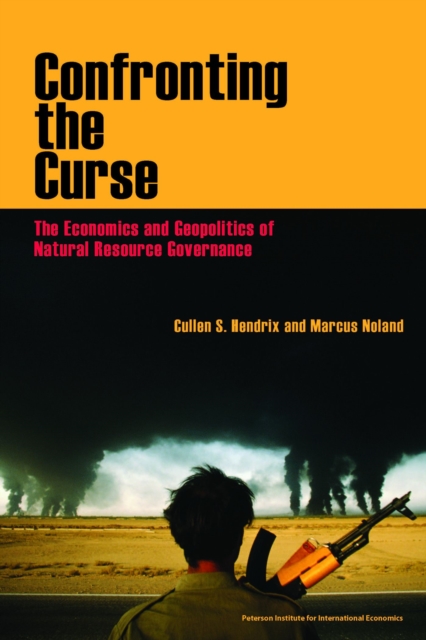
Confronting the curse : the economics and geopolitics of natural resource governance
Countries blessed with abundant natural resources often seek financial and political power from their supposedly lucky status. But the potentially negative impact of natural resources on development of poor countries is captured in the phrase \"the resource curse.\" Instead of success and prosperity, producers of gold, oil, rubber, sugar, and other commodities--many in the least developed parts of Africa and Asia--often remain mired in poverty and plagued by economic mismanagement, political authoritarianism, foreign exploitation, and violent conflict. These difficulties and the many challenges they pose for American foreign policy are the focus of this important new book. Marcus Noland and Cullen S. Hendrix review recent developments as poor countries struggle to avoid the \"resource curse\" but fall too often into that trap. They call for support for international efforts to encourage greater transparency and improved management of natural resource wealth and for new partnerships between the West and the developing world to \"confront the curse.\".
eBook
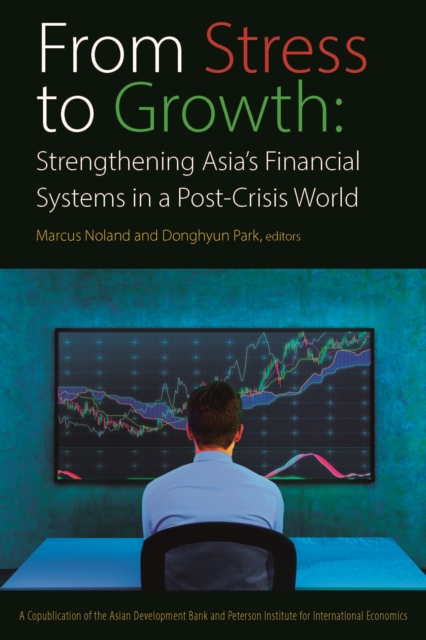
From stress to growth : strengthening Asia's financial systems in a post-crisis world
Asian financial systems, which serve the most economically dynamic region of the world, survived the global economic crisis of the last several years. In From Stress to Growth: Strengthening Asia's Financial Systems in a Post-Crisis World, scholars affiliated with the Peterson Institute for International Economics and the Asian Development Bank argue in separate essays that Asian systems must strengthen their quality, diversity, and resilience to future shocks in order to deliver growth in coming years. The book examines such phenomena as the dominance of state-owned banks, the growth of nonbank lending (the so-called shadow banks), and the need to develop local bond markets, new financial centers, and stronger supervisory tools to prevent dangerous real estate asset bubbles. China's large financial system is discussed at length, with emphasis on concerns that China's system has grown too fast, that it is overly tilted toward corporate borrowing, and that state domination has led to overly easy credit to state-owned actors. Asia needs investment to improve its infrastructure and carry out technological innovation, but the book argues that the region's financial systems face challenges in meeting that need.
eBook


The Arab economies in a changing world
The tragic events of 9/11 and the subsequent war in Iraq have focused international attention on a nexus of problems involving economic underperformance, problematic internal politics, and externalization of domestic dissent in the Muslim world. This book examines the economics of the Middle East, with the aim of identifying changes to economic policy that could address at least the economic component of the challenges facing this part of the globe. The authors analyze the interaction of trade, productivity growth, and the political difficulties that may ensue as these countries move towards greater openness. Relevant comparisons are drawn from the experience of the transition economies and India on potentially successful policies and those likely to exacerbate existing problems.
eBook

Confronting the curse : the economics and geopolitics of natural resource governance / Cullen S. Hendrix and Marcus Noland
Countries blessed with abundant natural resources often seek financial and political power from their supposedly lucky status. But the potentially negative impact of natural resources on development of poor countries is captured in the phrase \"the resource curse.\" Instead of success and prosperity, producers of gold, oil, rubber, sugar, and other commodities-many in the least developed parts of Africa and Asia -- often remain mired in poverty and plagued by economic mismanagement, political authoritarianism, foreign exploitation, and violent conflict. These difficulties and the many challenges they pose for American foreign policy are the focus of this important new book. Marcus Noland and Cullen S. Hendrix review recent developments as poor countries struggle to avoid the \"resource curse\" but fall too often into that trap. They call for support for international efforts to encourage greater transparency and improved management of natural resource wealth and for new partnerships between the West and the developing world to \"confront the curse.\"--
eBook