
Catalogue Search | MBRL


Are you sure you want to remove the book from the shelf?

{{itemTitle}}
3
result(s) for
"Norris, Christopher M., author"
Sort by:

The complete guide to stretching
This guide provides an over view of the scientific principles of physical training for sports participants and recreational exercisers.
Book

The Complete Guide to Back Rehabilitation
T he Complete Guide to Back Rehabilitation is the essential resource for all experts involved in back care, including massage therapists, exercise therapists, physiotherapists and fitness professionals.
eBook
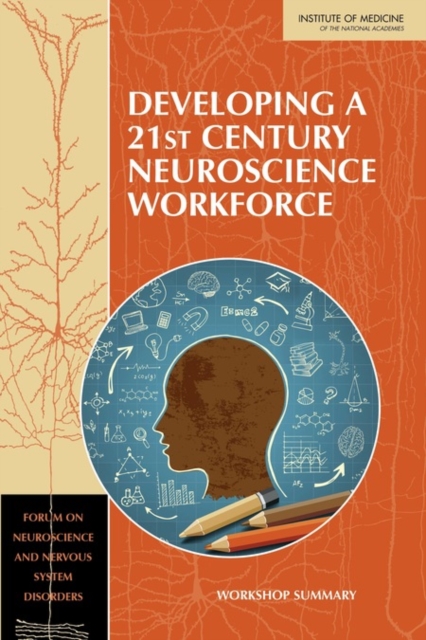
Developing a 21st Century Neuroscience Workforce
From its very beginning, neuroscience has been fundamentally interdisciplinary. As a result of rapid technological advances and the advent of large collaborative projects, however, neuroscience is expanding well beyond traditional subdisciplines and intellectual boundaries to rely on expertise from many other fields, such as engineering, computer science, and applied mathematics. This raises important questions about to how to develop and train the next generation of neuroscientists to ensure innovation in research and technology in the neurosciences. In addition, the advent of new types of data and the growing importance of large datasets raise additional questions about how to train students in approaches to data analysis and sharing. These concerns dovetail with the need to teach improved scientific practices ranging from experimental design (e.g., powering of studies and appropriate blinding) to improved sophistication in statistics. Of equal importance is the increasing need not only for basic researchers and teams that will develop the next generation of tools, but also for investigators who are able to bridge the translational gap between basic and clinical neuroscience.
Developing a 21st Century Neuroscience Workforce is the summary of a workshop convened by the Institute of Medicine's Forum on Neuroscience and Nervous System Disorders on October 28 and 29,2014, in Washington, DC, to explore future workforce needs and how these needs should inform training programs. Workshop participants considered what new subdisciplines and collaborations might be needed, including an examination of opportunities for cross-training of neuroscience research programs with other areas. In addition, current and new components of training programs were discussed to identify methods for enhancing data handling and analysis capabilities, increasing scientific accuracy, and improving research practices. This report highlights the presentation and discussion of the workshop.
eBook