
Catalogue Search | MBRL


Are you sure you want to remove the book from the shelf?

{{itemTitle}}
68
result(s) for
"O'Callaghan, Catherine M"
Sort by:

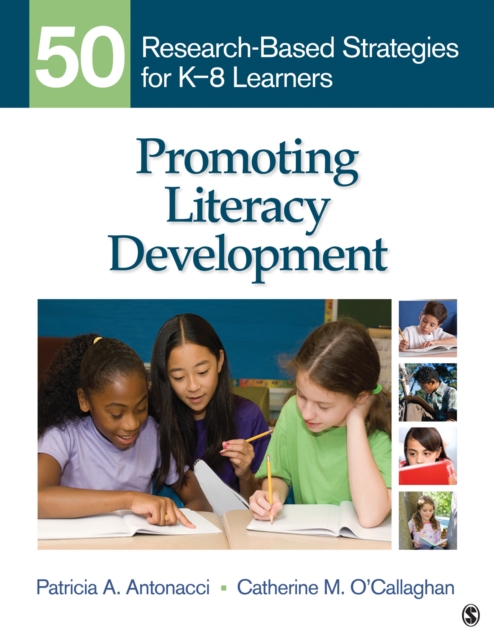
Promoting Literacy Development
Fifty research-based literacy strategies designed for busy K-8 classroom teachersOrganized around 10 key areas for teaching and learning literacy—phonemic awareness, phonics, reading fluency, vocabulary, story comprehension, comprehension of informational text, questioning for understanding, discussion for understanding, narrative writing, and writing to learn-Promoting Literacy Development offers 50 clearly written, step-by-step strategies for developing proficient readers and writers. The authors also include suggestions for differentiating instruction for English language learners and for students with special needs.
eBook

Social construction of preservice teachers' instructional strategies for reading
This multiple case study investigated the social construction of four female preservice teachers' instructional strategies for reading. Data collection consisted of DeFord's (1989) Theoretical Orientation to Reading Profile, literacy narratives, teaching metaphors, and think-aloud protocols for six vignettes of primary grade reading problems. Miles and Huberman's (1994) data reduction techniques were utilized. Cross-case analysis indicated that all participants engaged in increased levels of reflective thinking and procedural reasoning. In addition, two participants also engaged in reflective thinking while teaching (Schon, 1983). A skills orientation to reading was the predominant approach to instruction. Only one participant shifted her theoretical orientation from a phonics orientation to skills-based instruction. Finally, it was determined that all four participants' instructional strategies for reading were rooted in their own literacy histories. Finally, it was hypothesized that engaging in narrative inquiry, coupled with instructional problem solving, generated cognitive conflict among participants. Increased cognitive conflict resulted in changes in preservice teachers' reflection and procedural reasoning.
Dissertation
