
Catalogue Search | MBRL


Are you sure you want to remove the book from the shelf?

{{itemTitle}}
336
result(s) for
"O'Connor, Barbara"
Sort by:

On the road to Mr. Mineo's
Sherman, a one-legged pigeon, sets everyone aflutter in a small southern town.
Book

Breast-milk substitute marketing practices in four countries: an analysis using a community-based approach
Background
This quantitative study engaged volunteer participants and a scavenger hunt application with the purpose of collecting photographic data of the breadth and scope of violations of the World Health Organization’s Code of Marketing of Breast-milk Substitutes (“the Code”) and subsequent World Health Assembly Resolutions, in four industrialized countries– the United States (“U.S.”), Canada, Australia and the United Kingdom (“U.K.”). These four countries do not have or do not adequately enforce their related polices or laws. A secondary goal was to provide evidence to inform national strategic planning efforts related to the marketing practices of manufacturers and distributors of breast-milk substitutes (BMS).
Methods
Participants had to be residents of either the U.S., Australia, Canada or the U.K., and had to be 18 years old at minimum. They were recruited via social media, conference attendance and professional networks. Participants completed a demographic survey and downloaded the scavenger hunt application onto their mobile devices. The application directed participants to fulfill as many of the thirty total “missions,” which were provided by the research team, by uploading photographic evidence of images that they believed were examples of breaches of the Code. Data collection occurred from July 19, 2023 through July 31, 2024. The research team assessed, recategorized and calculated the numbers of participant submissions after the data collection phase. The Statistical Package for the Social Sciences software was utilized to conduct descriptive statistics, including Pearson’s chi-squared and residuals.
Results
In total, 738 individuals were eligible and consented to participation in the study. Of those individuals, 323 continued on to the scavenger hunt application. After evaluation by the research team to assess if participant submissions were submitted under the appropriate “mission” within the application, and then if their submission qualified as a true violation of the Code, 138 submitted violations were verified and included in the analysis. Key findings include the prevalence of digital marketing violations across all four countries, false, unsubstantiated marketing claims on BMS, a lack of key instructions on the preparation, handling and storage on labels of infant formula products and the marketing violations of BMS in healthcare facilities.
Conclusions
Breaches of the Code are prevalent across the U.S., the U.K., Australia and Canada and expose the public to misleading marketing tactics. To safeguard breastfeeding from exploitative digital marketing practices, countries must legislate the Code into national law and commit to its implementation through advocacy, policy and enactment.
Journal Article

Wish
\"A story about a girl who, with the help of the dog of her dreams, discovers that family doesn't always have to be related--they are simply people who love you for who you are\"-- Provided by publisher.
Book
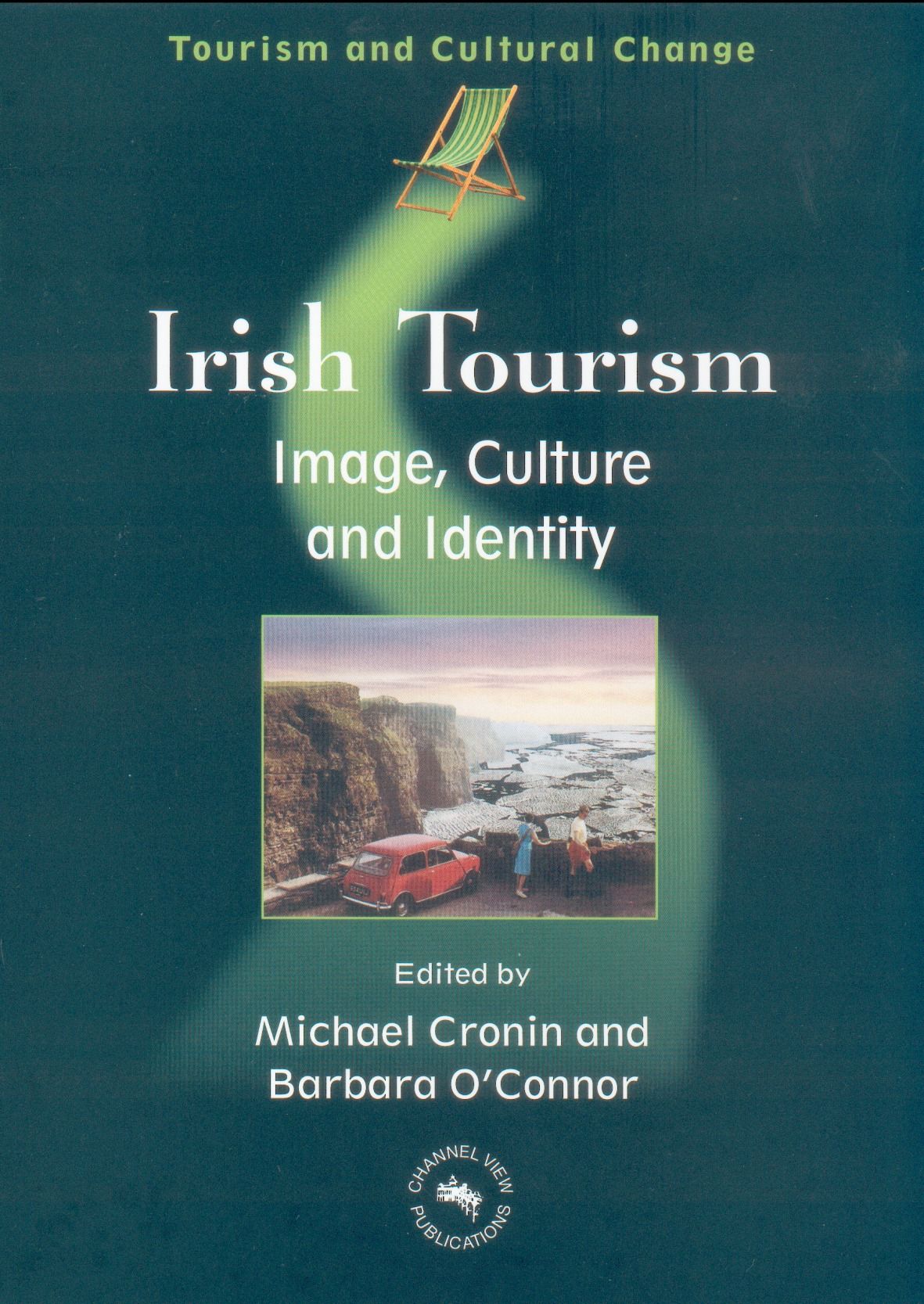
Irish tourism
The book explores the multi-faceted nature of the important phenomenon of Irish tourism, drawing on current work in sociology, cultural studies, ethnography, and language studies. It will provide invaluable insights into historical and contemporary tourist representations, practices and impacts and will interest researchers and practitioners.
eBook

Wish
\"A story about a girl who, with the help of the dog of her dreams, discovers that family doesn't always have to be related--they are simply people who love you for who you are\"-- Provided by publisher.
Book

Profiles and Perspectives: Keeping It Real: How Realistic Does Realistic Fiction for Children Need to Be?
O’Connor, an author of realistic fiction for children, shares her attempts to strike a balance between carefree, uncensored, authentic, realistic writing and age-appropriate writing. Of course, complicating that balancing act is the fact that what seems age-appropriate to her might not seem so to everyone. O’Connor suggests that while it may be easy to romanticize the idea of being so immersed in writing that you wouldn’t even think about setting limits, there comes a time when authors must step back and examine their work with a discerning eye, asking, “Is this too real for my intended audience?” She explores this question through examinations of five story elements: dialogue, character, family relationships, economic class, and endings.
Journal Article

Inclusion Means Everyone! The Role of the Early Childhood Educator when Including Young Children with Autism in the Classroom
The impact of the emphasis on inclusion in special education has resulted in a higher frequency of young children with autism being included in early childhood programs with typically developing peers. Many early childhood educators have risen to face the challenge, and this has resulted in enhanced learning for young children with autism in the regular classroom. This article focuses on the multiple roles of early childhood educators as they work with the diverse needs of young children with autism in their classrooms.
Journal Article

Laceration of the popliteal artery and compartment syndrome resulting from stingray envenomation
In the emergency department, the patient required several units of packed red blood cells to maintain his blood pressure. The patient was discharged home from the hospital on postoperative day number 8 and was continued on intravenous and oral antibiotics.
Journal Article