
Catalogue Search | MBRL


Are you sure you want to remove the book from the shelf?

{{itemTitle}}
76
result(s) for
"O'Kane, Bernard"
Sort by:


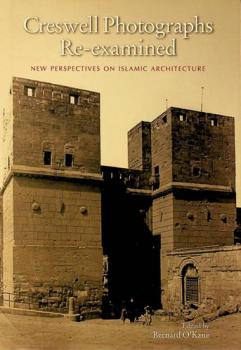
Creswell photographs re-examined : new perspectives on Islamic architecture
This book uses photographs as documentary evidence to study Islamic architecture. The Creswell photographic archive at the American University in Cairo is an invaluable resource of over 12,000 printed images of Islamic architecture, mainly in Cairo, but also including buildings in other important cities such as Cordoba and Baghdad. Creswell's own photographs constitute the majority of the collection, but he also assembled work by photographers active in the decades before he began his systematic recording in the 1920s.
Book

TEXT AND PAINTINGS IN THE AL-WĀSIṬĪ \MAQĀMĀT\
The copy of al-Ḥarīrīʾs Maqāmāt in the Bibliothèque nationale, Paris, arabe 5847, was made by Yaḥyā b. Maḥmūd b. Yaḥyā b. Abiʾl-ḥasan b. Kūrrīhā al-Wāsiṭī, who tell us in its colophon that he was responsible for both the calligraphy and the illustrations, and gives us the date, AH 6 Ramadan 634/May 3, 1236 CE. This is a well known manuscript, having been recognized as one of the masterpieces of Arab painting and Islamic art for more than a century. The al-Wāsiṭī Maqāmāt features three unprecedented pictorial features: first, at least sixteen double-page paintings, each of which represents a single episode in the text; second, one full-page painting with no text; and third, two paintings spread across two open pages with no text. This paper analyzes al-Wāsiṭīʾs use oftext and image and shows that, based on previously unnoticed lacunae, the original manuscript could have had up to ten more paintings in addition to its current number of ninety-nine.
Journal Article

The mosques of Egypt
Less than ten years after the death of the Prophet Muhammad, the new religion of Islam arrived in Egypt with the army of Amr ibn al-As in AD 639. Amr immediately established his capital at al-Fustat, just south of modern Cairo, and there he built Africa's first mosque, one still in regular use today. Since then, governors, caliphs, sultans, amirs, beys, pashas, among others, have built mosques, madrasas, and mausoleums throughout Egypt in a changing sequence of Fatimid, Ayyubid, Mamluk, Ottoman, and modern styles. Here, a leading historian of Islamic art and culture celebrates the great variety of Egypt's mosques and related religious buildings, from the early congregational mosques, through the medieval mausoleum--madrasas, to the neighborhood mosques of the Ottoman and modern periods. With outstanding architectural photography and authoritative descriptive texts, this book will be valued as the finest on the subject by scholars and general readers alike. Includes more that 80 of the country's most historic mosques, with more than 500 color photographs. -- Inside jacket flap.
Book