
Catalogue Search | MBRL


Are you sure you want to remove the book from the shelf?

{{itemTitle}}
31
result(s) for
"Ojima, Minoru"
Sort by:

The Earth : its birth and growth
\"A clear understanding of the Earth's past evolution can provide the key to its possible future development. The Earth: Its Birth and Growth explores the evolution of the Earth over 4.6 billion years using basic reasoning and simple illustrations to help explain the underlying physical and chemical principles and major processes involved. Fully updated and revised, this rigorous but accessible second edition includes three completely new chapters. It incorporates exciting developments in isotope geology, placing results within a wider framework of Earth evolution and plate tectonics. Some background in physics and chemistry is assumed, but basic theories and processes are explained concisely in self-contained sections. Key research papers and review articles are fully referenced. This book is ideal as supplementary reading for undergraduate and graduate students in isotope geochemistry, geodynamics, plate tectonics and planetary science. It also provides an enjoyable overview of Earth's evolution for professional scientists and general readers\"-- Provided by publisher.
Book
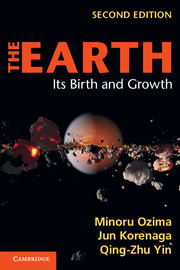
The Earth
A clear understanding of the Earth's past evolution can provide the key to its possible future development. The Earth: Its Birth and Growth explores the evolution of the Earth over 4.6 billion years using basic reasoning and simple illustrations to help explain the underlying physical and chemical principles and major processes involved. Fully updated and revised, this rigorous but accessible second edition includes three completely new chapters. It incorporates exciting developments in isotope geology, placing results within a wider framework of Earth evolution and plate tectonics. Some background in physics and chemistry is assumed, but basic theories and processes are explained concisely in self-contained sections. Key research papers and review articles are fully referenced. This book is ideal as supplementary reading for undergraduate and graduate students in isotope geochemistry, geodynamics, plate tectonics and planetary science. It also provides an enjoyable overview of Earth's evolution for professional scientists and general readers.
eBook

Noble Gas Geochemistry
Noble Gas Geochemistry discusses the fundamental concepts of using noble gases to solve problems in the earth and planetary sciences. The discipline offers a powerful and unique tool in resolving problems such as the origin of the solar system, evolution of the planets, earth formation, mantle evolution and dynamics, atmospheric degassing and evolution, ocean circulation, dynamics of aquifer systems, and numerous applications to other geological problems. This book gives a comprehensive description of the physical chemistry and cosmochemistry of noble gases, before leading on to applications for problem-solving in the earth and planetary sciences. There have been many developments in the use of the noble gases since publication of the first edition of this book in 1983. This second edition has been fully revised and updated. The book will be invaluable to graduate students and researchers in the earth and planetary sciences who use noble gas geochemistry techniques.
eBook


Toward understanding early Earth evolution: Prescription for approach from terrestrial noble gas and light element records in lunar soils
Because of the almost total lack of geological record on the Earth's surface before 4 billion years ago, the history of the Earth during this period is still enigmatic. Here we describe a practical approach to tackle the formidable problems caused by this lack. We propose that examinations of lunar soils for light elements such as He, N, O, Ne, and Ar would shed a new light on this dark age in the Earth's history and resolve three of the most fundamental questions in earth science: the onset time of the geomagnetic field, the appearance of an oxygen atmosphere, and the secular variation of an Earth-Moon dynamical system.
Journal Article

Early-onset hepatic veno-occlusive disease after liver transplantation: an institutional experience and analysis of a literature-based cohort
Purpose
Hepatic veno-occlusive disease (HVOD) after liver transplantation (LT) is almost always a fatal complication. We assessed the outcomes of HVOD in a single institute and analyzed a literature-based cohort.
Methods
We reviewed the medical records of recipients of LT performed between 1995 and 2020 at our institute and the literature on HVOD after LT. We then analyzed the clinical features based on a “pooled” cohort of cases identified in our institute and reported in the literature.
Results
HVOD was diagnosed in 3 of 331 LT recipients, all of whom died in hospital, on days 164, 12, and 13, respectively. Our comprehensive review of the literature, as well as our cases, identified eight cases of HVOD that developed within 14 days after LT (early-onset type). Early-onset HVOD had a significantly worse prognosis than HVOD that developed beyond 2 weeks after LT (non-early-onset type), which was identified in 22 cases (25.0% vs. 86.1% of the 3-month graft survival rate). The most common causes of early-onset and non-early-onset types were acute cellular rejection (50%) and drug-induced disease (50%), respectively.
Conclusion
Early-onset HVOD developing within 14 days after LT has a poor prognosis.
Journal Article

Characterization of spatial distribution of tumor-infiltrating CD8+ T cells refines their prognostic utility for pancreatic cancer survival
The abundance of cytotoxic T-cell infiltrates has important implications for patient outcome and therapeutic design for pancreatic ductal adenocarcinoma. However, intratumoral heterogeneity remains a challenge to understanding the complex immune microenvironment. We hypothesized that characterizing CD8
+
cell distribution within pancreatic adenocarcinoma tissues might refine the prognostic value of tumor-infiltrating CD8
+
lymphocytes. Using multiplex immunohistochemistry-based image analysis on whole-tissue sections of 214 pancreatic ductal adenocarcinomas, we measured CD8
+
cell densities in the tumor center, the tumor margin, and the whole tumor, along with the proximity of CD8
+
cells to carcinoma cells. Multivariable Cox regression analysis was performed to assess the associations of CD8
+
cell densities with pancreatic cancer-specific survival, adjusting for clinicopathologic and immune-related features, including tumor expressions of TP53, SMAD4, and the programmed cell death 1 ligand 1 (CD274, PD-L1) and the extent of tertiary lymphoid structures. There was substantial heterogeneity in CD8
+
cell density, with the mean density in the tumor center less than half that in the tumor margin. Tumor CD274 expression and extensive tertiary lymphoid structures were appeared to be associated with higher CD8
+
cell density in the tumor margin (
P
= 0.037 and
P
= 0.005, respectively), but not with that in the tumor center (
P
> 0.50). The association of higher CD8
+
cell density with prolonged survival was significant for the whole tumor (
P
trend
= 0.009); however, the association was stronger for the tumor center (
P
trend
= 0.002) and insignificant for the tumor margin (
P
trend
= 0.07). Tumor cell–CD8
+
cell distance correlated strongly with CD8
+
cell density, whereas the density of CD8
+
cells proximate to cancer cells exhibited no prognostic association. In conclusion, spatial computational analysis on pancreatic ductal adenocarcinoma reveals the prognostic validity of CD8
+
cell density in the tumor center, where CD8
+
cell infiltration is ununiformly restricted, likely suggesting pro-tumorigenic roles of the immunosuppressive tumor microenvironment of pancreatic cancer.
Journal Article

Cholangiolocellular Component Predicts a Biologically Distinct Subgroup of Mass‐Forming Intrahepatic Cholangiocarcinoma
Cholangiolocellular carcinoma (CLC) is a histopathological variant of primary liver tumor with unique morphologies, and intrahepatic cholangiocarcinomas (iCCAs) frequently contain a CLC component; however, the biological characteristics of iCCA with CLC remain undescribed. In this study, 36 mass‐forming iCCAs (MF‐iCCAs), histologically small‐duct type iCCA, were classified into CLC(+) iCCAs and CLC(−) iCCAs by the presence/absence of the CLC component. Two genetic subgroups were generated using highly expressed genes in CLC(+) iCCA and CLC(−) iCCA. As the results of clinicopathological and genetic analyses, CLC(+) iCCA had better overall survival and upregulation of stromal‐ and oxidation‐related genes, whereas CLC(−) iCCA showed upregulation of proliferation‐ and hypoxia‐related genes. Two genetic subgroups of iCCA were identified: iCCA‐G1, which was related to CLC, and iCCA‐G2, which was unrelated to CLC. iCCA‐G1 comprised all 14 CLC(+) iCCAs [CLC(+)G1] and 7 of 19 CLC(−) iCCAs [CLC(−)G1], whereas iCCA‐G2 was composed only of CLC(−) iCCAs [CLC(−)G2]. CLC(+)G1 and CLC(−)G1 exhibited similar patterns of somatic gene alterations compared with CLC(−)G2. Angiogenesis‐related genes were upregulated in CLC(+)G1, and the number of tumor vessels was larger in CLC(+)G1, followed by CLC(−)G1, compared with CLC(−)G2. Further, SPP1 (encoding osteopontin) was identified as a highly expressed angiogenesis‐related gene in CLC(+) iCCA. Immunohistochemical expression of osteopontin was high in CLC(+) iCCA, showing apical and/or cytoplasmic expression patterns, which should facilitate the histopathological classification of iCCA‐G1 and iCCA‐G2. CLC component is useful for predicting a distinct genetic subgroup of MF‐iCCA with better prognosis, high angiogenesis, and different gene alteration patterns, indicating different carcinogenic pathways of MF‐iCCA.
Journal Article

Morphometrical evaluation of the choriocapillaris imaged by swept-source optical coherence tomography angiography
To assess the reproducibility of quantitative morphometrical evaluation of the choriocapillaris imaged with swept-source optical coherence tomography angiography (SS-OCTA).
This observational, cross-sectional case series included 35 eyes of healthy individuals and 32 eyes of 32 patients. Two images of the fovea were taken using SS-OCTA with 3×3 mm squares. Images of the choriocapillaris within 800×800 pixel squares centered at the fovea were analyzed morphometrically using open-source software \"AngioTool\" that applies a Gaussian recursive filter and multiscale Hessian enhancement. This program's vessel thickness and intensity parameters can be changed to aid vessel detection. We measured the pairs of images per eye with different parameter sets and calculated the intraclass correlation (ICC) for the morphometrical results. After determining the parameters that produced high reproducibility, we evaluated regional variations in 800×800 pixel mm squares within the fovea.
The ICCs for vessel area, total vessel length, vessel diameter index, and mean lacunarity were over 0.9 using the parameters of \"vessel thickness\" 3-4 and intensity 15 in the group including all subjects. When measurements were performed using these same parameter values, the vessel density and mean vessel diameter index were 60.5% and 19.1±0.389, respectively. Vessel density, vessel length, vessel diameter index, and mean lacunarity did not change significantly within an 800×800 pixel square centered at the fovea except for the 200×200 pixel square at the foveal center.
SS-OCTA images of the choriocapillaris can be measured with high reproducibility by morphometrical evaluation using open-source software with multiscale Hessian enhancement. Such automated morphometric analysis can provide an objective evaluation of the choriocapillaris.
Journal Article

Optimal Indications for Additional Resection of the Invasive Cancer-Positive Proximal Bile Duct Margin in Cases of Advanced Perihilar Cholangiocarcinoma
Background
The survival benefits of additional resection of the positive proximal ductal margin in cases of perihilar cholangiocarcinoma remain to be elucidated. The purpose of this retrospective study was to clarify the optimal indications for additional resection of the invasive cancer-positive proximal ductal margin (PM)
Methods
All patients who underwent hepatectomy for perihilar cholangiocarcinoma between 2000 and 2011 were analyzed. Surgical variables, the status of the PM, prognostic factors, and survival were evaluated.
Results
A total of 224 patients were enrolled. Additional resection was performed in 52 of 75 positive PMs of invasive cancer, resulting in 43 negative PMs. The survival of patients with a negative PM treated with additional resection (
n
= 43) was significantly worse than that of the patients with a negative PM treated without additional resection (
n
= 149;
P
= 0.031) and did not significantly differ from that of the patients with a positive PM (
n
= 32;
P
= 0.215). A multivariate analysis demonstrated that the carbohydrate antigen 19-9 (CA19-9) level (<64 or ≥64), combined vascular resection, pN, pM, the histological grade, perineural invasion, liver invasion, and R status were independent prognostic factors. Only in the subgroups of CA19-9 < 64 and pM0, the survival of the patients with a negative PM treated with additional resection was significantly better than that of the patients with a positive PM (
P
= 0.019 and
P
= 0.021, respectively).
Conclusions
Additional resection of the invasive cancer-positive PMs may be warranted only in limited patients with a lower level of CA19-9 and no distant metastatic disease.
Journal Article