
Catalogue Search | MBRL


Are you sure you want to remove the book from the shelf?

{{itemTitle}}
104
result(s) for
"Ophir, Adi"
Sort by:
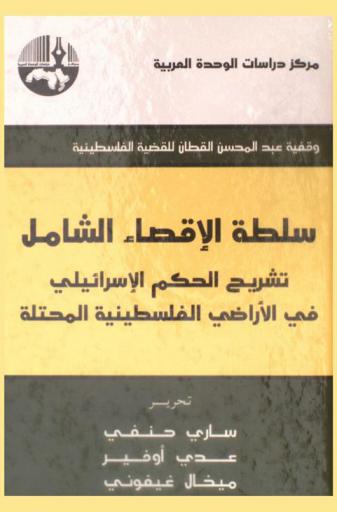
سلطة الإقصاء الشامل : تشريع الحكم الإسرائيلي في الأراضي الفلسطينية المحتلة
يضع هذا الكتاب بين يدي القارئ العربي وصانعي القرار مجموعة هامة من الأبحاث حول الاحتلال الإسرائيلي أدواته وتحولاته وصيرورته المستمرة، ويتناول مواضيع شتى من الصعب تبويبها ووضعها تحت يافطات جاهزة ؛ فبعضها يركز على أساليب السيطرة (الزراعة والاقتصاد والحركة) والبعض الآخر يتمحور حول التحولات العميقة في طريقة التحكم في المناطق المحتلة (مثل التحول إلى العنف المكشوف وسياسة الأغتيالات والتحول إلى البيروقراطية الكولونيالية والتحول من الاحتلال إلى سياسة الفصل) في حين أن البعض الآخر يركز على الجانب الإسرائيلي للاحتلال.
Book

On the Structural Role and Coming End of “The Occupation”
[...]the main debate that divided the Israeli-(Jewish) political system since 1967 was not whether but where to build new settlements.\\n But one should also note how the same discussion and the concerns for the majoritarian project, which it explicitly articulates, tacitly frames the Israeli map and regime of separations that allows ongoing colonization. [...]alongside the violent externalization of Gaza, this project has recently come to consist of precisely this discursive delinking.
Journal Article
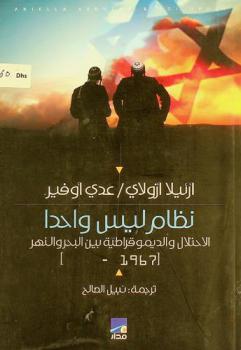
نظام ليس واحدا : الاحتلال والديموقراطية بين البحر والنهر 1967-
يرصد الكتاب حقيقة أنه وبعد أربعة عقود على الاحتلال يواصل الجميع، تقريبا إن كان ذلك في الخطاب السياسي أو حتى في الأوساط الأكاديمية رؤية الاحتلال كحالة مؤقتة ومميز عرضي للنظام الإسرائيلي، ما يضمن تغييب السؤال حول ما إذا كانت إسرائيل مستعدة لوقف حالة الاحتلال، لصالح الحديث عن شروط فعل ذلك وتناول الكتاب \"نظام ليس واحدا\" الاحتلال والديمقراطية بين البحر والنهر الذي ترجمه عن العبرية نبيل الصالح.
Book

Political concepts : a critical lexicon
Deciding what is and what is not political is a fraught, perhaps intractably opaque matter. Just who decides the question; on what grounds; to what ends—these seem like properly political questions themselves. Deciding what is political and what is not can serve to contain and restrain struggles, make existing power relations at once self-evident and opaque, and blur the possibility of reimagining them differently. Political Concepts seeks to revive our common political vocabulary—both everyday and academic—and to do so critically. Its entries take the form of essays in which each contributor presents her or his own original reflection on a concept posed in the traditional Socratic question format “What is X?” and asks what sort of work a rethinking of that concept can do for us now.
The explicitness of a radical questioning of this kind gives authors both the freedom and the authority to engage, intervene in, critique, and transform the conceptual terrain they have inherited. Each entry, either implicitly or explicitly, attempts to re-open the question “What is political thinking?” Each is an effort to reinvent political writing. In this setting the political as such may be understood as a property, a field of interest, a dimension of human existence, a set of practices, or a kind of event. Political Concepts does not stand upon a decided concept of the political but returns in practice and in concern to the question “What is the political?” by submitting the question to a field of plural contention.
The concepts collected in Political Concepts are “Arche” (Stathis Gourgouris), “Blood” (Gil Anidjar), “Colony” (Ann Laura Stoler), “Concept” (Adi Ophir), “Constituent Power” (Andreas Kalyvas), “Development” (Gayatri Spivak), “Exploitation” (Étienne Balibar), “Federation” (Jean Cohen), “Identity” (Akeel Bilgrami), “Rule of Law” (J. M. Bernstein), “Sexual Difference” (Joan Copjec), and “Translation” (Jacques Lezra)
eBook

The one-state condition : occupation and democracy in Israel/Palestine
Since the start of the occupation of Palestinian territories in 1967, Israel's domination of the Palestinians has deprived an entire population of any political status or protection. But even decades on, most people speak of this rule—both in everyday political discussion and in legal and academic debates—as temporary, as a state of affairs incidental and external to the Israeli regime. In The One-State Condition, Ariella Azoulay and Adi Ophir directly challenge this belief.
Looking closely at the history and contemporary formation of the ruling apparatus—the technologies and operations of the Israeli army, the General Security Services, and the legal system imposed in the Occupied Territories—Azoulay and Ophir outline the one-state condition of Israel/Palestine: the grounding principle of Israeli governance is the perpetuation of differential rule over populations of differing status. Israeli citizenship is shaped through the active denial of Palestinian citizenship and civil rights.
Though many Israelis, on both political right and left, agree that the occupation constitutes a problem for Israeli democracy, few ultimately admit that Israel is no democracy or question the very structure of the Israeli regime itself. Too frequently ignored are the lasting effects of the deceptive denial of the events of 1948 and 1967, and the ways in which the resulting occupation has reinforced the sweeping militarization and recent racialization of Israeli society. Azoulay and Ophir show that acknowledgment of the one-state condition is not only a prerequisite for considering a one- or two-state solution; it is a prerequisite for advancing new ideas to move beyond the trap of this false dilemma.
eBook

A True Tree Story
The possibility of trees – those models of standalone creatures – living some kind of communal lives, exchanging messages, collaborating, even caring for each other and for some other creatures felt like good news among so much doomsday prophecy coming from the students of nature. For I know that my mind must have a small drawer for tree memories, a memotrees section, and that sometimes, some real-life trees tell us, humans, real-life stories. A tree that was very special for me, generous to me, was anything but mute, but I was deaf in its presence.
Journal Article

Political Concepts
Deciding what is and what is not political is a fraught, perhaps intractably opaque matter. Just who decides the question; on what grounds; to what ends-these seem like properly political questions themselves. Deciding what is political and what is not can serve to contain and restrain struggles, make existing power relations at once self-evident and opaque, and blur the possibility of reimagining them differently. Political Concepts seeks to revive our common political vocabulary-both everyday and academic-and to do so critically. Its entries take the form of essays in which each contributor presents her or his own original reflection on a concept posed in the traditional Socratic question format \"What is X?\" and asks what sort of work a rethinking of that concept can do for us now.
The explicitness of a radical questioning of this kind gives authors both the freedom and the authority to engage, intervene in, critique, and transform the conceptual terrain they have inherited. Each entry, either implicitly or explicitly, attempts to re-open the question \"What is political thinking?\" Each is an effort to reinvent political writing. In this setting the political as such may be understood as a property, a field of interest, a dimension of human existence, a set of practices, or a kind of event. Political Concepts does not stand upon a decided concept of the political but returns in practice and in concern to the question \"What is the political?\" by submitting the question to a field of plural contention.
The concepts collected in Political Concepts are \"Arche\" (Stathis Gourgouris), \"Blood\" (Gil Anidjar), \"Colony\" (Ann Laura Stoler), \"Concept\" (Adi Ophir), \"Constituent Power\" (Andreas Kalyvas), \"Development\" (Gayatri Spivak), \"Exploitation\" (Étienne Balibar), \"Federation\" (Jean Cohen), \"Identity\" (Akeel Bilgrami), \"Rule of Law\" (J. M. Bernstein), \"Sexual Difference\" (Joan Copjec), and \"Translation\" (Jacques Lezra)
eBook

The One-State Condition
Since the start of the occupation of Palestinian territories in 1967, Israel's domination of the Palestinians has deprived an entire population of any political status or protection. But even decades on, most people speak of this rule—both in everyday political discussion and in legal and academic debates—as temporary, as a state of affairs incidental and external to the Israeli regime. In The One-State Condition, Ariella Azoulay and Adi Ophir directly challenge this belief. Looking closely at the history and contemporary formation of the ruling apparatus—the technologies and operations of the Israeli army, the General Security Services, and the legal system imposed in the Occupied Territories—Azoulay and Ophir outline the one-state condition of Israel/Palestine: the grounding principle of Israeli governance is the perpetuation of differential rule over populations of differing status. Israeli citizenship is shaped through the active denial of Palestinian citizenship and civil rights. Though many Israelis, on both political right and left, agree that the occupation constitutes a problem for Israeli democracy, few ultimately admit that Israel is no democracy or question the very structure of the Israeli regime itself. Too frequently ignored are the lasting effects of the deceptive denial of the events of 1948 and 1967, and the ways in which the resulting occupation has reinforced the sweeping militarization and recent racialization of Israeli society. Azoulay and Ophir show that acknowledgment of the one-state condition is not only a prerequisite for considering a one- or two-state solution; it is a prerequisite for advancing new ideas to move beyond the trap of this false dilemma.
eBook

Plato's Invisible Cities
This book offers an original and detailed reading of Plato's Republic, one of the most influential philosophical works in the emergence of Western philosophy. The author discusses the Republic in terms of discursive events and political acts. Plato's act is placed in the context of a politico-discursive crisis in Athens at the end of the fifth and the beginning of the fourth century B.C that gave rise to the dialogue's primary question, that of justice. The originality of Dr. Ophir lies in the way he reconstructs the Republic's different spatial settings - utopian, mythical, dramatic and discursive - using them as the main thread of his interpretation. Against the background of Plato's critique of the organisation of civic-space in the Greek polis, the author relates the spatial settings in the Plato text to each other. This provides a basis for a re-examination of the relationship between philosophy and politics, which Plato's work advocates, and which it actually enacted.
eBook
CONCEPT
Of the many thinkers engaged in conceptual work, only few stop and ask, “What is a concept?” This is the question I wish to explore here. Its form is Socratic, and it first appears in Socrates’s inquiries.
“Philosophers have not been sufficiently concerned with the nature of the concept as philosophical reality,” argue Deleuze and Guattari. “They have preferred to think of it as a given knowledge or representation that can be explained by the [mental] faculties able to form it (abstraction or generalization) or employ it (judgment).” The two then add, “But the concept is not given, it is
Book Chapter