
Catalogue Search | MBRL


Are you sure you want to remove the book from the shelf?

{{itemTitle}}
1,790
result(s) for
"Organisation for Economic Co-operation and Development"
Sort by:


The Ocean Economy in 2030
This report explores the growth prospects for the ocean economy, its capacity for future employment creation and innovation, and its role in addressing global challenges. Special attention is devoted to the emerging ocean-based industries in light of their high growth and innovation potential, and contribution to addressing challenges such as energy security, environment, climate change and food security.The report examines the risks and uncertainties surrounding the future development of ocean industries, the innovations required in science and technology to support their progress, their potential contribution to green growth and some of the implications for ocean management. Finally, and looking across the future ocean economy as a whole, it explores possible avenues for action that could boost its long-term development prospects while managing the use of the ocean itself in responsible, sustainable ways. This book belongs to the OECD Report Series
eBook

Integrating human rights into development : donor approaches, experiences, and challenges
This volume charts donor approaches, experiences, and challenges integrating human rights into development policy. It analyses a range of rationales for donor approaches to human rights and results these have yielded in policies, programmes, and projects.
Book
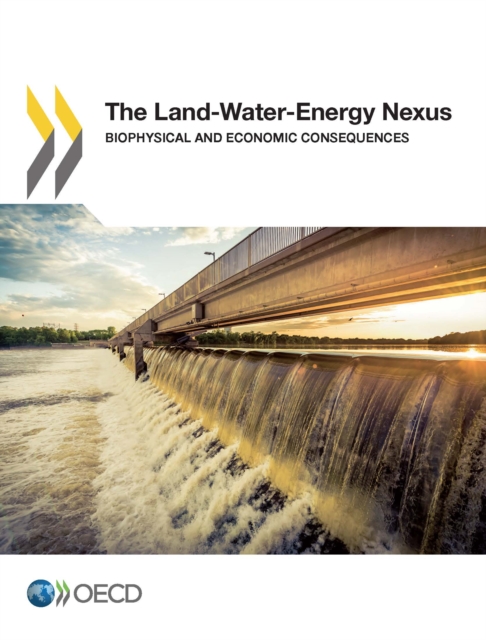
The Land-Water-Energy Nexus
This report contributes to the discussion of interconnections between scarce resources by highlighting the nexus between land, water and energy (the LWE nexus).It focuses on a dynamic, integrated, and disaggregated analysis of how land, water and energy interact in the biophysical and economic systems.
eBook


The Regulatory Control of Radioactive Waste Management
Regulators are major stakeholders in the decision-making process for radioactive waste management. The NEA Radioactive Waste Management Committee (RWMC) has recognised the value of exchanging and comparing information about national regulatory practices and having an informal, international network for discussing issues of common concern. The RWMC Regulators’ Forum provides considerable opportunity for such activities.This report presents the initial results of the Forum’s work. Information is given for 15 NEA member countries in a format that allows easy accessibility to specific aspects and comparison between different countries. It includes an array of facts about national policies for radioactive waste management, institutional frameworks, legislative and regulatory frameworks, available guidance, classification and sources of waste and the status of waste management. It also provides an overview of current issues being addressed and related R&D programmes.
eBook

Education in Saudi Arabia
\"Saudi Arabia has embarked upon an unprecedented reform agenda known as Vision 2030, which aims to create a dynamic, diverse and sustainable economy. To meet the demands of a 21st century, knowledge-based labour market, Saudi Arabia must develop a highly-skilled population, which puts education at the centre of Vision 2030. Saudi Arabia has made tremendous progress in expanding access to education and has achieved universal enrollment rates at primary and lower secondary levels. Nevertheless, most young Saudi Arabians leave school without having mastered the basic competences needed for success in future academic and professional endeavours. There are also widening disparities between students in terms of their access to high quality education and their subsequent learning outcomes. This review, developed in co-operation with the Ministry of Education of Saudi Arabia, analyses the strengths and challenges of the country's education system and makes recommendations to help improve student learning. It will be of interest to policy makers in Saudi Arabia and international audiences who wish to learn about the country's ambitious reform efforts.\"--Page 4 of cover.
BOOK
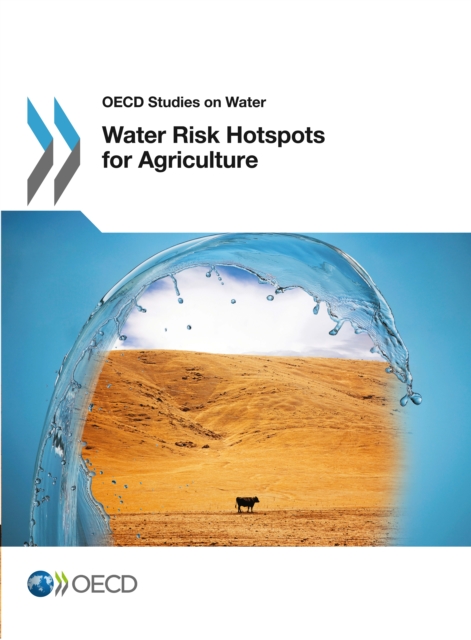
Water risk hotspots for agriculture
Agriculture is expected to face increasing water risks that will impact production, markets, trade and food security - risks that can be mitigated with targeted policy actions on water hotspots.This report develops the hotspot approach, provides an application at the global scale, and presents a mitigation policy action plan.
eBook

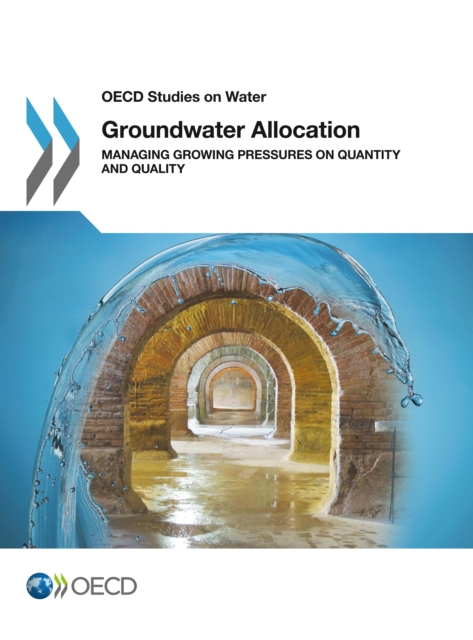
Groundwater allocation : managing growing pressures on quantity and quality
Groundwater allocation determines who is able to use groundwater resources, how, when and where. It directly affects the value (economic, ecological, socio-cultural) that individuals and society obtain from groundwater, today and in the future. Building on the 2015 OECD publication Water Resources Allocation: Sharing Risks and Opportunities, this report focuses on groundwater and how its allocation can be improved in terms of economic efficiency, environmental effectiveness and social equity. Drawing on an analysis of groundwater’s distinctive features and nine case studies of groundwater allocation in a range of countries, the report provides practical policy guidance for groundwater allocation in the form of a \"health check\". This health check can be used to assess the performance of current arrangements and manage the transition towards improved allocation.
eBook