
Catalogue Search | MBRL


Are you sure you want to remove the book from the shelf?

{{itemTitle}}
4
result(s) for
"Oros, Andrew, author"
Sort by:

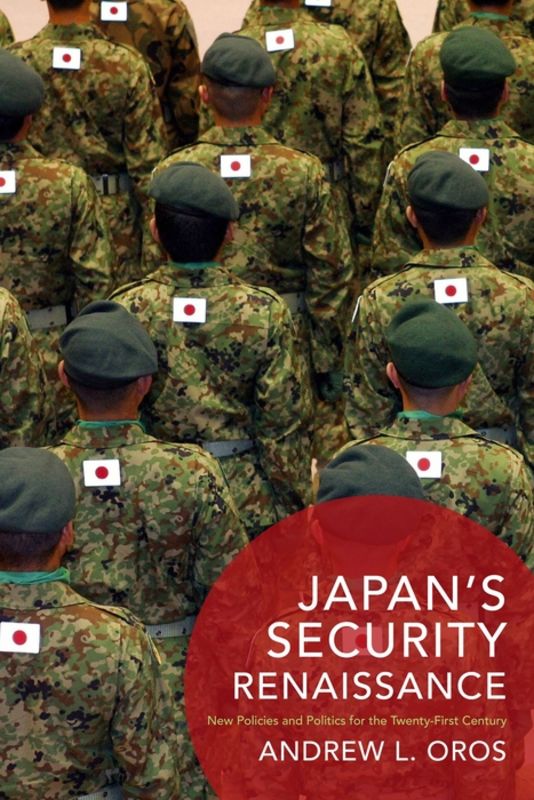
Japan's Security Renaissance
For decades after World War II, Japan chose to focus on soft power and economic diplomacy alongside a close alliance with the United States, eschewing a potential leadership role in regional and global security. Since the end of the Cold War, and especially since the rise of Prime Minister Shinzo Abe, Japan's military capabilities have resurged. In this analysis of Japan's changing military policy, Andrew L. Oros shows how a gradual awakening to new security challenges has culminated in the multifaceted \"security renaissance\" of the past decade.
Despite openness to new approaches, however, three historical legacies-contested memories of the Pacific War and Imperial Japan, postwar anti-militarist convictions, and an unequal relationship with the United States-play an outsized role. InJapan's Security RenaissanceOros argues that Japan's future security policies will continue to be shaped by these legacies, which Japanese leaders have struggled to address. He argues that claims of rising nationalism in Japan are overstated, but there has been a discernable shift favoring the conservative Abe and his Liberal Democratic Party. Bringing together Japanese domestic politics with the broader geopolitical landscape of East Asia and the world,Japan's Security Renaissanceprovides guidance on this century's emerging international dynamics.
eBook
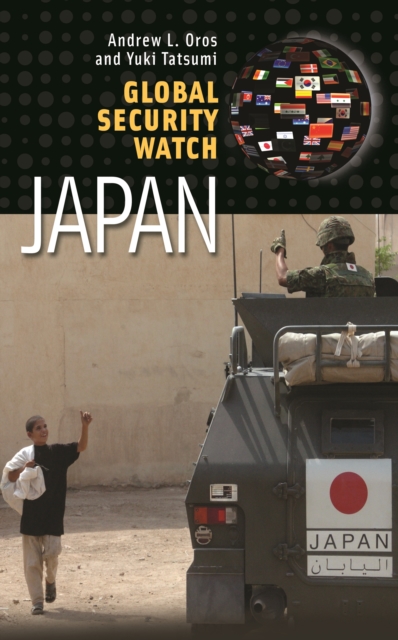
Global security watch, Japan
This book offers a comprehensive overview of Japan's national security institutions and policy today, including a detailed discussion of Japan's regional security environment and its alliance with the United States in the context of the Democratic Party of Japan's rise to power in August 2009. 2010 marks the 50th anniversary of the revision of the U.S.-Japan Security Treaty, making Japan one of the United States's longest and most important military allies. Over 40,000 US troops are based in Japan, as is the only U.S. aircraft carrier based outside the United States, the USS George Washington. Japan possesses one of the world's largest economies and strongest military forces, and as a result, its national security policies and institutions are highly significant—not just to America, but to the rest of the global community as well. This book provides an overview of Japan's transformation into one of the world's most capable military powers over the past 150 years. Particular attention is paid to developments in the past decade, such as the 2009 change in the controlling political party and Japan's responses to new global security threats.
eBook
Normalizing Japan : politics, identity, and the evolution of security practice
Normalizing Japan seeks to answer the question of what future direction Japan's military policies are likely to take, by considering how policy has evolved since World War II, and what factors shaped this evolution. It argues that Japanese security policy has not changed as much in recent years as many believe, and that future change also will be highly constrained by Japan's long-standing \"security identity,\" the central principle guiding Japanese policy over the past half-century. Oros' analysis is based on detailed exploration of three cases of policy evolution—restrictions on arms exports, the military use of outer space, and cooperation with the United States on missile defense—which shed light on other cases of policy change, such as Japan's deployment of its military to Iraq and elsewhere and its recent creation of a Ministry of Defense. More broadly, the book refines how \"ideational\" factors interact with domestic politics and international changes to create policy change.
eBook