
Catalogue Search | MBRL


Are you sure you want to remove the book from the shelf?

{{itemTitle}}
31
result(s) for
"Ostermann, Christian F"
Sort by:

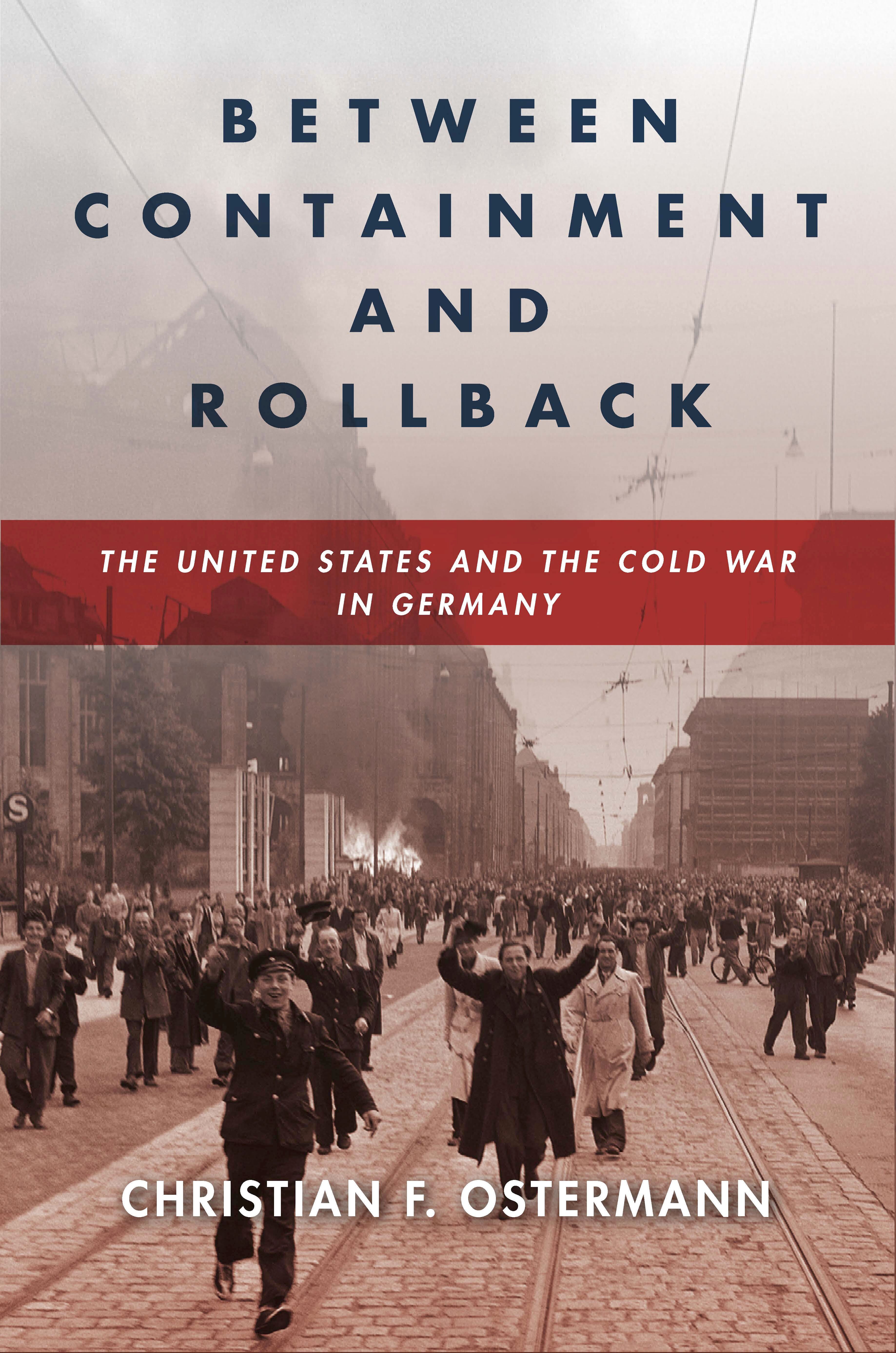
Between containment and rollback : the United States and the Cold War in Germany
In the aftermath of World War II, American policymakers turned to the task of rebuilding Europe while keeping communism at bay. In Germany, formally divided since 1949,the United States prioritized the political, economic, and, eventually, military integration of the fledgling Federal Republic with the West. The extraordinary success story of forging this alliance has dominated our historical under-standing of the American-German relationship. Largely left out of the grand narrative of American–German relations were most East Germans who found themselves caught under Soviet and then communist control by the post-1945 geo-political fallout of the war that Nazi Germany had launched. They were the ones who most dearly paid the price for the country's division. This book writes the East Germans—both leadership and general populace—back into that history as objects of American policy and as historical agents in their own right
Based on recently declassified documents from American, Russian, and German archives, this book demonstrates that U.S. efforts from 1945 to 1953 went beyond building a prosperous democracy in western Germany and \"containing\" Soviet-Communist power to the east. Under the Truman and then the Eisenhower administrations, American policy also included efforts to undermine and \"roll back\" Soviet and German communist control in the eastern part of the country. This story sheds light on a dark-er side to the American Cold War in Germany: propaganda, covert operations, economic pressure, and psychological warfare. Christian F. Ostermann takes an international history approach, capturing Soviet and East German responses and actions, and drawing a rich and complex picture of the early East–West confrontation in the heart of Europe.
eBook

The Cold War
The traces of the Cold War are still visible in many places all around the world. It is the topic of exhibits and new museums, of memorial days and historic sites, of documentaries and movies, of arts and culture. There are historical and political controversies, both nationally and internationally, about how the history of the Cold War should be told and taught, how it should be represented and remembered. While much has been written about the political history of the Cold War, the analysis of its memory and representation is just beginning. Bringing together a wide range of scholars, this volume describes and analyzes the cultural history and representation of the Cold War from an international perspective. That innovative approach focuses on master narratives of the Cold War, places of memory, public and private memorialization, popular culture, and schoolbooks. Due to its unique status as a center of Cold War confrontation and competition, Cold War memory in Berlin receives a special emphasis.
eBook

The Cold War : historiography, memory, representation
\"This volume describes and analyzes the cultural history and representation of the Cold War from an international perspective. That innovative approach focuses on master narratives of the Cold War, places of memory, public and private memorialization, popular culture, and schoolbooks. These general themes are illustrated through a case study of Cold War memory in Berlin, which was a unique former center of Cold War confrontation and competition\"--Provided by publisher.
Book

The Cold War. Historiography, Memory, Representation
This volume describes and analyzes the cultural history and representation of the Cold War from an international perspective. That innovative approach focuses on master narratives of the Cold War, places of memory, public and private memorialization, popular culture, and schoolbooks. These general themes are illustrated through a case study of Cold War memory in Berlin, which was a unique former center of Cold War confrontation and competition.
eBook

Cold War International History Project Bulletin
(ProQuest: ... denotes non-US-ASCII text omitted.) China's \"archival thaw\" is the main subject of this issue of the Cold War International History Project Bulletin. The archives of important political organs such as state ministries, not to mention the Central Archives in Beijing, however, remained inaccessible to independent researchers. Since 2004, the Foreign Ministry of the People's Republic of China has started to partially declassify its records of the 1950s and thus come to complement the previously available materials published by the CCP Central Documents Research Office. The collection is a very helpful resource for courses on CCP politics, Cold War studies and international relations, and will hopefully be continued in future issues.
Journal Article