
Catalogue Search | MBRL


Are you sure you want to remove the book from the shelf?

{{itemTitle}}
40
result(s) for
"Oyebade, Adebayo"
Sort by:

Hot Spot
This book provides an extensive examination of the major conflicts in the extremely volatile region of sub-Saharan Africa and their ramifications throughout the continent and beyond. Conflict has been a critical factor in the making of contemporary Africa, and its study is key to understanding the continent's tortuous history. Hot Spot: Sub-Saharan Africa analyzes the area's major, post-independence conflicts intense enough to threaten national, regional, or international security. This work defines conflict broadly to encompass political instability and state failure, ethno-religious tensions, government and political corruption, economic mismanagement and poverty, cult violence, and youth gangsterism. Thematically organized chapters examine the origins and development of explosive hot spots—including Sudan, Somalia, Rwanda, and Democratic Republic of Congo—in West Africa, Nigeria, Southern Africa, the Horn of Africa and Central Africa, and the Great Lakes region. The book also explores outside factors that have impacted African conflicts, such as superpower Cold War manipulation and foreign influence and intervention.
eBook
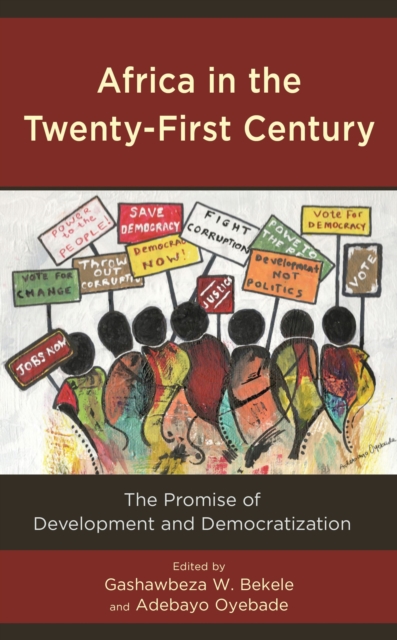
Africa in the twenty-first century : the promise of development and democratization
Written by African scholars on both sides of the Atlantic, explores contemporary debates, controversies, achievements, challenges, and future prospects of African development and democratization from diverse theoretical perspectives.
eBook
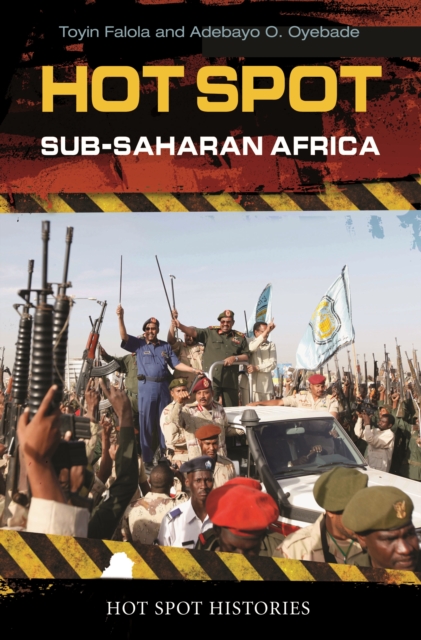
Hot Spot: Sub-Saharan Africa: Sub-Saharan Africa
Conflict has been a critical factor in the making of contemporary Africa, and its study is key to understanding the continent's tortuous history. Hot Spot: Sub-Saharan Africa analyzes the area's major, post-independence conflicts intense enough to threaten national, regional, or international security.This work defines conflict broadly to encompass political instability and state failure, ethno-religious tensions, government and political corruption, economic mismanagement and poverty, cult violence, and youth gangsterism. Thematically organized chapters examine the origins and development of explosive hot spots-including Sudan, Somalia, Rwanda, and Democratic Republic of Congo-in West Africa, Nigeria, Southern Africa, the Horn of Africa and Central Africa, and the Great Lakes region. The book also explores outside factors that have impacted African conflicts, such as superpower Cold War manipulation and foreign influence and intervention.
eBook

Hot Spot
This book provides an extensive examination of the major conflicts in the extremely volatile region of sub-Saharan Africa and their ramifications throughout the continent and beyond.Conflict has been a critical factor in the making of contemporary Africa, and its study is key to understanding the continent's tortuous history.
eBook

The United States and West Africa
Over the last several decades, historians have conducted extensive research into contact between the United States and West Africa during the era of the transatlantic trade. Yet we still understand relatively little about more recent relations between the two areas. This multidisciplinary volume presents the most comprehensive analysis of the U.S.-West African relationship to date, filling a significant gap in the literature by examining the social, cultural, political, and economic bonds that have, in recent years, drawn these two world regions into increasingly closer contact. Beginning with examinations of factors that linked the nations during European colonial rule of Africa, and spanning to discussions of U.S. foreign policy with regard to West Africa from the Cold War through the end of the twentieth century and beyond, these essays constitute the first volume devoted to interrogating the complex relationship - both historic and contemporary - between the United States and West Africa. Contributors: Abdul Karim Bangura, Karen B. Bell, Peter A. Dumbuya, Kwame Essien, Andrew I. E. Ewoh, Toyin Falola, Osman Gbla, John Wess Grant, Stephen A. Harmon, Harold R. Harris, Olawale Ismail, Alusine Jalloh, Fred L. Johnson III, Stephen Kandeh, Ibrahim Kargbo, Bayo Lawal, Ayodeji Olukoju, Adebayo Oyebade, Christopher Ruane, Anita Spring, Ibrahim Sundiata, Hakeem Ibikunle Tijani, Ken Vincent, and Amanda Warnock. Alusine Jalloh is associate professor of history and founding director of The Africa Program at the University of Texas at Arlington. Toyin Falola is the Frances Higginbotham Nalle Centennial Professor in History at the University of Texas at Austin.
eBook
West Africa and the United States in Historical Perspective
During World War II, the exigencies of America's national security caused the forging of new and more enduring relations between the African continent and the United States. What had hitherto been a “dark continent” to many Americans became something of significance to the United States during the war. Yet the history of interactions between the two entities dates back several centuries before the global war of 1939–45. The possibility of pre-Columbian American interaction with the region, particularly with West Africa, has been suggested in the literature, even if it has not been firmly established as fact. But the Atlantic slave trade and the establishment of an American colony, Liberia, on the West African coast, represented more significant epochs in the history of relations between the United States and West Africa. This chapter will situate in historical perspective the centuries of interactions between America and West Africa.West Africa and Pre-Columbian AmericaThe famed Christopher Columbus, the “discoverer” of America, first sailed to the New World in 1492 under the sponsorship of Queen Isabella and King Ferdinand, who had just established the Spanish nation-state through the union of their two independent kingdoms. The age of exploration in Europe was unfolding in the fifteenth century and enterprising adventurers embarked on voyages of discovery. One of the noted architects of European exploration was Prince Henry the Navigator, son of King John I of Portugal. Between 1444 and 1446, Henry, who was never an explorer himself, organized and sponsored a series of voyages along the coast of West Africa that ultimately led to the circumnavigation of Africa and the charting of an oceanic route to the Indies.
Book Chapter


Decolonization and African Society: The Labor Question in French and British Africa
Oyebade reviews \"Decolonization and African Society: The Labor Question in French and British Africa\" by Frederick Cooper.
Book Review