
Catalogue Search | MBRL


Are you sure you want to remove the book from the shelf?

{{itemTitle}}
48
result(s) for
"Palfrey, Simon"
Sort by:

Doing Shakespeare
\"A thoroughly revised edition of the successful student text Doing Shakespeare, first published in 2005. The book's success lies in the close readings it gives students, demystifying the language of the plays and critical approaches to it. The new edition introduces a new way of approaching Shakespeare's text, through ideas of performance and the actor's role and restructures the content to make it easier to navigate. Simon Palfrey takes a direct approach to the common difficulties faced by students 'doing' Shakespeare and tackles them head on in a no-nonsense style which makes the book especially accessible. He bring us much closer to the animate life of the plays, as things that are not finished monuments but living material, in process and up for grabs, empowering students to see opportunities for their own creative or re-creative readings of Shakespeare.\"--Publisher description.
Book
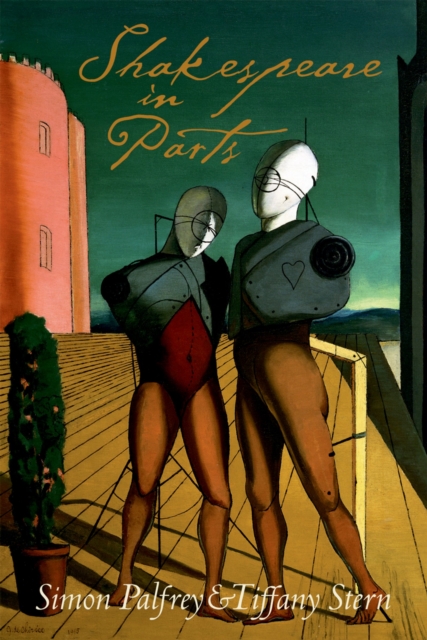
Shakespeare in parts
A combination of original theatre history and literary criticism, this book explores the original form in which Shakespeare's drama circulated. This was not the full play-text; it was not the public performance. It was the actor's part, consisting of the bare cues and speeches of each individual role. With group rehearsals rare or non-existent, the cued part alone had to furnish the actor with his character. But each such part-text was riddled with gaps and uncertainties. The actor knew what he was going to say, but not necessarily when, or why, or to whom; he may have known next to nothing of any other part. It demanded the most sensitive attention to the opportunities inscribed in the script, and to the ongoing dramatic moment. Here is where the young actor Shakespeare learnt his trade; here is where his imagination, verbal and technical, learnt to roam. As Shakespeare developed his playwriting, the apparent limitations of the medium were transformed into expressive opportunities. Both cue and speech become repositories of meaning and movement. Writing always for the same core group of players, Shakespeare could take — and insist upon — unprecedented risks. The result is onstage drama of astonishing immediacy. Starting with a comprehensive history of the part in early modern theatre, this book provides an insight into hitherto forgotten practices and techniques.
eBook


Doing Shakespeare
A thoroughly revised edition of the successful student text Doing Shakespeare, first published in 2005. The book's success lies in the close readings of speeches and scenes it gives students, demystifying the language of the plays and critical approaches to them. This new edition introduces a new way of approaching Shakespeare's text, through ideas of performance and the actor's role and restructures the content to make it easier to navigate, with clear signposting throughout, guiding students to the content most useful to them. Simon Palfrey takes a direct approach to the common difficulties faced by students \"\"doing\"\" Shakespeare and tackles them head-on in a no-nonsense style, making the book especially accessible. He brings us much closer to the animate life of the plays, as things that are not finished monuments but living material, in process and up for grabs, empowering students to see opportunities for their own creative or re-creative readings of Shakespeare.
eBook

Shakespeare's possible worlds
\"New methods are needed to do justice to Shakespeare. His work exceeds conventional models, past or present, for understanding playworlds. In this book, Simon Palfrey goes right to the heart of early modern popular drama, recovering both how it works and why it matters. Unlike his contemporaries, Shakespeare gives independent life to all of his instruments, and to every fraction and fragment of the plays. Palfrey terms these particles \"formactions\" - theatre-specific forms that move with their own action and passion. Palfrey's book is critically daring both in substance and format. It unique mix of imaginative gusto, thought-experiments, and virtuosic technique generates piercing close readings of the plays. There is far more to playlife than meets the eye. Influenced by Leibniz's visionary original model of possible worlds, this book opens up the multiple worlds of Shakespeare's language, scenes and characters as never before\"-- Provided by publisher.
Book

Attending to Tom
[...]Tom, irrupting from the straw like some charged birth. Whom the foule fiend hath led through Fire, and through Flame, through Sword, and Whirle-Poole, o're Bog, and Quagmire, that hath laid Kniues vnder his Pillow, and Halters in his Pue, set Rats-bane by his Porredge, made him Proud of heart, to ride on a Bay trotting Horse, ouer foure incht Bridges, to course his owne shadow for a Traitor.
Journal Article

