
Catalogue Search | MBRL


Are you sure you want to remove the book from the shelf?

{{itemTitle}}
346
result(s) for
"Palit, Amitendu"
Sort by:


Will India's Disengaging Trade Policy Restrict It from Playing a Greater Global Role?
India's ambition of playing a prominent role in regional and global affairs has been particularly visible since the assumption of office by Prime Minister Narendra Modi in May 2014. The ambition has resulted in India's external engagement, abandoning the posturing of non-alignment for a more proactive multi-alignment strategy. Its efforts to engage with major powers such as the US and China, as well as other global middle powers such as Japan, the UK, and Australia, have been positioned on rapid economic progress, enabled by one of the fastest rates of growth among major economies. Attempts to expand global strategic influence, a natural outcome of robust economic expansion, should have seen India pursuing an aggressive outward-oriented external trade policy for increasing its share in global trade. India, though, has shown a marked resistance to open trade, including being reluctant to engage in regional and bilateral trade negotiations. This paper examines the dichotomy between India's desire to play a prominent global role and its aversion to open trade policies. Attributing the inward-looking approach to lack of competitiveness of Indian industry, absence of domestic pro-trade constituencies, and discomfort in negotiating new-generation trade issues, the paper argues India's quest for greater global strategic influence might be adversely affected by its restrictive trade policies.
Journal Article

China–India Economics
A review of the existing literature on the China-India comparative theme conveys the distinct impression that the literature largely projects China and India as intrinsically competitive entities. While much has been written on where and why China and India are contesting, particularly from a political sense, very little attention has been devoted to mutual collaboration, whether existing or potential. Such possibilities are at their greatest in economics, which will dominate the future China-India relationship.This book explores Sino-Indian ties from a comparative economic perspective and argues that it is erroneous to visualise the ties either from exclusively competitive or collaborative perspectives. The future relationship between the two countries will be characterised simultaneously by two C s: competition and collaboration, which are both linked to common challenges facing them. Arguing that while competition in the economic sphere is inevitable, given their size and aspirations, the book contends that negative externalities from competition will encourage both countries to collaborate and expand the scope of such collaboration. The book's refreshing angle makes it a must-read for those interested in Sino-Indian relationship.
eBook

Modi's three years: Cheers and challenges
It has been more than three years since Narendra Modi, India's 15th prime minister, guided the Bharatiya Janata Party (BJP)-led National Democratic Alliance to a spectacular victory in the parliamentary elections in May 2014. Modi's tenure has been under the spotlight, largely due to his contrasting successes and failures.
Journal Article

South Asia in the new decade
At the beginning of the second decade of the new millennium, South Asia has emerged as a key regional variable in the contemporary global order. The last decade saw the region experiencing a robust phase of economic growth and development. Over time, South Asia's economic progress is expected to accelerate, given its favourable demography and strategic location. The prospects of faster economic growth and development, however, will materialize depending upon the region's success in handling various challenges including security, climate change, political instability and ethnic strife. It is in this context that the Sixth International Conference on South Asia brought together academics and policy specialists to provide insights and contribute to an understanding of the challenges and prospects facing the region in the new decade. This volume is a collection of the papers presented at the Conference and assembles a large and diverse set of viewpoints and perceptions on the region.
eBook

China-India Economics
A review of the existing literature on the China-India comparative theme conveys the distinct impression that the literature largely projects China and India as intrinsically competitive entities. While much has been written on where and why China and India are contesting, particularly from a political sense, very little attention has been devoted to mutual collaboration, whether existing or potential. Such possibilities are at their greatest in economics, which will dominate the future China-India relationship.
This book explores Sino-Indian ties from a comparative economic perspective and argues that it is erroneous to visualise the ties either from exclusively competitive or collaborative perspectives. The future relationship between the two countries will be characterised simultaneously by two 'C's: competition and collaboration, which are both linked to common challenges facing them. Arguing that while competition in the economic sphere is inevitable, given their size and aspirations, the book contends that negative externalities from competition will encourage both countries to collaborate and expand the scope of such collaboration. The book's refreshing angle makes it a must-read for those interested in Sino-Indian relationship.
eBook

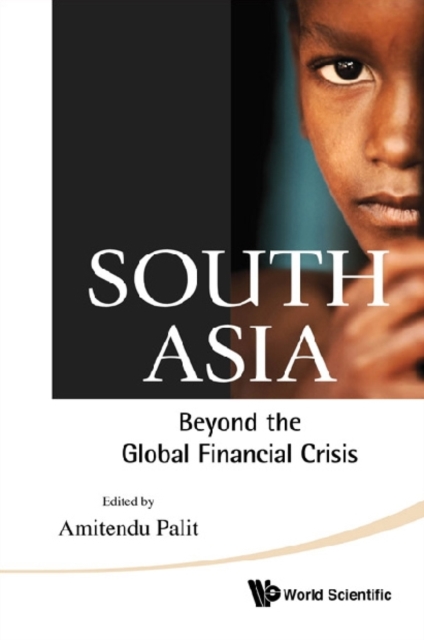
South Asia
The book is an edited volume of different perspectives on the South Asian region and captures the political, social and economic challenges facing the region following the financial crisis and the region's responses to these challenges.
eBook

INDIA’S ACT EAST POLICY AND IMPLICATIONS FOR SOUTHEAST ASIA
The Indian Prime Minister Narendra Modi announced the upgrading of India's erstwhile Look East Policy to a more action-oriented Act East strategy at the India -- ASEAN summit in Myanmar in November 2014. Since then, much debate and discussion has taken place on the nature and content of the strategy. A large part of the debate has been speculative, since India is yet to come out with an official vision statement for it. However, various pronouncements by India, as well as the shifting pattern of its engagement with countries to its East, are beginning to throw greater light on the strategy. This article discusses the features of the strategy as discernible till now and emphasizes its geographic scope and strategic depth. It discusses the specific relevance and implications of the Act East strategy for Southeast Asia. While India's engagement with ASEAN is likely to become more comprehensive and strategic over time, the region would need to be prepared for the implications of India playing a more active role in regional affairs.
Journal Article