
Catalogue Search | MBRL


Are you sure you want to remove the book from the shelf?

{{itemTitle}}
26
result(s) for
"Palmer, R. Barton, 1946-"
Sort by:


French literature on screen
This collection presents new essays in the complex field of French
literary adaptation. Using a variety of textual and interpretive
approaches, it sheds light on issues of gender, sexuality, class,
politics and social conventions while acknowledging a range of
contexts, from the commercial to the archival and the aesthetic.
The chapters, written by eminent international scholars, run
chronologically from The Count of Monte Cristo through
Proust and Bonjour, Tristesse to Philippe Djian's
Oh… (adapted for the screen as Elle ).
Collectively, they fill a need for contemporary discussions on the
significance of France's literary representations in the history of
global cinema.
eBook

Rule, Britannia! : the biopic and British national identity
\"Rule, Britannia! surveys the British biopic, a genre crucial to understanding how national cinema engages with the collective experience and values of its intended audience. The volume focuses on how screen biographies of prominent figures in British history and culture can be understood as involved, if unofficially, in the shaping and promotion of an ever-protean national identity. The contributors engage with the vexed concept of British nationality, especially as this sense of collective belonging is problematized by the ethnically oriented alternatives of English, Scottish, Welsh, and Irish nations. They explore the critical and historiographical issues raised by the biopic, demonstrating that celebration of conventional virtue is not the genre's only natural subject. The chapters cover filmic depictions of such personalities as Elizabeth I, Victoria, George VI, Elizabeth II, Margaret Thatcher, Iris Murdoch, and Jack the Ripper. Rule, Britannia! offers a provocative take on an aspect of filmmaking with profound cultural significance\"-- Provided by publisher.
Book

An Introduction to the Sagas of Icelanders
Combining an accessible approach with innovative scholarship, An Introduction to the Sagas of Icelanders provides up-to-date perspectives on a unique medieval literary genre that has fascinated the English-speaking world for more than two centuries. Carl Phelpstead draws on historical context, contemporary theory, and close reading to deepen our understanding of Icelandic saga narratives about the island's early history. Phelpstead explores the origins and cultural setting of the genre, demonstrating the rich variety of oral and written source traditions that writers drew on to produce the sagas. He provides fresh, theoretically informed discussions of major themes such as national identity, gender and sexuality, and nature and the supernatural, relating the Old Norse-Icelandic texts to questions addressed by postcolonial studies, feminist and queer theory, and ecocriticism. He then presents readings of select individual sagas, pointing out how the genre's various source traditions and thematic concerns interact. Including an overview of the history of English translations that shows how they have been stimulated and shaped by ideas about identity, and featuring a glossary of critical terms, this book is an essential resource for students of the literary form. A volume in the series New Perspectives on Medieval Literature: Authors and Traditions, edited by R. Barton Palmer and Tison Pugh
eBook


Autism in Film and Television
Global awareness of autism has skyrocketed since the 1980s, and
popular culture has caught on, with film and television producers
developing ever more material featuring autistic characters.
Autism in Film and Television brings together more than a
dozen essays on depictions of autism, exploring how autistic
characters are signified in media and how the reception of these
characters informs societal understandings of autism.
Editors Murray Pomerance and R. Barton Palmer have assembled a
pioneering examination of autism's portrayal in film and
television. Contributors consider the various means by which autism
has been expressed in films such as Phantom Thread,
Mercury Rising , and Life Animated and in
television and streaming programs including Atypical ,
Stranger Things , Star Trek: The Next Generation ,
and Community . Across media, the figure of the brilliant,
accomplished, and \"quirky\" autist has proven especially appealing.
Film and television have thus staked out a progressive position on
neurodiversity by insisting on screen time for autism but have done
so while frequently ignoring the true diversity of autistic
experience. As a result, this volume is a welcome celebration of
nonjudgmental approaches to disability, albeit one that is still
freighted with stereotypes and elisions.
eBook


International Noir
Examines the influence of noir on global cinema Early audiences were drawn to the experimental lighting effects, oblique camera angles, distorted compositions, and shifting points-of-view of film noir.International noir continues to appeal on a global scale, because no other cinematic form has merged style and genre to effect a vision of the disturbing consequences of modernity. In fact, various national cinemas now boast an indigenous expression of the genre and other cinematic genres continue to rely upon film noir's narrative structure and visual style, as evidenced by noir Westerns and noir Science Fiction. This collection of essays examines noir's influence on film narrative and technique in the ceinematic traditions of Britain, France, Scandinavia, Japan, China and Korea.
eBook
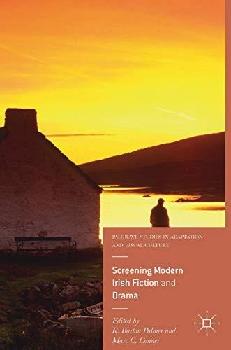
Screening modern Irish fiction and drama
This book offers the first comprehensive discussion of the relationship between Modern Irish Literature and the Irish cinema, with twelve chapters written by experts in the field that deal with principal films, authors, and directors. This survey outlines the influence of screen adaptation of important texts from the national literature on the construction of an Irish cinema, many of whose films because of cultural constraints were produced and exhibited outside the country until very recently. Authors discussed include George Bernard Shaw, Oscar Wilde, Liam O?Flaherty, Christy Brown, Edna O?Brien, James Joyce, and Brian Friel. The films analysed in this volume include THE QUIET MAN, THE INFORMER, MAJOR BARBARA, THE GIRL WITH GREEN EYES, MY LEFT FOOT, THE PICTURE OF DORIAN GRAY, THE SNAPPER, and DANCING AT LUGHNASA. The introduction features a detailed discussion of the cultural and political questions raised by the promotion of forms of national identity by Ireland?s literary and cinematic establishments.
Book

An Introduction to Jean Bodel
Bringing the work of a highly influential medieval
French writer to English-speaking audiences for the first
time
This book explores the life and works of Jean Bodel, an
influential author who lived in twelfth-century Arras, France. A
versatile poet, playwright, and epic writer who established new
genres such as fabliaux and the mystery play, Bodel remains
relatively unknown to Anglophone audiences. Lynn Ramey offers
translations and summaries of works never published before in
English while delving into Bodel's historical and cultural
context.
After a brief introduction to the poet, Ramey highlights the
stimulating and cosmopolitan environment of Arras, considering the
influence of the Crusades and social movements in shaping Bodel's
works. Next, Ramey provides an extensive survey of all of Bodel's
known writing across his prolific career by genre, from his most
well-known work, The Play of Saint Nicholas ( Le Jeu de
saint Nicolas ), to his final piece, Farewell ( Les
Congés ), which offers important insight into his diagnosis of
leprosy toward the end of his life. Ramey translates several pieces
including pastourelles , fabliaux, and selections from the
Song of the Saxons ( Chanson des Saisnes ). The
book also includes information on Bodel's sources, a chronology,
and a glossary.
With much of the existing scholarship on Bodel only available in
French, this book bridges a gap in knowledge of the poet and serves
as a useful resource for both students and specialists. An
Introduction to Jean Bodel allows a broader audience to engage
with the writer's wide-ranging work and contributions to literary
history.
A volume in the series New Perspectives on Medieval Literature:
Authors and Traditions, edited by R. Barton Palmer and Tison
Pugh
eBook