
Catalogue Search | MBRL


Are you sure you want to remove the book from the shelf?

{{itemTitle}}
16
result(s) for
"Palmer, R. Barton, 1946- editor"
Sort by:

Rule, Britannia! : the biopic and British national identity
\"Rule, Britannia! surveys the British biopic, a genre crucial to understanding how national cinema engages with the collective experience and values of its intended audience. The volume focuses on how screen biographies of prominent figures in British history and culture can be understood as involved, if unofficially, in the shaping and promotion of an ever-protean national identity. The contributors engage with the vexed concept of British nationality, especially as this sense of collective belonging is problematized by the ethnically oriented alternatives of English, Scottish, Welsh, and Irish nations. They explore the critical and historiographical issues raised by the biopic, demonstrating that celebration of conventional virtue is not the genre's only natural subject. The chapters cover filmic depictions of such personalities as Elizabeth I, Victoria, George VI, Elizabeth II, Margaret Thatcher, Iris Murdoch, and Jack the Ripper. Rule, Britannia! offers a provocative take on an aspect of filmmaking with profound cultural significance\"-- Provided by publisher.
Book

International Noir
Examines the influence of noir on global cinema Early audiences were drawn to the experimental lighting effects, oblique camera angles, distorted compositions, and shifting points-of-view of film noir.International noir continues to appeal on a global scale, because no other cinematic form has merged style and genre to effect a vision of the disturbing consequences of modernity. In fact, various national cinemas now boast an indigenous expression of the genre and other cinematic genres continue to rely upon film noir's narrative structure and visual style, as evidenced by noir Westerns and noir Science Fiction. This collection of essays examines noir's influence on film narrative and technique in the ceinematic traditions of Britain, France, Scandinavia, Japan, China and Korea.
eBook


Autism in Film and Television
Global awareness of autism has skyrocketed since the 1980s, and
popular culture has caught on, with film and television producers
developing ever more material featuring autistic characters.
Autism in Film and Television brings together more than a
dozen essays on depictions of autism, exploring how autistic
characters are signified in media and how the reception of these
characters informs societal understandings of autism.
Editors Murray Pomerance and R. Barton Palmer have assembled a
pioneering examination of autism's portrayal in film and
television. Contributors consider the various means by which autism
has been expressed in films such as Phantom Thread,
Mercury Rising , and Life Animated and in
television and streaming programs including Atypical ,
Stranger Things , Star Trek: The Next Generation ,
and Community . Across media, the figure of the brilliant,
accomplished, and \"quirky\" autist has proven especially appealing.
Film and television have thus staked out a progressive position on
neurodiversity by insisting on screen time for autism but have done
so while frequently ignoring the true diversity of autistic
experience. As a result, this volume is a welcome celebration of
nonjudgmental approaches to disability, albeit one that is still
freighted with stereotypes and elisions.
eBook


French literature on screen
This collection presents new essays in the complex field of French
literary adaptation. Using a variety of textual and interpretive
approaches, it sheds light on issues of gender, sexuality, class,
politics and social conventions while acknowledging a range of
contexts, from the commercial to the archival and the aesthetic.
The chapters, written by eminent international scholars, run
chronologically from The Count of Monte Cristo through
Proust and Bonjour, Tristesse to Philippe Djian's
Oh… (adapted for the screen as Elle ).
Collectively, they fill a need for contemporary discussions on the
significance of France's literary representations in the history of
global cinema.
eBook
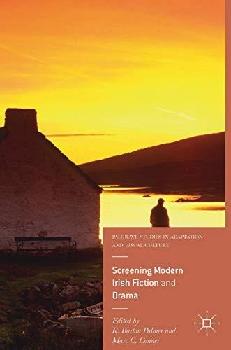
Screening modern Irish fiction and drama
This book offers the first comprehensive discussion of the relationship between Modern Irish Literature and the Irish cinema, with twelve chapters written by experts in the field that deal with principal films, authors, and directors. This survey outlines the influence of screen adaptation of important texts from the national literature on the construction of an Irish cinema, many of whose films because of cultural constraints were produced and exhibited outside the country until very recently. Authors discussed include George Bernard Shaw, Oscar Wilde, Liam O?Flaherty, Christy Brown, Edna O?Brien, James Joyce, and Brian Friel. The films analysed in this volume include THE QUIET MAN, THE INFORMER, MAJOR BARBARA, THE GIRL WITH GREEN EYES, MY LEFT FOOT, THE PICTURE OF DORIAN GRAY, THE SNAPPER, and DANCING AT LUGHNASA. The introduction features a detailed discussion of the cultural and political questions raised by the promotion of forms of national identity by Ireland?s literary and cinematic establishments.
Book

Allegory and the Poetic Self
The rise of an influential new family of poetry in the
Middle Ages
This book is the first collective examination of late medieval
intimate first-person narratives that blur the lines between
author, narrator, and protagonist and usually feature
personification allegory and courtly love tropes, creating an
experimental new family of poetry. In this volume, contributors
analyze why the allegorical first-person romance embedded itself in
the vernacular literature of Western Europe and remained popular
for more than two centuries.
The editors identify and discuss three predominant forms within
this family: debate poetry, dream allegories, and autobiographies.
Contributors offer textual analyses of key works from late medieval
German, French, Italian, and Iberian literature, with discussion of
developments in England, as well.
Allegory and the Poetic Self offers a sophisticated,
theoretically current discussion of relevant literature. This
exploration of medieval \"I\" narratives offers insights not just
into the premodern period but also into Western literature's
subsequent traditions of self-analysis and identity crafting
through storytelling.
eBook


Modern British Drama on Screen
This collection of essays offers the first comprehensive treatment of British and American films adapted from modern British plays. Offering insights into the mutually profitable relationship between the newest performance medium and the most ancient. With each chapter written by an expert in the field, Modern British Drama on Screen focuses on key playwrights of the period including George Bernard Shaw, Somerset Maugham, Terence Rattigan, Noel Coward and John Osborne and the most significant British drama of the past century from Pygmalion to The Madness of George III. Most chapters are devoted to single plays and the transformations they underwent in the move from stage to screen. Ideally suited for classroom use, this book offers a semester's worth of introductory material for the study of theater and film in modern Britain, widely acknowledged as a world center of dramatic productions for both the stage and screen.
eBook