
Catalogue Search | MBRL


Are you sure you want to remove the book from the shelf?

{{itemTitle}}
45
result(s) for
"Pandya, Vishvajit"
Sort by:

In the forest
There are always at least two 'histories' of encounter or contact, as each party would tell the story differently, but where and when is it really the 'first contact' and for whom? This book deploys an analytical framework developed from Semiotics to have both sides of the story address each other. It is ethnography of dialogue, emerging from textual representation by outsiders and its relationship to visual response and presentations by the Andaman Islanders that this book aims to present as the critical 'ethnography of history. The section on Visuality looks at how the \"Other\" is incorporated into an organized knowledge-system, including Ongee myths and songs about outsiders and the early photographs of tribal people by British settlers and ethnographers. The section on Materiality concerns the investment in things made, to influence natural processes or to distinguish the human body, and discusses how they are transacted between cultures that come into contact. The concluding section on history addresses encounters and developments in which the experiences of both tribal and settler are implicated more thoroughly than in the transaction of objects. Thus juxtaposing alternative perspectives on change indicates areas of experience unaccounted for in the dominant discourse and shows the provisionality of images.
eBook
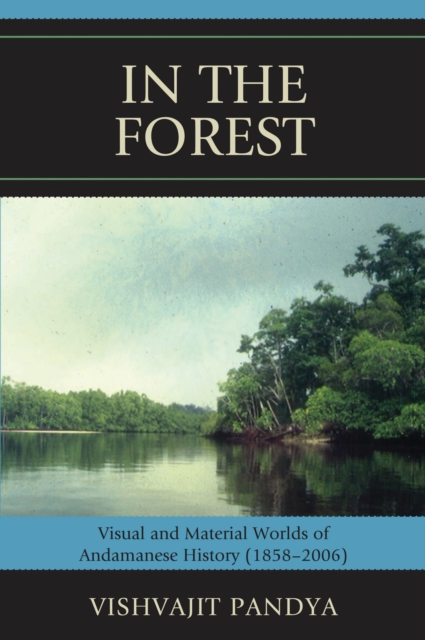
In the forest : visual and material worlds of Andamanese history, 1858-2006
There are always at least two 'histories' of encounter or contact, as each party would tell the story differently, but where and when is it really the 'first contact' and for whom? This book deploys an analytical framework developed from Semiotics to have both sides of the story address each other. It is ethnography of dialogue, emerging from textual representation by outsiders and its relationship to visual response and presentations by the Andaman Islanders that this book aims to present as the critical 'ethnography of history.' The section on Visuality looks at how the 'Other' is incorporated into an organized knowledge-system, including Ongee myths and songs about outsiders and the early photographs of tribal people by British settlers and ethnographers. The section on Materiality concerns the investment in things made, to influence natural processes or to distinguish the human body, and discusses how they are transacted between cultures that come into contact. The concluding section on history addresses encounters and developments in which the experiences of both tribal and settler are implicated more thoroughly than in the transaction of objects. Thus juxtaposing alternative perspectives on change indicates areas of experience unaccounted for in the dominant discourse and shows the provisionality of images.
eBook

Time to move: winds and the political economy of space in Andamanese culture
Seasons, or temporal duration, for Andamanese are created by the flow of winds through the Andamanese cultural construct of space, which is neither fixed nor constant. In order to organize the space for society, Andaman islanders have to move constantly out from the place where the winds are. Winds associated with temperamental spirits are powerful aspects of nature that culture has to negotiate. Within this worldview where winds affect individual body condition and the capacity to continue hunting and gathering, Andaman islanders negotiate space by creating conditions that invite winds to structure and sustain life. For this purpose, smells are ritualized and wind movements are manipulated. As a result, seasons are distinguished either by winds that are spirit-given, or by a lack of winds caused by islanders' actions. Based on ethnographic data from the Ongees and jarwas, this analysis will focus on how various forms of movement in Andamanese culture are negotiated according to a political economy of winds and smells. The worldview of the Andaman islanders, within which winds are so central, has major implications for government authorities, who are keen to confine the translocating Jarwas to a specific and permanent location. But is this possible for the Andamanese, for whom space, like time, changes by the presence and absence of winds? / Dans la culture des îles Andaman, les saisons (où la durée temporelle) sont créés par la circulation des vents à travers la construction culturelle de l'espace, qui n'est ni fixe ni constante. Afin d'organiser l'espace pour la société, les insulaires des Andaman doivent constamment quitter le lieu où se trouvent les vents. Associés à des esprits capricieux, les vents sont des aspects puissants de la nature, avec lesquels la culture doit composer. Dans cette vision du monde, où les vents affectent l'état physique des individus et leur capacité de continuer à chasser et à récolter, les insulaires des Andaman négocient l'espace afin de créer des conditions invitant les vents à structurer et maintenir la vie. Dans ce but, les odeurs sont ritualisées et les mouvements du vent sont manipulés. Les saisons sont ainsi distinguées soit par la présence des vents, accordée par les esprits, soit par leur absence, qui résulte des actions des insulaires. Sur la base des données ethnographiques recueillies chez les Ongi et les Jarwa, l'auteur concentre son analyse sur la manière dont différentes formes de déplacements dans la culture des Andaman sont négociées selon l'économie politique des vents et des odeurs. La vision du monde des insulaires des Andaman, dans laquelle les vents jouent un rôle central, a d'importantes implications pour les autorités gouvernementales : celles-ci cherchent à sédentariser les Jarwa migrateurs à un emplacement spécifique et permanent, mais cela est-il possible pour ces insulaires, pour lesquels l'espace, comme le temps, changent selon la présence ou l'absence des vents?
Journal Article
Time to move: winds and the political economy of space in Andamanese culture
ABSTRACT IN ENGLISH: Seasons, or temporal duration, for Andamanese are created by the flow of winds through the Andamanese cultural construct of space, which is neither fixed nor constant. In order to organize the space for society, Andaman islanders have to move constantly out from the place where the winds are. Winds associated with temperamental spirits are powerful aspects of nature that culture has to negotiate. Within this worldview where winds affect individual body condition and the capacity to continue hunting and gathering, Andaman islanders negotiate space by creating conditions that invite winds to structure and sustain life. For this purpose, smells are ritualized and wind movements are manipulated. As a result, seasons are distinguished either by winds that are spirit-given, or by a lack of winds caused by islanders' actions. Based on ethnographic data from the Ongees and Jarwas, this analysis will focus on how various forms of movement in Andamanese culture are negotiated according to a political economy of winds and smells. The worldview of the Andaman islanders, within which winds are so central, has major implications for government authorities, who are keen to confine the translocating Jarwas to a specific and permanent location. But is this possible for the Andamanese, for whom space, like time, changes by the presence and absence of winds? // ABSTRACT IN FRENCH: Dans la culture des îles Andaman, les saisons (où la durée temporelle) sont créées par la circulation des vents à travers la construction culturelle de l'espace, qui n'est ni fixe ni constante. Afin d'organiser l'espace pour la société, les insulaires des Andaman doivent constamment quitter le lieu où se trouvent les vents. Associés à des esprits capricieux, les vents sont des aspects puissants de la nature, avec lesquels la culture doit composer. Dans cette vision du monde, où les vents affectent l'état physique des individus et leur capacité de continuer à chasser et à récolter, les insulaires des Andaman négocient l'espace afin de créer des conditions invitant les vents à structurer et maintenir la vie. Dans ce but, les odeurs sont ritualisées et les mouvements du vent sont manipulés. Les saisons sont ainsi distinguées soit par la présence des vents, accordée par les esprits, soit par leur absence, qui résulte des actions des insulaires. Sur la base des données ethnographiques recueillies chez les Ongi et les Jarwa, l'auteur concentre son analyse sur la manière dont différentes formes de déplacements dans la culture des Andaman sont négociées selon l'économie politique des vents et des odeurs. La vision du monde des insulaires des Andaman, dans laquelle les vents jouent un rôle central, a d'importantes implications pour les autorités gouvernementales: celles-ci cherchent à sédentariser les Jarwa migrateurs à un emplacement spécifique et permanent, mais cela est-il possible pour ces insulaires, pour lesquels l'espace, comme le temps, changent selon la présence ou l'absence des vents? Reprinted by permission of the Royal Anthropological Institute of Great Britain and Ireland
Journal Article

Through Lens and Text: Constructions of a ‘Stone Age’ Tribe in the Andaman Islands
The inhabitants of the North Sentinel Islands in the Bay of Bengal have for long been described as one of the last surviving Stone Age tribes of the world. The ‘truth value’ of this assertion has been reinforced over time through a complex and often collusive representational order sustained by for instance the institutions of the Indian state, the global media, travel writers, anthropologists and the non-tribal communities of the Andaman Islands. This paper examines the visual and textual practices that constitute this representational order and pits against it the historical and ethnographic realities that render it vulnerable to radical inquiry. With its critical focus on the truth-bearing propensities of photographic images and their accompanying texts, this paper seeks to interrogate received ethnographic certitudes about an imputed Stone Age people and ponders the possibilities of acknowledging them as historical actors.
Journal Article

Making Sense of the Andaman Islanders: Reflections on a New Conjuncture
The inclusion of Andaman islanders in the \"indigenous\" slot by academics and activists coupled with recent studies on the colonial history of the islands has generated a new conjuncture in academic engagement with these peoples. This paper seeks to understand the significance of this conjuncture in the context of larger debates around the disciplinary reassessment of tribal studies in contemporary India. By focusing closely on the implications of framing the Andaman islanders within the discourse of \"indigeneity\", this paper explores the possibilities opened up by the ongoing conversations in the field of adivasi studies.
Journal Article

Contacts, images and imagination; The impact of a road in the Jarwa reserve forest, Andaman Islands
According to Portman, the Andamanese asserted that they objected to the jungle being cleared.4 The prisoners who cleared the forest and made paths through it often worked with North Andamanese tribal guides. [...]Enmey's structure of events pertaining to his treatment in Port Blair has constiruted and structured the history of contact as practised by Jarwas. [...]as foragers, Jarwas have been subject to rapid changes since early colonial occupation of the islands (Mouat 1863; Portman 1899; Radcliffe-Brown 1964: 10-9; Ritchie 1787). The above-mentioned Enmey who was detained in Port Blair hospital for five months is an individual who has frequently brought other Jarwas out of the forest into Port Blair. [...]I asked Enmey and his close associates, who have spent considerable time in Port Blair and have conducted roadside contacts, 'What attracted Jarwas to the road and to Port Blair?' For Jarwas the hospital, the road to the hospital, the trees in the forest, the road in the forest, and all the interconnecting paths were constantly referred to as trees {pepeyh) of different places.
Journal Article

SACRIFICE AND ESCAPE AS COUNTER-HEGEMONIC RITUALS: A Structural Essay on an Aspect of Andamanese History
The effects of Indian national history/mythology & local history on the development of a historical consciousness in the people of the Andaman Islands are examined. Two narratives of colonial prisoners who escaped from the British colonial prison in the Andamans illustrate how sacrifice comprises a central component of present-day Andaman historical consciousness, with the escape narratives perceived as acts of individual sacrifice. The tendency for Andaman Islanders to connect these examples of sacrifice with narratives from Indian history & mythology is discussed. It is contended that the association of escape & sacrifice results in the creation of a conceptual order that permits individuals to return to escaped-from places. It is concluded that these rituals of escape & sacrifice challenged the hegemonic authority of the British colonials by acknowledging the existence of different historical structures. 2 Figures, 77 References. J. W. Parker
Journal Article