
Catalogue Search | MBRL


Are you sure you want to remove the book from the shelf?

{{itemTitle}}
29
result(s) for
"Panel on Information Technology"
Sort by:
An Assessment of the National Institute of Standards and Technology Information Technology Laboratory
Since 1959, the National Research Council (NRC), at the request of the National Institute of Standards and Technology (NIST), has annually assembled panels of experts to assess the quality and effectiveness of the NIST measurements and standards laboratories. In 2011, the NRC evaluated three of the six NIST laboratories: the Center for Nanoscale Science and Technology (CNST), the NIST Center for Neutron Research (NCNR) and the Information Technology Laboratory (ITL). Each of these was addressed individually by a separate panel of experts; this report assesses ITL.
eBook

An Assessment of the National Institute of Standards and Technology Information Technology Laboratory
An Assessment of the National Institute of Standards and Technology Information Technology Laboratory evaluates The Information Technology Laboratory (ITL) of the National Institute of Standards and Technology (NIST). Six divisions of the laboratory were visited and reviewed. The scope of the assessment includes the following criteria: (1) the technical merit of the current laboratory programs relative to current state-of-the-art programs worldwide; (2) the adequacy of the laboratory budget, facilities, equipment, and human resources, as they affect the quality of the laboratory's technical programs; and (3) the degree to which the laboratory programs in measurement science and standards achieve their stated objectives and desired impact. Based on the assessment, and using these criteria, the book outlines several observations and recommendations for ITL.
eBook
An Assessment of the National Institute of Standards and Technology Information Technology Laboratory
The report on the ITL presents a general assessment of the laboratory including a look at its research strategies, opportunities, planning for growth, research culture, and computing infrastructure; and provides assessments of the laboratory's six divisions. The report notes that the work of the ITL generally ranks at or near the top of the work being done by peer institutions.
eBook
Information technology and the conduct of research
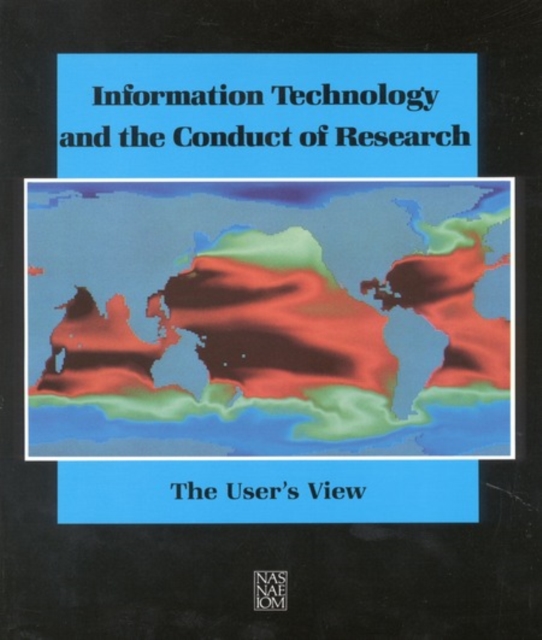
Computers and telecommunications have revolutionized the processes of scientific research. How is this information technology being applied and what difficulties do scientists face in using information technology? How can these difficulties be overcome?Information Technology and the Conduct of Research answers these questions and presents a variety of helpful examples. The recommendations address the problems scientists experience in trying to gain the most benefit from information technology in scientific, engineering, and clinical research.
eBook
Preparing for the Revolution
The rapid evolution of information technology (IT) is transforming our society and its institutions. For the most knowledge-intensive entities of all, research universities, profound IT-related challenges and opportunities will emerge in the next decade or so. Yet, there is a sense that some of the most significant issues are not well understood by academic administrators, faculty, and those who support or depend on the institution's activities. This study identifies those information technologies likely to evolve in the near term (a decade or less) that could ultimately have a major impact on the research university. It also examines the possible implications of these technologies for the research university-its activities (learning, research, outreach) and its organization, management, and financing-and for the broader higher education enterprise. The authoring committee urges research universities and their constituents to develop new strategies to ensure that they survive and thrive in the digital age.
eBook

Assessment Of The National Institute Of Standards And Technology Informatio : Fiscal Year 2011
Since 1959, the National Research Council (NRC), at the request of the National Institute of Standards and Technology (NIST), has annually assembled panels of experts to assess the quality and effectiveness of the NIST measurements and standards laboratories. In 2011, the NRC evaluated three of the six NIST laboratories: the Center for Nanoscale Science and Technology (CNST), the NIST Center for Neutron Research (NCNR) and the Information Technology Laboratory (ITL). Each of these was addressed individually by a separate panel of experts; this report assesses ITL.
eBook

Assessment Of The National Institute Of Standards And Technology Informatio : Fiscal Year 2009
An Assessment of the National Institute of Standards and Technology Information Technology Laboratory evaluates The Information Technology Laboratory (ITL) of the National Institute of Standards and Technology (NIST). Six divisions of the laboratory were visited and reviewed. The scope of the assessment includes the following criteria: (1) the technical merit of the current laboratory programs relative to current state-of-the-art programs worldwide; (2) the adequacy of the laboratory budget, facilities, equipment, and human resources, as they affect the quality of the laboratory's technical programs; and (3) the degree to which the laboratory programs in measurement science and standards achieve their stated objectives and desired impact. Based on the assessment, and using these criteria, the book outlines several observations and recommendations for ITL.
eBook
