
Catalogue Search | MBRL


Are you sure you want to remove the book from the shelf?

{{itemTitle}}
271
result(s) for
"Panitch, Leo"
Sort by:


Whose crisis? Capital, labour and the state today
I am honoured to be giving this lecture in honour of Ted Wheelwright, with whom I feel a strong personal affinity even though we never actually met. Apart from his pioneering work on MNCs and capitalist globalization, on reading Frank Stilwell's obituary of him in 2007 I was especially impressed that he was not only 'an intellectual of unashamedly socialist convictions,' but also that this did not deter him from driving a big old Mercedes on the grounds that this was the only car he could 'fold his tall legs into'. I have myself used this excuse for bourgeois behavior, most pointedly by getting the sponsors of tonight's lecture to pay the airline's charge for a seat with extra legroom on the long flight over here.
Journal Article

Crisis of What?
This sharp question is appropriately thought-provoking. We certainly have been living through a great capitalist crisis, really only the fourth crisis of such scale after the so-called Great Depression of 1873-96, the more familiar Great Depression of the 1930s, and the global stagflation and profitability crisis of the 1970s. The very fact that capitalism survived these earlier crises should warn us away from reverting to the old mistaken notions of economic crises heralding the final breakdown of the system. But could this at least be a major turning point? Is this at least a crisis of neoliberalism? Or of American empire? Or even perhaps of \"globalization\"?
Journal Article
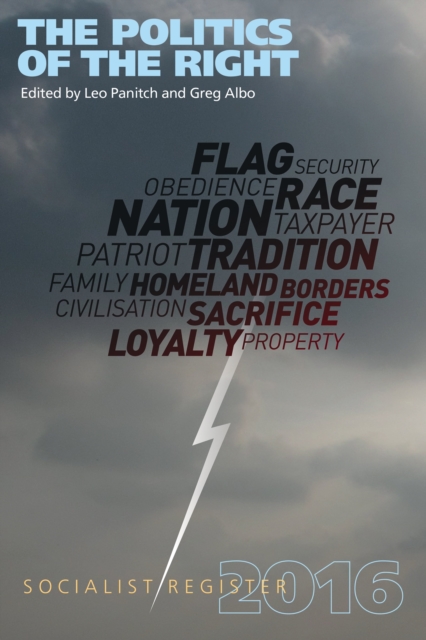
The Politics of the Right
Today the Left faces new challenges from political forces amassing on the radical right. The 52nd volume of the Socialist Register presents a serious calibration and a careful political mapping of these forces. It addresses pivotal questions on the reordering of the new right. These essays - very broad in terms of themes and places - speak to the global challenges the new right poses for the left at this historical moment. * What is the nature of the right's populism, nationalism and militarism? * What is the social base and organizational strength and range of far right political forces? * To what extent are they influencing mainstream parties and opinion? * How have they penetrated state institutions?* What role do state security services and police forces play?* Does our political situation today require comparison with 1930s Fascism? * How should the left respond to defend democratic and human rights?
eBook

Political Economy and Political Power: The American State and Finance in the Neoliberal Era
Understanding the role of the American state in the era of neoliberal finance requires a scale of analysis that can identify not only the domestic but also the international role of the informal empire the US established in the middle of the twentieth century for superintending capitalism on a world scale. This article demonstrates that it was not so much neoliberal ideology that broke the old system of financial regulations, as it was the latter’s increasingly dysfunctional effects as finance outgrew the New Deal incubator through the post-war decades. Through the Bretton Woods crisis and the stagflation of the 1970s, institutional reform in the financial sector became a key dimension of broader competitive capitalist strategies for innovation and expansion. While this certainly involved extensive leveraging and speculation, it met the hedging needs not only of financial institutions but also of the many corporations seeking protection from the rapidly evolving vulnerabilities associated with global trade and investment. Yet the financial volatility that inevitably resulted from those very transformations meant that the Federal Reserve’s function as lender of last resort was increasingly called upon, just as the Treasury came to define its role as that of ‘failure containment’ on a global scale. On the basis of this theoretical and historical perspective, the article analyses the causes and consequences of the 2007–8 financial crisis and the ‘old/new practice of failure containment’ that has characterized the American state’s response to it.
Journal Article
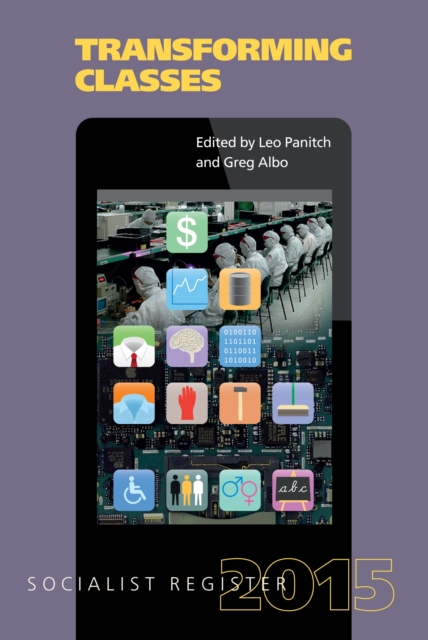
Transforming Classes
For more than half a century, the Socialist Register has brought together some of the sharpest thinkers from around the globe to address the pressing issues of our time. Founded by Ralph Miliband and John Saville in London in 1964, SR continues their commitment to independent and thought-provoking analysis, free of dogma or sectarian positions. Transforming Classes is a compendium of socialist thought today and a clarifying account of class struggle in the early twenty-first-century, from China to the United States.
eBook


ÉTAT, CLASSES ET MONDIALISATION
This paper addresses the alleged contradiction between the international space of accumulation and the national space of states. In particular, it challenges the argument that the internationalization of production directly establishes a transnational capitalist class (TCC) as a coherent and self-conscious social force engaged in the formation of a putative transnational state (TNS). This contention rests on a set of mechanistic understandings of class formation and the role of the capitalist state. Against this, the emphasis here is on the ‘internationalization of the state’ whereby nation states have, in an uneven and asymmetric way, come to take responsibility for promoting, underwriting and superintending a globalizing capitalism, both abroad and within their own domains. The political significance of this distinction is that the attempt to match the advanced internationalization of capital with a parallel internationalization of working class solidarity leads to a misguided internationalism. It mistakenly assumes that the weaknesses of working classes at a national level can be skipped over at an international level, and fails to properly grasp the continuing centrality, even under globalization, of the national-social formation.
Journal Article