
Catalogue Search | MBRL


Are you sure you want to remove the book from the shelf?

{{itemTitle}}
6
result(s) for
"Pappé, Ilan author"
Sort by:


The Forgotten Palestinians
For more than 60 years, hundreds of thousands of Palestinians have lived as Israeli citizens within the borders of the nation formed at the end of the 1948 conflict. Occupying a precarious middle ground between the Jewish citizens of Israel and the dispossessed Palestinians of the West Bank and the Gaza Strip, the Israeli Palestinians have developed an exceedingly complex relationship with the land they call home; however, in the innumerable discussions of the Israel-Palestine problem, their experiences are often overlooked and forgotten.
In this book, historian Ilan Pappé examines how Israeli Palestinians have fared under Jewish rule and what their lives tell us about both Israel's attitude toward minorities and Palestinians' attitudes toward the Jewish state. Drawing upon significant archival and interview material, Pappé analyzes the Israeli state's policy towards its Palestinian citizens, finding discrimination in matters of housing, education, and civil rights. Rigorously researched yet highly readable,The Forgotten Palestiniansbrings a new and much-needed perspective to the Israel-Palestine debate.
eBook
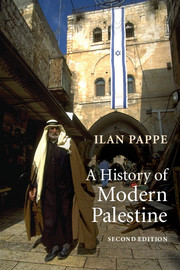
A History of Modern Palestine
Ilan Pappe's book traces the history of Palestine from the Ottomans in the nineteenth century, through the British Mandate, the establishment of the state of Israel in 1948, and the subsequent wars and conflicts which have dominated this troubled region. The second edition of Pappe's book has been updated to include the dramatic events of the 1990s and the early twenty-first century. These years, which began with a sense of optimism, as the Oslo peace accord was being negotiated, culminated in the second intifada and the increase of militancy on both sides. Pappe explains the reasons for the failure of Oslo and the two-state solution, and reflects upon life thereafter as the Palestinians and Israelis battle it out under the shadow of the wall of separation. As in the first edition, it is the men, women and children of Palestine who are at the centre of Pappe's narrative.
eBook

