
Catalogue Search | MBRL


Are you sure you want to remove the book from the shelf?

{{itemTitle}}
172
result(s) for
"Paradis, Michel"
Sort by:

The light of battle : Eisenhower, D-Day, and the birth of the American superpower
\"A thrilling new biography of Dwight Eisenhower set in the months leading up to D-Day, when he grew from a well-liked general into one of the singular figures of American history\"-- Provided by publisher.
Book
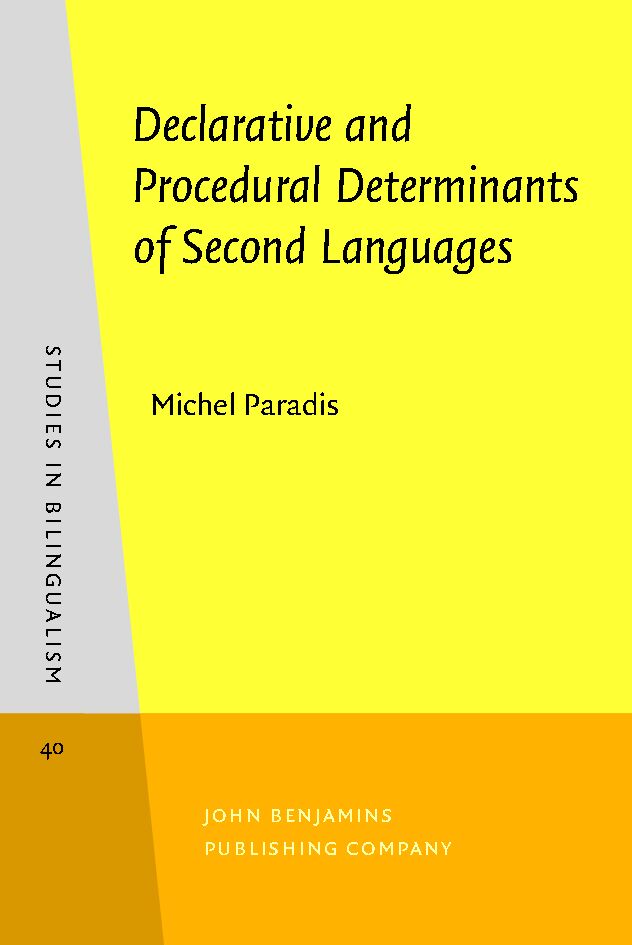
Declarative and Procedural Determinants of Second Languages
This volume is the outcome of the author's observations and puzzlement over seventeen years of teaching English and French as second languages, followed by 30 years of research into the neurolinguistic aspects of bilingualism. It examines, within the framework of a neurolinguistic theory of bilingualism (Paradis, 2004), the crucial and pervasive contributions made by declarative and procedural memory to the appropriation, representation and processing of a second language. This requires careful consideration of a number of concepts associated with issues pertaining to second language research: consciousness, interface, modularity, automaticity, proficiency, accuracy, fluency, intake, ultimate attainment, switching, implicit linguistic competence and explicit metalinguistic knowledge. It is informed by data from a variety of domains, including language pathology, neuroimaging, and, from each side of the fence, practical classroom experience. This book introduces four further proposals within the framework of a neurolinguistic theory of bilingualism: (1) There are two sets of cerebral representations, those that are capable of reaching consciousness and those that are not; implicit grammar is inherently not capable of reaching consciousness. (2) The increased activation observed in neuroimaging studies during the use of a second language is not devoted to the processing of implicit linguistic competence. (3) Intake is doubly implicit. (4) Given the premise that metalinguistic knowledge cannot be converted into implicit competence, there can be no possible interface between the two.
eBook

Rationale and design of the Transcatheter Aortic Valve Replacement to UNload the Left ventricle in patients with ADvanced heart failure (TAVR UNLOAD) trial
Coexistence of moderate aortic stenosis (AS) in patients with heart failure (HF) with reduced ejection fraction is not uncommon. Moderate AS increases afterload, whereas pharmacologic reduction of afterload is a pillar of contemporary HF management.
Unloading the left ventricle by reducing the transaortic gradient with transfemoral transcatheter aortic valve replacement (TAVR) may improve clinical outcomes in patients with moderate AS and HF with reduced ejection fraction.
The TAVR UNLOAD (NCT02661451) is an international, multicenter, randomized, open-label, clinical trial comparing the efficacy and safety of TAVR with the Edwards SAPIEN 3 Transcatheter Heart Valve in addition to optimal heart failure therapy (OHFT) vs OHFT alone in patients with moderate AS (defined by a mean transaortic gradient ≥20 mm Hg and <40 mm Hg, and an aortic valve area >1.0 cm2 and ≤1.5 cm2 at rest or after dobutamine stress echocardiography) and reduced ejection fraction. A total of 600 patients will be randomized in a 1:1 fashion. Clinical follow-up is scheduled at 1, 6, and 12 months, and 2 years after randomization. The primary end point is the hierarchical occurrence of all-cause death, disabling stroke, hospitalizations related to HF, symptomatic aortic valve disease or nondisabling stroke, and the change in the Kansas City Cardiomyopathy Questionnaire at 1 year. Secondary end points capture effects on clinical outcome, biomarkers, echocardiographic parameters, and quality of life.
The TAVR UNLOAD trial aims to test the hypothesis that TAVR on top of OHFT improves clinical outcomes in patients with moderate AS and HF with reduced ejection fraction.
Journal Article

Incidence and Effect of Acute Kidney Injury After Transcatheter Aortic Valve Replacement Using the New Valve Academic Research Consortium Criteria
Acute kidney injury (AKI) is associated with a poor prognosis after transcatheter aortic valve replacement (TAVR). A paucity of data exists regarding the incidence and effect of AKI after TAVR using the new recommended Valve Academic Research Consortium criteria. At Columbia University Medical Center, 218 TAVR procedures (64.2% transfemoral, 35.8% transapical) were performed from 2008 to July 2011. The creatinine level was evaluated daily until discharge. Using the Valve Academic Research Consortium definitions, the 30-day and 1-year outcomes were compared between patients with significant AKI (AKI stage 2 or 3) and those without significant AKI (AKI stage 0 or 1). Significant AKI occurred in 18 patients (8.3%). Of these 18 patients, 10 (55.6%) had AKI stage 3 and 9 (50%) required dialysis. AKI was associated with a lower baseline mean transvalvular gradient (37.6 ± 11.4 vs 45.6 ± 14.8 mm Hg for no AKI, p = 0.03). After TAVR, the AKI group had a greater hemoglobin decrease (3.6 ± 2.0 vs 2.4 ± 1.3 g/dl, p = 0.01), greater white blood cell elevation at 72 hours (21.09 ± 12.99 vs 13.18 ± 4.82 × 10³/μl, p = 0.001), a more severe platelet decrease (118 ± 40 vs 75 ± 43 × 103/μl, p <0.0001), and longer hospitalization (10.7 ± 6.4 vs 7.7 ± 8.5 days, p <0.001). One stroke (5.6%) occurred in the AKI group compared with 3 (1.5%) in the group without AKI (p = 0.29). The 30-day and 1-year rates of death were significantly greater in the AKI group than in the no-AKI group (44.4% vs 3.0%, hazard ratio 18.1, 95% confidence interval 6.25 to 52.20, p <0.0001; and 55.6% vs 16.0%, hazard ratio 6.32, 95% confidence interval 3.06 to 13.10, p <0.0001, respectively). Periprocedural life-threatening bleeding was the strongest predictor of AKI after TAVR. In conclusion, the occurrence of AKI, as defined by the Valve Academic Research Consortium criteria, is associated with periprocedural complications and a poor prognosis after TAVR.
Journal Article

Changes in Coagulation and Platelet Activation Markers Following Transcatheter Left Atrial Appendage Closure
The recommendations for antithrombotic treatment after left atrial appendage closure (LAAC) remain empirical, and no data exist on the changes in hemostatic markers associated with LACC. The objective of the present study is to determine the presence, degree, and timing of changes in the markers of platelet and coagulation activation after LAAC. Forty-three patients (mean age 76 ± 9 years, 23 men) with atrial fibrillation who underwent successful LACC with the Watchman (n = 27) or Amplatzer Cardiac Plug (n = 16) devices were included in the study. Patients received antiplatelet therapy after LAAC (aspirin + clopidogrel: 27 patients; single antiplatelet therapy with aspirin or clopidogrel: 16 patients). Prothrombin fragment 1+2 and thrombin-antithrombin III were used as markers of coagulation activation, and soluble P-selectin and soluble CD40 ligand were used as markers of platelet activation. Measurements of all hemostatic markers were performed at baseline just before the procedure, followed by days 7, 30, and 180 after LAAC. Prothrombin fragment 1+2 and thrombin-antithrombin levels increased from 0.27 nmol/L and 4.68 ng/ml, respectively, at baseline to peak values of 0.43 nmol/L and 9.76 ng/ml, respectively, at 7 days, partially returning to baseline levels at days 30 and 180 after LAAC (p <0.001 for both markers). No clinical or procedural factors were associated with a greater increase in the markers of coagulation activation after LAAC. Levels of soluble P-selectin and soluble CD40 ligand did not change at any time after LAAC. In conclusion, transcatheter LAAC is associated with significant activation of the coagulation system, yet without evidence of significant platelet activation.
Journal Article

Molecular phylogenetics of cool-season grasses in the subtribes Agrostidinae, Anthoxanthinae, Aveninae, Brizinae, Calothecinae, Koeleriinae and Phalaridinae (Poaceae, Pooideae, Poeae, Poeae chloroplast group 1)
Circumscriptions of and relationships among many genera and suprageneric taxa of the diverse grass tribe Poeae remain controversial. In an attempt to clarify these, we conducted phylogenetic analyses of >2400 new DNA sequences from two nuclear ribosomal regions (ITS, including internal transcribed spacers 1 and 2 and the 5.8S gene, and the 3'-end of the external transcribed spacer (ETS)) and five plastid regions (
,
,
,
,
), and of more than 1000 new and previously published ITS sequences, focused particularly on Poeae chloroplast group 1 and including broad and increased species sampling compared to previous studies. Deep branches in the combined plastid and combined ITS+ETS trees are generally well resolved, the trees are congruent in most aspects, branch support across the trees is stronger than in trees based on only ITS and fewer plastid regions, and there is evidence of conflict between data partitions in some taxa. In plastid trees, a strongly supported clade corresponds to Poeae chloroplast group 1 and includes Agrostidinae p.p., Anthoxanthinae, Aveninae s.str., Brizinae, Koeleriinae (sometimes included in Aveninae s.l.), Phalaridinae and Torreyochloinae. In the ITS+ETS tree, a supported clade includes these same tribes as well as Sesleriinae and Scolochloinae. Aveninae s.str. and Sesleriinae are sister taxa and form a clade with Koeleriinae in the ITS+ETS tree whereas Aveninae s.str. and Koeleriinae form a clade and Sesleriinae is part of Poeae chloroplast group 2 in the plastid tree. All species of
are part of Koeleriinae, but the genus is polyphyletic. Koeleriinae is divided into two major subclades: one comprises
,
,
,
,
and
subg. Trisetum, and the other
/
p.p. (multiple species from Mexico to South America),
,
,
,
and
subg.
,
,
and
fall in different clades of Koeleriinae in plastid vs. nuclear ribosomal trees, and are likely of hybrid origin. ITS and
trees identify a third lineage of Koeleriinae corresponding to Trisetum subsect. Sibirica, and affinities of
with respect to Aveninae s.str. and Koeleriinae are incongruent in nuclear ribosomal and plastid trees, supporting recognition of
in its own subtribe. A large clade comprises taxa of Agrostidinae, Brizinae and Calothecinae, but neither Agrostidinae nor Calothecinae are monophyletic as currently circumscribed and affinities of Brizinae differ in plastid and nuclear ribosomal trees. Within this clade, one newly identified lineage comprises
,
,
(Agrostidinae p.p.) and
(Calothecinae p.p.), and another comprises
(Calothecinae p.p.) and
(Agrostidinae p.p.). Within Agrostidinae p.p., the type species of
and
s.str. are closely related, supporting classification of
as a synonym of
s.str. Furthermore, the two species of
are not sister taxa and are nested among different groups of
s.str., supporting their classification in
.
,
and
form a clade and species of each are variously intermixed in plastid and nuclear ribosomal trees. Additionally, all but one species from South America classified in Deyeuxia sect. Stylagrostis resolve in Holcinae p.p. (
). The current phylogenetic results support recognition of the latter species in
, and we also demonstrate
is part of this clade. Moreover, Holcinae is not monophyletic in its current circumscription because
does not form a clade with
and
, which are sister taxa. The results support recognition of
in its own subtribe Aristaveninae. Substantial further changes to the classification of these grasses will be needed to produce generic circumscriptions consistent with phylogenetic evidence. The following 15 new combinations are made: Calamagrostis × calammophila,
, C. breviligulata subsp. champlainensis, C. × don-hensonii,
,
,
, D. chrysantha var. phalaroides,
, D. eminens var. fulva, D. eminens var. inclusa,
,
, and
var.
; the new name
is proposed; the new subtribe Lagurinae is described; and a second-step lectotype is designated for the name
.
Journal Article

Heart failure hospitalization following surgical or transcatheter aortic valve implantation in low‐risk aortic stenosis
Aims In low‐risk patients with severe aortic stenosis (AS), sutureless surgical aortic valve replacement (SU‐SAVR) may be an alternative to transcatheter aortic valve implantation (TAVI). The risk of heart failure hospitalization (HFH) after aortic valve replacement (AVR) in this population is incompletely characterized. This study aims to investigate the incidence, predictors, and outcomes of HFH in patients undergoing SU‐SAVR versus TAVI. Methods and results Patients referred for AVR between 2013 and 2020 at two centres were consecutively included. The decision for SU‐SAVR or TAVI was determined by a multidisciplinary Heart Team. Cox regression and competing risk analysis were conducted to assess adverse events. Of 594 patients (mean age 77.5 ± 6.4, 59.8% male), 424 underwent SU‐SAVR, while 170 underwent TAVI. Following a mean follow‐up of 34.1 ± 23.1 months, HFH occurred in 112 (27.8%) SU‐SAVR patients and in 8 (4.8%) TAVI patients (P < 0.001). The SU‐SAVR cohort exhibited higher all‐cause mortality (138 [32.5%] patients compared with 30 [17.6%] in the TAVI cohort [P < 0.001]). These differences remained significant after sensitivity analyses with 1:1 propensity score matching for baseline variables. SU‐SAVR with HFH was associated with increased all‐cause mortality (61.6% vs. 23.1%, P < 0.001). Independent associates of HFH in SU‐SAVR patients included diabetes, atrial fibrillation, chronic obstructive pulmonary disease, lower glomerular filtration rate and lower left ventricular ejection fraction. SU‐SAVR patients with HFH had a 12‐month LVEF of 59.4 ± 12.7. Conclusions In low‐risk AS, SU‐SAVR is associated with a higher risk of HFH and all‐cause mortality compared to TAVI. In patients with severe AS candidate to SU‐SAVR or TAVI, TAVI may be the preferred intervention. This study compares SU‐SAVR and TAVI in low‐risk patients with severe aortic stenosis (AS), focusing on heart failure hospitalization (HFH). Among 594 patients from 2013 to 2020, 424 underwent SU‐SAVR and 170 TAVI. HFH was significantly higher in SU‐SAVR patients (27.8% vs. 4.8%), who also had higher all‐cause mortality. Factors like diabetes, atrial fibrillation, and lower LVEF increased HFH risk in SU‐SAVR patients. TAVI shows lower HFH and mortality, suggesting it as the preferred intervention for low‐risk AS patients.
Journal Article

Comparison of Hemodynamic Performance of the Balloon-Expandable SAPIEN 3 Versus SAPIEN XT Transcatheter Valve
The SAPIEN 3 valve (S3V) is a new-generation transcatheter valve with enhanced anti-paravalvular leak properties, but no data comparing with earlier transcatheter valve systems are available. We aimed to compare the hemodynamic performance of the S3V and the SAPIEN XT valve (SXTV) in a case-matched study with echo core laboratory analysis. A total of 27 patients who underwent transcatheter aortic valve replacement (TAVR) with the S3V were matched for prosthesis size (26 mm), aortic annulus area, and mean diameter measured by computed tomography, left ventricular ejection fraction, body surface area, and body mass index with 50 patients treated with the SXTV. The prosthesis size was determined by oversizing of 1% to 15% of annulus area. Doppler echocardiographic images collected at baseline and 1-month follow-up were analyzed in a central echocardiography core laboratory. The need for postdilation was higher in the SXTV group (20% vs 4%, p = 0.047), and mean residual gradient and effective orifice area were similar in both groups (p >0.05). The incidence of paravalvular aortic regurgitation was greater with the SXTV (≥mild: 42%, moderate: 8%) than with the S3V (≥mild: 7%, moderate: 0%; p = 0.002 for ≥mild vs SXTV). The implantation of an S3V was the only factor associated with trace or no paravalvular leak after TAVR (p = 0.007). In conclusion, TAVR with the S3V was associated with a very low rate of paravalvular leaks and need for balloon postdilation, much lower than that observed with the earlier generation of balloon-expandable valve (SXTV). The confirmation of these results in a larger cohort of patients will represent a major step forward in using transcatheter valves for the treatment of aortic stenosis.
•Despite major improvements in aortic annulus measurements and valve sizing, the occurrence of paravalvular leaks remains one of the most important challenges of transcatheter aortic valve implantation (TAVI).•The present case-matched study with central echo core laboratory analysis showed a major reduction in the occurrence and severity of residual aortic regurgitation after TAVI with a new-generation balloon-expandable valve with enhanced anti-paravalvular leak properties (SAPIEN 3) compared with an earlier generation transcatheter valve (SAPIEN XT). Also, the SAPIEN 3 valve was associated with a significant reduction in the need for balloon postdilation after TAVI.
Journal Article

Clinical and Technical Characteristics of Coronary Angiography and Percutaneous Coronary Interventions Performed before and after Transcatheter Aortic Valve Replacement with a Balloon-Expandable Valve
Objectives. To report on the feasibility and technical differences between coronary procedures performed before and after TAVR with the balloon-expandable Edwards-SAPIEN or the SAPIEN XT valves. Background. Coronary artery disease (CAD) and aortic stenosis often coexist. Transcatheter aortic valve replacement (TAVR) is emerging as a treatment for younger and lower surgical risk patients who might not present with clinically evident CAD before TAVR. The demand for performing post-TAVR coronary angiograms (CAs) and percutaneous coronary interventions (PCIs) will thus increase, posing new technical challenges. Methods. Over 1000 TAVRs were performed at the Quebec Heart and Lung Institute, of which 616 with the abovementioned valves. Of these, 28 patients had an analyzable pre- and post-TAVR CAs and 13 patients had pre- and post-TAVR PCIs performed. Procedural characteristics were gathered from all coronary procedures and subsequently compared amongst the same type of procedure performed at these two distinct time periods. Results. Neither CAs‐nor PCIs‐performed after valve implantation revealed significant differences regarding arterial access site, catheter diameter, number of diagnostic or guiding catheters used, procedural duration, fluoroscopy time, or achievement of selective coronary injection. Lesion location and classification, as well as the preference of using a drug-eluting stent, remained unchanged. During post-TAVR CA, the amount of contrast delivered and the radiation dose area product were significantly lower compared with pre-TAVR CA values. Conclusions. Performance of CA and PCI after TAVR with a balloon-expandable valve appears unaffected by its presence.
Journal Article

Impact of the Use of Transradial Versus Transfemoral Approach as Secondary Access in Transcatheter Aortic Valve Implantation Procedures
No data exist on the impact of vascular complications related to the secondary access site in transcatheter aortic valve implantation (TAVI). The objectives of this nonrandomized study were to determine the rate of vascular complications related to the secondary access site in TAVI procedures and to evaluate the clinical impact of using the radial versus femoral approach as a secondary access in such procedures. A total of 462 consecutive patients (mean age 79 ± 9 years, 50% men) who underwent TAVI were included. The femoral approach (FA) was used as the secondary access (for the insertion of a 5F pigtail catheter) in 335 patients and the radial approach (RA) in 127 patients. Thirty-day events were prospectively collected. There were no baseline differences between groups, except for a higher prevalence of women and peripheral disease in the FA group (p <0.05 for both). A total of 74 vascular access site complications occurred in 70 patients (15%), and 23% of them (29% in the FA group) were related to the secondary access. The use of FA as secondary access was associated with a higher rate of vascular complications (5.0% vs 0% in the RA group, p = 0.005, adjusted p = 0.014). All major vascular complications related to the secondary access occurred in the FA group (3% vs 0% in the RA group, p = 0.040, adjusted p = 0.049), and this translated into a higher rate of major and/or life-threatening bleeding events related to the secondary access in the FA group (3% vs 0% in the RA group, p = 0.040, adjusted p = 0.049). In conclusion, about 1/4 of vascular access site complications in TAVI are related to the secondary access. The use of the RA as a secondary access was associated with a major reduction in vascular complications. These results highlight the impact of secondary access vascular complications in TAVI procedures and support the use of the RA as the preferred secondary access.
1.This is the first report on vascular complications related to the secondary access in transcatheter aortic valve implantation (TAVI) interventions.2.One fourth of vascular complications in TAVI are related to the secondary access, and this rate increased up to about 1/3 when the femoral approach was used as secondary access.3.The use of the radial approach as secondary access was associated with a reduction in vascular complications and major and/or life-threatening bleeding complications.4.The results of the present study support the use of the radial approach as the first-option secondary access in TAVI procedures.
Journal Article