
Catalogue Search | MBRL


Are you sure you want to remove the book from the shelf?

{{itemTitle}}
22
result(s) for
"Parrillo, Vincent N"
Sort by:


The National Social Distance Study: Ten Years Later
The Bogardus social distance scale, which measures the level of acceptance that Americans feel toward members of the most common ethnic and racial groups in the United States, was administered six times nationally between 1920 and 2001. Replicating the most recent study with its revised list of ethnic and racial groups, the authors of this study analyzed a stratified random sample of 3,166 college students, making it the largest national social distance study ever conducted. The findings indicate an increase since 2001 in the mean level of social distance toward all ethnic groups, as well as in the spread between the groups with the highest and lowest levels of social distance. Further, a consistency between studies in group preferences reaffirms the relevance of the similarity-attraction bond in accepting those who are racially and culturally different. Mean comparisons and analysis of variance tests also showed that gender, birthplace of respondents and/or their parents, race, and year in college are all significant indicators of the level of social distance toward groups.
Journal Article
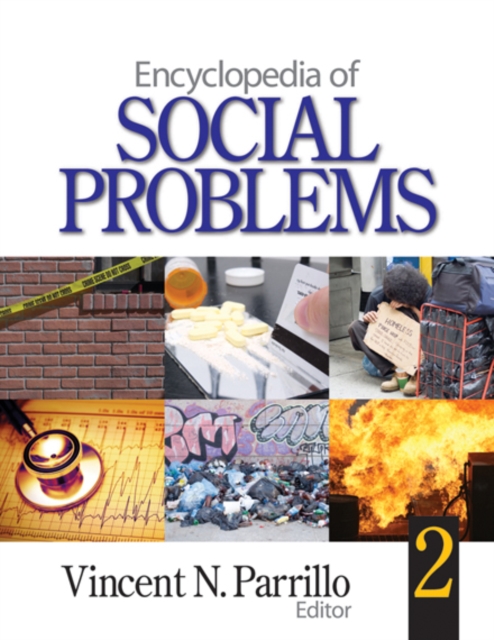
Encyclopedia of social problems
From terrorism to social inequality and from health care to environmental issues, social problems affect us all. The Encyclopedia will offer an interdisciplinary perspective into these and many other social problems that are a continuing concern in our lives, whether we confront them on a personal, local, regional, national, or global level.
eBook
Response to Mulvey and Richards
In this response to Mulvey & Richards assertions about the value of the Race Relations Project (RRP), the commentator argues that the approach of getting participants to move beyond the usual scripted responses & into unscripted dialogues in the world of race relations actually has layers of complexities of the impact what takes place. Although the commentator recognizes the difficulty of getting students to reconsider their position & recognize latent prejudices, the success of the RRP project in obtaining their goals rests heavily on the skills developed by the facilitators through training & channeling the discussion into productive conversations. The question of lasting impact of the projects on the participants after a single 90 minute session is related to the labor intensive project within the classroom & the challenge of reaching thousands of students. Perhaps the conversational approach of Mulvey & Richards will become more widespread as a means to get college students to understand one another more fully & stretch their cultural comfort zones. J. Harwell
Journal Article
Diversity in America: A Sociohistorical Analysis
Multiculturalism, while a fairly new term, is not a new social phenomenon despite prevailing beliefs that the United States was culturally homogeneous at its formation. A new concept, the Dillingham Flaw, can explain many misconceptions about the nation's past. Cultural pluralism in the colonial and early national periods was extensive, in many ways surpassing that of the 1990s. Through conceptualization of mainstream/outgroup population proportions and comparative analysis of immigration rates, foreign-born percentages, and racial composition, the diversity of American society is shown to be less today than in past generations. Future projections suggest greater diversity by the mid-21st century, but the nonwhite population has not yet returned to its dimensions of 200 years ago.
Journal Article

immigrant family: securing the American dream
Closely interwoven throughout the immigrant experience has been the importance of family as a motivational factor and as a resource/support vehicle. Families and households were the predominant form in which all immigrants entered the industrialurban economy and ordered their lives. Significant differences in cultural background, religion, economic status, place of settlement, and particular family strategies all affected how the immigrant families functioned and, ultimately, affected the separate paths of education, occupation, and mobility they would take. Nevertheless, despite differences within and among ethnic groups, discernible patterns permit an analysis of this social institution as a lodestar to the immigrant experience. In the early years of settlement, familial and communal networks abounded. The immigrant family structure took many forms: transplanted nuclear and/or extended, surrogate, communal, or new established. Some families did break up, but most adapted and significantly contributed to strengthening individuals' determination to find their share of the American Dream. L'importance de la famille comme facteur de motivation et comme véhicule de ressource/support fut étroitement entremêlée à l'expérience de l'immigration. Familles et foyers furent la forme prédominante sous laquelle tous les immigrants entrèrent dans l'économie industrielle/urbaine et organi sèrent leur vie. Des différences importantes dans l'origine culturelle, la religion, le niveau économique, l'endroit où la famille s'établit et particulièrement les stratégies de famille, affectèrent le fonctionnement des familles immigrantes et finalement affectèrent les différentes avenues vers l'éducation, l'occupation et la mobilité qu'ils allaient adopter. Néanmoins en dépit des différences dans les groupes ethniques, des modèles visibles permirent une analyse de cette insitution sociale comme le principal point de référence à l'expérience de l'immigration. Durant les premières années de colonisation, les réseaux de familles et de communes étaient nombreux. La structure de la famille immigrante prenait plusieurs formes: famille nucléaire transplantée et/ou élargie, substituée, communale ou établie récemment. Des familles furent dissoutes, mais la majorité s'adapta et contribua d'une manière significative à renforcer la détermination de l'individu à trouver sa part du \"rêve américain\". Entrelazada intimamente a la experiencia de los inmigrantes, ha existido la importancia de la familia como factor de motivación y como vehículo de recurso/apoyo. Familias y hogares fueron la forma predominante en la que todos los inmigrantes entraron a la economía, industrial-urbana y ordenaron su vida. Diferencias significantes de antecedentes culturales, religión, estado económico, lugar de establecimiento asi como estrategias familiares particulares, todo afectó los rumbos separados de educación, ocupación y movilidad a seguir. Sin embargo, a pesar de las diferencias dentro y entre los grupoe étnicos, hay patrones perceptibles que permiten un análisis de esta institución social como guía estelar en la experiencia inmigratoria. En los primeros años de establecimiento, abundaban las redes familiares y comunales. La estructura familiar inmigrante adquirió muchas formas: nuclear y/o extendida transplantada, subrogada, comunal o recientemente establecida. Algunas familias se separaron pero la mayoría se adaptó y contribuyó significativamente a consolidar la determinación de los individuos para encontrar su parte en el Sueño Americano.
Journal Article

American Conversations: Puerto Ricans, White Ethnics, and Multicultural Education
'American Conversations: Puerto Ricans, White Ethnics, and Multicultural Education,' by Ellen Bigler, is reviewed.
Book Review
