
Catalogue Search | MBRL


Are you sure you want to remove the book from the shelf?

{{itemTitle}}
20
result(s) for
"Pasha, Kamran"
Sort by:


Native Tricuspid Valve Infective Endocarditis After Breast Skin Abscess
Tricuspid valve infective endocarditis is a rare disease in non-intravenous drug users. It can occur with congenital heart disease, foreign bodies such as central venous catheters and intracardiac devices, and in immunocompromised patients. In the present case, there was a left-sided breast abscess associated with tricuspid valve endocarditis in a patient without any apparent underlying causative factors.We present a case of a young female in her early 20s who arrived at the emergency department with complaints of fever, epistaxis, and vomiting. On clinical examination, she was found to have a fading 2 cm pinkish left breast skin lesion, which had formed on her breast 10 days ago. Blood cultures identified methicillin-resistant Staphylococcus aureus in the blood. A CT scan of the chest, abdomen, and pelvis revealed splenomegaly and an infective focus in the spleen. Subsequent echocardiography confirmed the diagnosis of infective endocarditis of the native tricuspid valve, which was treated with intravenous vancomycin. There was no history of intravenous drug abuse, congenital heart disease, placement of an intracardiac device, central venous catheter, or an immunocompromised state in this patient. Therefore, the diagnosis of infective endocarditis, characterized by a native tricuspid valve vegetation identified as a consequence of a left breast skin abscess, was made.A high index of suspicion is required for a non-specific presentation of tricuspid valve infective endocarditis and in the absence of any prior history of risk factors for right-sided infective endocarditis. Timely initiation of antibiotics depends on a preliminary clinical diagnosis.
Journal Article

Mother of the believers : a novel of the birth of Islam
Follows the story of young Aisha, whose marriage to a new prophet in seventh-century Arabia is overshadowed by false accusations, an attack on their settlement, and her husband's death, a situation that inspires her to advocate on behalf of human rights.
Book

First presentation of Addison's disease as hyperkalaemia in acute kidney injury
Addison's disease is a rare endocrine disorder that frequently presents with non-specific symptoms, but may deteriorate rapidly into life-threatening Addisonian crisis if left untreated. Diagnosis can be difficult in patients without a suggestive medical history. We describe a case of a 37-year-old man who was admitted with acute kidney injury and hyperkalaemia, resistant to treatment with insulin/dextrose and calcium gluconate. On clinical examination, he was found to be hyperpigmented; a subsequent random serum cortisol of 49 nmol/L affirmed the preliminary diagnosis of Addison's disease. The patient's hyperkalaemia improved on treatment with hydrocortisone, and a follow-up morning adrenocorticotropic hormone of 1051 ng/L confirmed the diagnosis.
Journal Article
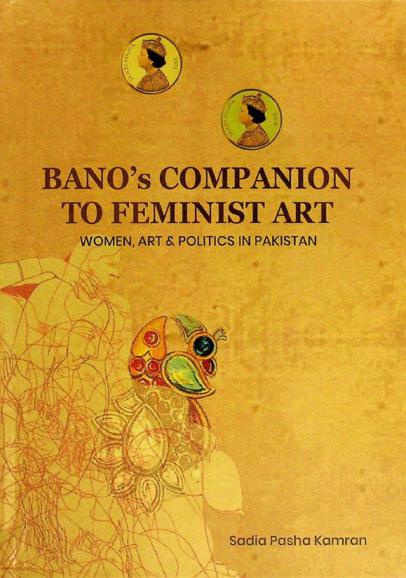
Exploring Female Identity in and Through Art in Pakistan: Experiencing De-Colonial Feminism
This study looks into the identity of brown female artists living in the post-colonial society of the Islamic Republic of Pakistan today. It examines the role, status, and ideals of a handful of women artists and educators from the '80s, mostly members of the Women Action Forum, who have helped define the current identity of Pakistani women by initiating feminist debates. The concept of feminism in post-colonial society is multidimensional and needs to be explored to combat the misconstrued and imposed identity of Pakistani women as miserable, second-grade citizens of the third world. Dominant religions and cultural practices in this region designate woman to a distinct status in society. In Islam, women are seen as the followers of Fatima-the leader of all Muslim women in paradise-and are ranked amongst the greatest humans (Qutbuddin, 2006, 249) while Hinduism considers them as devis-divine beings (Pintchman, 2011). With this socio-cultural mind set and confirming the persuasive relationship between feminist aesthetics and feminist theory as proposed by Hilde Hein (1999), we analyse works of selected female artists and aim to understand the current wave of feminism here. The investigation adopts ethnographic methods of research along with established approaches to historiography that involve discussing, collecting, documenting, digitizing and analysing the information.
Journal Article

Exploring Female Identity in and Through Art in Pakistan: Experiencing De-Colonial Feminism
This study looks into the identity of brown female artists living in the post-colonial society of the Islamic Republic of Pakistan today. It examines the role, status, and ideals of a handful of women artists and educators from the '80s, mostly members of the Women Action Forum, who have helped define the current identity of Pakistani women by initiating feminist debates. The concept of feminism in post-colonial society is multidimensional and needs to be explored to combat the misconstrued and imposed identity of Pakistani women as miserable, second-grade citizens of the third world. Dominant religions and cultural practices in this region designate woman to a distinct status in society. In Islam, women are seen as the followers of Fatima--the leader of all Muslim women in paradise--and are ranked amongst the greatest humans (Qutbuddin, 2006, 249) while Hinduism considers them as devis--divine beings (Pintchman, 2011). With this socio-cultural mind set and confirming the persuasive relationship between feminist aesthetics and feminist theory as proposed by Hilde Hein (1999), we analyse works of selected female artists and aim to understand the current wave of feminism here. The investigation adopts ethnographic methods of research along with established approaches to historiography that involve discussing, collecting, documenting, digitizing and analysing the information.
Journal Article

Muslim Societies and Politics: Soviet and US Approaches: A Conference Report
In Aug 1990, Soviet and US scholars who specialize in the study of Muslim societies in the Middle East met in Moscow and Leningrad USSR. Highlights from the conference are discussed.
Journal Article
