
Catalogue Search | MBRL


Are you sure you want to remove the book from the shelf?

{{itemTitle}}
115,412
result(s) for
"Patel, A"
Sort by:

Hands-On Unsupervised Learning Using Python : how to build applied machine learning solutions from unlabeled data.
Many industry experts consider unsupervised learning the next frontier in artificial intelligence, one that may hold the key to the holy grail in AI research, the so-called general artificial intelligence. Since the majority of the world's data is unlabeled, conventional supervised learning cannot be applied; this is where unsupervised learning comes in. Unsupervised learning can be applied to unlabeled datasets to discover meaningful patterns buried deep in the data, patterns that may be near impossible for humans to uncover. Author Ankur Patel provides practical knowledge on how to apply unsupervised learning using two simple, production-ready Python frameworks - scikit-learn and TensorFlow using Keras. With the hands-on examples and code provided, you will identify difficult-to-find patterns in data and gain deeper business insight, detect anomalies, perform automatic feature engineering and selection, and generate synthetic datasets. All you need is programming and some machine learning experience to get started.
Book

Empirical Limb-darkening Coefficients and Transit Parameters of Known Exoplanets from TESS
Although the main goal of the Transiting Exoplanet Survey Satellite (TESS) is to search for new transiting exoplanets, its data can also be used to study already-known systems in further detail. The TESS bandpass is particularly interesting to study the limb-darkening effect of the stellar host that is imprinted in transit light curves, as the widely used phoenix and atlas stellar models predict different limb-darkening profiles. Here we study this effect by fitting the transit light curves of 176 known exoplanetary systems observed by TESS, which allows us to extract empirical limb-darkening coefficients (LDCs) for the widely used quadratic law but also updated transit parameters (including ephemeride refinements) as a by-product. Comparing our empirically obtained LDCs with theoretical predictions, we find significant offsets when using tabulated TESS LDCs. Specifically, the u 2 coefficients obtained using phoenix models show the largest discrepancies depending on the method used to derive them, with offsets that can reach up to Δu 2 ≈ 0.2, on average. Most of those average offsets disappear, however, if one uses the SPAM algorithm introduced by Howarth to calculate the LDCs instead. Our results suggest, however, that for stars cooler than about 5000 K, no methodology is good enough to explain the limb-darkening effect; we observe a sharp deviation between measured and predicted LDCs on both quadratic LDCs of order Δu 1, Δu 2 ≈ 0.2 for those cool stars. We recommend caution when assuming LDCs as perfectly known, in particular for these cooler stars when analyzing TESS transit light curves.
Journal Article

Applications of artificial neural networks for nonlinear data
\"This book is a collection of research on the contemporary nature of artificial neural networks and their specific implementations within data analysis\"-- Provided by publisher.
Book

Quantum chaos on a critical Fermi surface
We compute parameters characterizing many-body quantum chaos for a critical Fermi surface without quasiparticle excitations. We examine a theory of N species of fermions at nonzero density coupled to a U(1) gauge field in two spatial dimensions and determine the Lyapunov rate and the butterfly velocity in an extended random-phase approximation. The thermal diffusivity is found to be universally related to these chaos parameters; i.e., the relationship is independent of N, the gauge-coupling constant, the Fermi velocity, the Fermi surface curvature, and high-energy details.
Journal Article

تاريخ العالم في سبعة أشياء رخيصة : دليل الرأسمالية، والطبيعة، ومستقبل الكوكب
حقق هذا الكتاب منذ صدوره ضجة كبرى في الأوساط الأكاديمية والثقافية، إذ تناول فكرة الرأسمالية من زوايا مختلفة قطعت مع القراءات الأكاديمية المغلقة. يربط الكتاب فكرة الرأسمالية بالطبيعة ويرى المؤلفان أن استغلال الطبيعة على نحو خاطئ ومتوحش مهد المجال لاستغلال البشر وبذلك نشأت الرأسمالية على ثنائية استغلال الطبيعة والإنسان، وهو استغلال جعل من العالم عالما رخيصا ففكرة الاستعمار هي التي جعلت من المال رخيصا بما أنها استطاعت توفيره من جماجم المضطهدين كما جعلت من الغذاء رخيصا بما أنها نهبت العوالم الجديدة ودمرت الحياة الإيكولوجية فيها كما دمرت حيوات الأفراد عبر تعزيز ثقافة العبودية والاستغلال والاضطهاد علاوة على آثارها في جميع مناحي الحياة. يأخذنا هذا الكتاب في رحلة مع الاكتشافات الكبرى التي شهدها العالم القديم وكيف كانت تلك الاكتشافات مدخلا لبروز عصور دموية ومريعة، علاوة على تطرقه إلى دور الأوبئة والجوائح في بروز فكرة الاستعمار بشكلها الحالي. يمكن القول إن هذا الكتاب من أبرز الكتب التي تؤرخ للعالم من منظور مختلف ومتحرر من التحيزات والمركزية الأوروبية التي سادت في أغلب البحوث الأكاديمية.
BOOK

Task Shifting for Non-Communicable Disease Management in Low and Middle Income Countries – A Systematic Review
One potential solution to limited healthcare access in low and middle income countries (LMIC) is task-shifting- the training of non-physician healthcare workers (NPHWs) to perform tasks traditionally undertaken by physicians. The aim of this paper is to conduct a systematic review of studies involving task-shifting for the management of non-communicable disease (NCD) in LMIC.
A search strategy with the following terms \"task-shifting\", \"non-physician healthcare workers\", \"community healthcare worker\", \"hypertension\", \"diabetes\", \"cardiovascular disease\", \"mental health\", \"depression\", \"chronic obstructive pulmonary disease\", \"respiratory disease\", \"cancer\" was conducted using Medline via Pubmed and the Cochrane library. Two reviewers independently reviewed the databases and extracted the data.
Our search generated 7176 articles of which 22 were included in the review. Seven studies were randomised controlled trials and 15 were observational studies. Tasks performed by NPHWs included screening for NCDs and providing primary health care. The majority of studies showed improved health outcomes when compared with usual healthcare, including reductions in blood pressure, increased uptake of medications and lower depression scores. Factors such as training of NPHWs, provision of algorithms and protocols for screening, treatment and drug titration were the main enablers of the task-shifting intervention. The main barriers identified were restrictions on prescribing medications and availability of medicines. Only two studies described cost-effective analyses, both of which demonstrated that task-shifting was cost-effective.
Task-shifting from physicians to NPHWs, if accompanied by health system re-structuring is a potentially effective and affordable strategy for improving access to healthcare for NCDs. Since the majority of study designs reviewed were of inadequate quality, future research methods should include robust evaluations of such strategies.
Journal Article
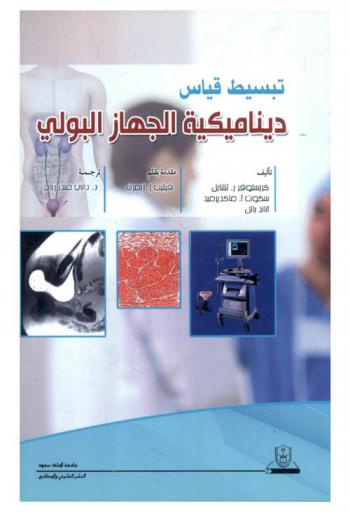
تبسيط قياس ديناميكية الجهاز البولي
يهدف هذا الكتاب إلى تغيير الفكرة السائدة بأن قياس حركية الجهاز البولي هو موضوع معقد ولا يقتصر موضوع قياس حركية الجهاز البولي على فئة معينة محدودة التطبيق ولا يتطلب معدات معقدة تتوافر فقط في \"الأبراج العاجية\" لأن المبادئ الأساسية لقياس حركية الجهاز البولي تعتبر بسيطة وفي معظم الحالات لا تستلزم بحثا معقدا وتغطي فصول الكتاب العشرة مجموعة واسعة من المواضيع تتضمن الأعراض البولية والتعاريف الحالية التي أقرتها الجمعية العالمية لسلس البول والوسائل التقنية لقياس حركية الجهاز البولي ونتائج التشخيص المتعلقة بسلس البول والأنسداد والاضطرابات الحسية والمثانة العصبية وأمراض المسالك البولية للأطفال وقد تم عرض كل فصل كوحدة تتضمن نصا موجزا وجداول عملية تم ترميزها بالألوان بالإضافة إلى ملحق وقسم للقيم المعيارية.
Book

Enhancing Construction Site Safety: Natural Language Processing for Hazards Identification and Prevention
Construction sites are well known for the inherent risks that negatively impact the safety and well-being of workers. Identifying and minimising these hazards is critical for preventing accidents and creating a safe working environment. Traditional techniques of hazards identification in construction rely on visual assessments and professional expertise, which can be time-consuming and subjective. The goal of this research is to identify traits that indicate potential dangers in the construction industry by extracting meaningful information from accident narratives. This will be achieved through the application of a rule-based iteration approach, using the Natural Language Toolkit (NLTK) for keyword extraction and text tokenization. It is a branch of artificial intelligence and computational linguistics concerned with the interaction of computers and human language. The research methodology involves the utilization of NLTK and the application of a rule-based iteration approach to extract hazards from construction-related accident narratives. The proposed approach includes gathering accident narratives, pre-processing data, and textual analysis with NLP tool for information extraction and training the algorithm with identified attributes. The textual analysis eventually leads to the extraction of significant sources of dangers that cause accidents. The study contributes to the developing subject of construction safety management by utilizing the capabilities of NLP to enhance hazard detection, resulting in safer construction practices and lower occupational hazards. The findings emphasise the accuracy with which NLP approaches detect dangers, allowing construction professionals to proactively decrease risks and enhance overall safety on construction sites.
Journal Article

Fast-track development of vaccines for SARS-CoV-2: The shots that saved the world
In December 2019, an outbreak emerged of severe acute respiratory syndrome coronavirus 2 (SARS-CoV-2) which leads to coronavirus disease 2019 (COVID-19). The World Health Organisation announced the outbreak a global health emergency on 30 January 2020 and by 11 March 2020 it was declared a pandemic. The spread and severity of the outbreak took a heavy toll and overburdening of the global health system, particularly since there were no available drugs against SARS-CoV-2. With an immediate worldwide effort, communication, and sharing of data, large amounts of funding, researchers and pharmaceutical companies immediately fast-tracked vaccine development in order to prevent severe disease, hospitalizations and death. A number of vaccines were quickly approved for emergency use, and worldwide vaccination rollouts were immediately put in place. However, due to several individuals being hesitant to vaccinations and many poorer countries not having access to vaccines, multiple SARS-CoV-2 variants quickly emerged that were distinct from the original variant. Uncertainties related to the effectiveness of the various vaccines against the new variants as well as vaccine specific-side effects have remained a concern. Despite these uncertainties, fast-track vaccine approval, manufacturing at large scale, and the effective distribution of COVID-19 vaccines remain the topmost priorities around the world. Unprecedented efforts made by vaccine developers/researchers as well as healthcare staff, played a major role in distributing vaccine shots that provided protection and/or reduced disease severity, and deaths, even with the delta and omicron variants. Fortunately, even for those who become infected, vaccination appears to protect against major disease, hospitalisation, and fatality from COVID-19. Herein, we analyse ongoing vaccination studies and vaccine platforms that have saved many deaths from the pandemic.
Journal Article

The TIMELESS effort for timely DNA replication and protection
Accurate replication of the genome is fundamental to cellular survival and tumor prevention. The DNA replication fork is vulnerable to DNA lesions and damages that impair replisome progression, and improper control over DNA replication stress inevitably causes fork stalling and collapse, a major source of genome instability that fuels tumorigenesis. The integrity of the DNA replication fork is maintained by the fork protection complex (FPC), in which TIMELESS (TIM) constitutes a key scaffold that couples the CMG helicase and replicative polymerase activities, in conjunction with its interaction with other proteins associated with the replication machinery. Loss of TIM or the FPC in general results in impaired fork progression, elevated fork stalling and breakage, and a defect in replication checkpoint activation, thus underscoring its pivotal role in protecting the integrity of both active and stalled replication forks. TIM is upregulated in multiple cancers, which may represent a replication vulnerability of cancer cells that could be exploited for new therapies. Here, we discuss recent advances on our understanding of the multifaceted roles of TIM in DNA replication and stalled fork protection, and how its complex functions are engaged in collaboration with other genome surveillance and maintenance factors.
Journal Article