
Catalogue Search | MBRL


Are you sure you want to remove the book from the shelf?

{{itemTitle}}
22
result(s) for
"Patsy Eubanks Owens"
Sort by:
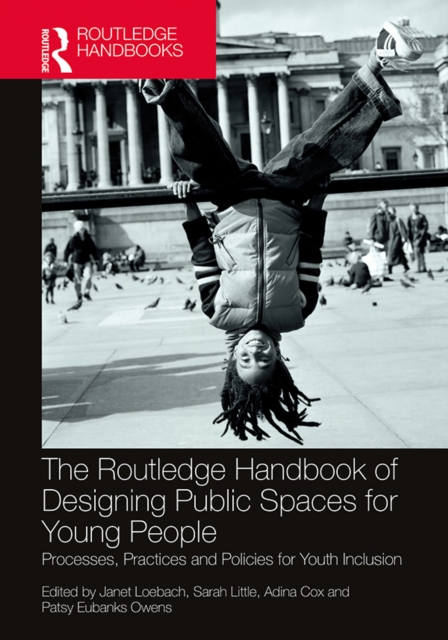
The Routledge Handbook of Designing Public Spaces for Young People
The Routledge Handbook of Designing Public Spaces for Young People is a thorough and practical resource for all who wish to influence policy and design decisions in order to increase young people's access to and use of public spaces, as well as their role in design and decision-making processes.
The ability of youth to freely enjoy public spaces, and to develop a sense of belonging and attachment to these environments, is critical for their physical, social, cognitive, and emotional development. Young people represent a vital citizen group with legitimate rights to occupy and shape their public environments, yet they are often driven out of public places by adult users, restrictive bylaws, or hostile designs. It is also important that children and youth have the opportunity to genuinely participate in the planning of public spaces, and to have their needs considered in the design of the public realm.
This book provides both evidence and tools to help effectively advocate for more youth-inclusive public environments, as well as integrate youth directly into both research and design processes related to the public realm. It is essential reading for researchers, design and planning professionals, community leaders, and youth advocates.
eBook

“We just want to play”: Adolescents Speak about Their Access to Public Parks
The discussion of play typically focuses on the activities of and benefits for young children while the perspectives and positive implications of play for adolescents are overlooked. During the participatory action research project, Youth Voices for Change, young people noted that, other than when they were participating in a team activity, they felt unwelcome in their neighborhood parks. Their attempts to use the swing set were denounced by parents and sitting around talking with friends drew suspicion from neighbors. The teenagers also lamented their ability to “just be a kid.” This paper discusses these views and what the youth did to impact change in local park design and citywide recreation policies. A public policy brief, in the form of a comic book, was developed and shared with city officials. This activism led to the youth being invited to participate in a park redesign and the city's recreation master plan update.
Journal Article
Youth Voices Influencing Local and Regional Change
This paper explores the contributions of a place-based learning initiative, Healthy Youth/Healthy Regions - participatory action research project (HYHR-PAR), to local and regional decision-making processes. The project intent was to engage teenaged youth and young adults from the Sacramento Capital Region in exploring the issues they face in their daily lives, and to document the supports and hindrances to their development that they find in their respective communities. This youth perspective serves as the foundation for change at multiple decision-making levels. The HYHR-PAR effort included three place-based learning, participatory action research projects. Youth produced videos, photographs, a web-based map, poetry and a comic book to capture their perceptions and to convey their ideas to others. In addition, they held public forums and private meetings with policy makers to present and discuss their findings. The HYHR-PAR project illustrates how place-based learning can play an innovative and effective role in engaging at-risk youth in progressive social change initiatives that improve the equity of decision-making processes in their communities and the state of the built environments in which they live.
Journal Article
The Impacts of COVID-19 Responses on Children, Youth and Their Environments in Canada, the United States, New Zealand, and Australia
This paper is written by the members of the Children, Youth and Environments Working Group of the Sustainable Cities and Landscapes Research Hub of the Association of Pacific Rim Universities, which at present includes members from Canada, the United States, Australia, and New Zealand. We use six spheres of experience that characterize the typical contexts of young people’s daily lives to identify their lived environmental experiences in our four countries, as created by the ongoing political and health responses to COVID-19. We discuss both the positive and negative impacts of COVID-19 in these spheres and identify areas for learning from these outcomes.
Journal Article

Building and Sustaining Community-Based Youth Development Collaboratives
Two youth development collaboratives were examined to better understand their formation and sustainability. These collaboratives were started with the purpose of promoting a positive approach toward youth development in their communities and were considered to be successful in their efforts. Employing a qualitative approach, the strategies utilized in building and sustaining these two collaboratives were explored. Although the collaboratives are different in many respects and are located in dissimilar communities, similar themes emerged that provide important lessons about building and maintaining community-based collaborations. These include (a) the style of the founder(s), (b) the significance of continual engagement of new participants, (c) the role of funds and other resources, and (d) the creative tension of control and capacity building. In addition, the same five-step strategy was employed to build and sustain the collaboratives. The findings of this study are potentially useful for other collaboratives either being formed or grappling with sustainability issues.
Journal Article
Young Humans Make Change, Young Users Click: Creating Youth-Centered Networked Social Movements
From the urbanists' perspective, the everyday experience of young people, as an underrepresented group in the design of public spaces, includes tactics they use to challenge the strategies which rule over urban spaces. In this regard, youth led social movements are a set of collective tactics which groups of young people use to resist power structures. Social informational streams have revolutionized the way youth organize and mobilize for social movements throughout the world, especially in urban areas. However, just like public spaces, these algorithm based platforms have been developed with a great power imbalance between the developers and users which results in the creation of non inclusive social informational streams for young activists. Social activism grows agency and confidence in youth which is critical to their development. This paper employs a youth centric lens, which is used in designing public spaces, for designing algorithmic spaces that can improve bottom up youth led movements. By reviewing the structure of these spaces and how young people interact with these structures in the different cultural contexts of Iran and the US, we propose a humanistic approach to designing social informational streams which can enhance youth activism.
Paper

A Fundamental Need
This chapter examines how the physical environment, and in particular the public realm, helps to support adolescent development, health, and well-being. Many of the developmental tasks that youth need to perform are commonly conducted in public settings; however, these places, and the policies that inform their creation and use, typically do not reflect the needs of youth. First, the developmental stage of adolescence and society's influences on youth access to the public realm are discussed. This contextual background is followed by an examination of adolescents' developmental tasks. This discussion is situated within a socio-ecological model in order to understand where these tasks occur and also within a developmental affordances framework. This framework provides a means for understanding how youth perceive and interpret environments as they relate to performing these tasks. Lastly, the chapter provides illustrations of how the public realm can and should provide venues that allow and encourage youth to make choices that foster their development. Four developmental tasks, (1) undertaking self-reflection and internal growth, (2) learning to manage their free-time, (3) developing satisfying social relationships, and (4) developing a sense of social responsibility, are explored in this context.
Book Chapter