
Catalogue Search | MBRL


Are you sure you want to remove the book from the shelf?

{{itemTitle}}
123
result(s) for
"Pattison, Stephen"
Sort by:


Religion, Spirituality and Health Care: Confusions, Tensions, Opportunities
This paper raises some issues about understanding religion, religions and spirituality in health care to enable a more critical mutual engagement and dialogue to take place between health care institutions and religious communities and believers. Understanding religions and religious people is a complex, interesting matter. Taking into account the whole reality of religion and spirituality is not just about meeting specific needs, nor of trying to ensure that religious people abandon their distinctive beliefs and insights when they engage with health care institutions and policies. Members of religious groups and communities form an integral part of the structure and fabric of health care delivery, whether as users or in delivery capacities. Religion is both facilitator and resistor, friend and critic, for health care institutions, providers and workers.
Journal Article
Flourishing in Health Care
The purpose of this paper is to offer an account of ‘flourishing’ that is relevant to health care provision, both in terms of the flourishing of the individual patient and carer, and in terms of the flourishing of the caring institution. It is argued that, unlike related concepts such as ‘happiness’, ‘well-being’ or ‘quality of life’, ‘flourishing’ uniquely has the power to capture the importance of the vulnerability of human being. Drawing on the likes of Heidegger and Nussbaum, it is argued that humans are at once beings who are autonomous and thereby capable of making sense of their lives, but also subject to the contingencies of their bodies and environments. To flourish requires that one engages, imaginatively and creatively, with those contingencies. The experience of illness, highlighting the vulnerability of the human being, thereby becomes an important experience, stimulating reflection in order to make sense of one’s life as a narrative. To flourish, it is argued, is to tell a story of one’s life, realistically engaging with vulnerability and suffering, and thus creating a framework through which one can meaningful and constructively go on with one’s life.
Journal Article
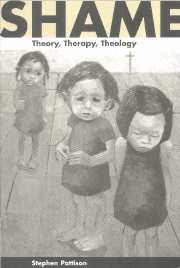
Shame
In this book, first published in 2000, Stephen Pattison considers the nature of shame as it is discussed in the diverse discourses of literature, psychology, psychoanalysis, philosophy, history and sociology and concludes that 'shame' is not a single unitary phenomenon, but rather a set of separable but related understandings in different discourses. Situating chronic shame primarily within the metaphorical ecology of defilement, pollution and toxic unwantedness, Pattison goes on to examine the causes and effects of shame. He then considers the way in which Christianity has responded to and used shame. Psychologists, philosophers, theologians and therapists will find this a fascinating source of insight, and it will be of particular use to pastoral workers and those concerned with religion and mental health.
eBook
Prospects for Flourishing in Contemporary Health Care
This special issue of
Health Care Analysis
originated in an conference, held in Birmingham in 2014, and organised by the group Think about Health. We introduce the issue by briefly reviewing the understandings of the concept of ‘flourishing’, and introducing the contributory papers, before offering some reflections on the remaining issues that reflection on flourishing poses for health care provision.
Journal Article


Shame: theory, therapy, theology
In this book, first published in 2000, Stephen Pattison considers the nature of shame as it is discussed in the diverse discourses of literature, psychology, psychoanalysis, philosophy, history and sociology and concludes that 'shame' is not a single unitary phenomenon, but rather a set of separable but related understandings in different discourses. Situating chronic shame primarily within the metaphorical ecology of defilement, pollution and toxic unwantedness, Pattison goes on to examine the causes and effects of shame. He then considers the way in which Christianity has responded to and used shame. Psychologists, philosophers, theologians and therapists will find this a fascinating source of insight, and it will be of particular use to pastoral workers and those concerned with religion and mental health.
eBook

O13 Rules of engagement: ethics issues in participatory research
BackgroundThis paper contributes to the literature on ethics in participatory research by looking at the Researcher-in-Residence model and its application within health services research.ObjectivesThis paper looks at one model of participatory research, the Researcher-in-Residence. The model places the researcher as a member of the delivery team to enable knowledge mobilisation and knowledge coproduction. We draw on recent literature on the ethics of participatory research to develop a framework that can support analysis of the ethical issues as experienced by Researchers-in-Residence. We examine several ethical issues that the researchers had to address at different points of the research process and reflect on different coping and negotiation strategies.MethodsThe data that form the basis of this paper were collected iteratively as part of two different qualitative and participatory evaluations of integrated care in East London. Data for this paper consisted of the two researchers’ personal journals and field notes, including reflections from fieldwork and communication with the wider research team.Results and conclusionWe offer a critical reflection on how the four ethics principles of respect for autonomy, beneficence, non-maleficence, and justice often have different implications for researchers engaged in participatory research, particularly when examined in terms of the contrasting norms of procedural ethics and everyday ethics. In line with other literature on participatory research, we found the institutional ethics review process offered no guidance, as it forced us to jump through hoops to fit an iterative process into requirements developed with a sequential steps process in mind. The paper suggests that, whereas the requirements of ethics committees, based on an ethics of principle, at times fail to offer appropriate guidelines for this methodological approach, an ethics of caring based on relationships can offer a complementary framework to address some of the thorny challenges that emerge from everyday practice in „participatory research.
Journal Article