
Catalogue Search | MBRL


Are you sure you want to remove the book from the shelf?

{{itemTitle}}
203
result(s) for
"Patton, Bruce"
Sort by:

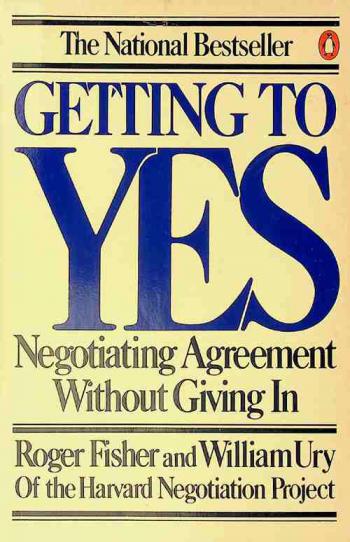
Getting to yes : negotiating agreement without giving in
\"Since it was first published in 1981 Getting to Yes has become a central book in the Business Canon: the key text on the psychology of negotiation. Its message of \"principled negotiations\"--finding acceptable compromise by determining which needs are fixed and which are flexible for negotiating parties--has influenced generations of businesspeople, lawyers, educators and anyone who has sought to achieve a win-win situation in arriving at an agreement. It has sold over 8 million copies worldwide in 30 languages, and since it was first published by Penguin in 1991 (a reissue of the original addition with Bruce Patton as additional coauthor) has sold over 2.5 million copies--which places it as the #10 bestselling title overall in Penguin Books, and #3 bestselling nonfiction title overall. We have recently relicensed the rights to Getting to Yes, and will be doing a new revised edition--a 30th anniversary of the original publication and 20th of the Penguin edition. The authors will be bringing the book up to date with new material and a assessment of the legacy and achievement of Getting to Yes after three decades\"-- Provided by publisher.
Book

Vascular KATP channel structural dynamics reveal regulatory mechanism by Mg-nucleotides
Vascular tone is dependent on smooth muscle KATP channels comprising pore-forming Kir6.1 and regulatory SUR2B subunits, in which mutations cause Cantú syndrome. Unique among KATP isoforms, they lack spontaneous activity and require Mg-nucleotides for activation. Structural mechanisms underlying these properties are unknown. Here, we determined cryogenic electron microscopy structures of vascular KATP channels bound to inhibitory ATP and glibenclamide, which differ informatively from similarly determined pancreatic KATP channel isoform (Kir6.2/SUR1). Unlike SUR1, SUR2B subunits adopt distinct rotational “propeller” and “quatrefoil” geometries surrounding their Kir6.1 core. The glutamate/aspartate-rich linker connecting the two halves of the SUR-ABC core is observed in a quatrefoil-like conformation. Molecular dynamics simulations reveal MgADP-dependent dynamic tripartite interactions between this linker, SUR2B, and Kir6.1. The structures captured implicate a progression of intermediate states between MgADP-free inactivated, and MgADP-bound activated conformations wherein the glutamate/aspartate-rich linker participates as mobile autoinhibitory domain, suggesting a conformational pathway toward KATP channel activation.
Journal Article

Vascular K ATP channel structural dynamics reveal regulatory mechanism by Mg-nucleotides
Vascular K ATP channels formed by the potassium channel Kir6.1 and its regulatory protein SUR2B maintain blood pressure in the physiological range. Overactivity of the channel due to genetic mutations in either Kir6.1 or SUR2B causes severe cardiovascular pathologies known as Cantú syndrome. The cryogenic electron microscopy structures of the vascular K ATP channel reported here show multiple, dynamically related conformations of the regulatory subunit SUR2B. Molecular dynamics simulations reveal the negatively charged ED-domain in SUR2B, a stretch of 15 glutamate (E) and aspartate (D) residues not previously resolved, play a key MgADP-dependent role in mediating interactions at the interface between the SUR2B and Kir6.1 subunits. Our findings provide a mechanistic understanding of how channel activity is regulated by intracellular MgADP. Vascular tone is dependent on smooth muscle K ATP channels comprising pore-forming Kir6.1 and regulatory SUR2B subunits, in which mutations cause Cantú syndrome. Unique among K ATP isoforms, they lack spontaneous activity and require Mg-nucleotides for activation. Structural mechanisms underlying these properties are unknown. Here, we determined cryogenic electron microscopy structures of vascular K ATP channels bound to inhibitory ATP and glibenclamide, which differ informatively from similarly determined pancreatic K ATP channel isoform (Kir6.2/SUR1). Unlike SUR1, SUR2B subunits adopt distinct rotational “propeller” and “quatrefoil” geometries surrounding their Kir6.1 core. The glutamate/aspartate-rich linker connecting the two halves of the SUR-ABC core is observed in a quatrefoil-like conformation. Molecular dynamics simulations reveal MgADP-dependent dynamic tripartite interactions between this linker, SUR2B, and Kir6.1. The structures captured implicate a progression of intermediate states between MgADP-free inactivated, and MgADP-bound activated conformations wherein the glutamate/aspartate-rich linker participates as mobile autoinhibitory domain, suggesting a conformational pathway toward K ATP channel activation.
Journal Article


Properly formed but improperly localized synaptic specializations in the absence of laminin α4
Precise apposition of pre- to postsynaptic specializations is required for optimal function of chemical synapses, but little is known about how it is achieved. At the skeletal neuromuscular junction, active zones (transmitter release sites) in the nerve terminal lie directly opposite junctional folds in the postsynaptic membrane. Few active zones or junctional folds form in mice lacking the laminin β2 chain, which is normally concentrated in the synaptic cleft. β2 and the broadly expressed γ1 chain form heterotrimers with α chains, three of which, α2, α4 and α5, are present in the synaptic cleft. Thus, α2β2γ1, α4β2γ1 and α5β2γ1 heterotrimers are all lost in β2 mutants. In mice lacking laminin α4, active zones and junctional folds form in normal numbers, but are not precisely apposed to each other. Thus, formation and localization of synaptic specializations are regulated separately, and α4β2γ1 (called laminin-9) is critical in the latter process.
Journal Article

You can’t win by avoiding difficult conversations
Purpose
In business, the failure to engage difficult conversations productively can prevent winning in the market and invite the competition to forge ahead. This study aims to identify areas in business where avoiding difficult conversations can put winning out of reach and present guidelines for handling difficult conversations in these domains.
Design/methodology/approach
This is a conceptual paper that presents guidelines on how to manage difficult conversations effectively.
Findings
This study shows how to manage difficult conversations with regards to the areas of compensation, performance, strategy and implementation.
Originality/value
This paper catalogs sources of lost value. Furthermore, this study outlines what is needed to capture such value, and briefly explains the principles for how to transform an organization to build such capability as a core competence.
Journal Article
ملخص كتاب الوصول إلى نعم
يتناول الكتاب مجموعة تتعامل مع كل المستويات للتفاوض وحل النزاع، يقدم الكتاب للقارئ منهجا مباشرا وقابلا للتطبيق عالميا للوصول إلى اتفاقات مرضية للطرفين، في المنزل والعمل ومع الناس في أي موقف. اقرأ الوصول إلى نعم لتتعلم خطوة بخطوة كيفية : فصل الناس عن المشكلة، التركيز على المصالح وليس المناصب، العمل سويا للعثور على خيارات خلاقة ومنصفة، التفاوض بنجاح مع أي شخص على أي مستوى.
Book

Rapid evaluation of particle properties using inverse SEM simulations
The characteristic X-rays produced by the interactions of the electron beam with the sample in a scanning electron microscope (SEM) are usually captured with a variable-energy detector, a process termed energy dispersive spectrometry (EDS). The purpose of this work is to exploit inverse simulations of SEM-EDS spectra to enable rapid determination of sample properties, particularly elemental composition. This is accomplished using penORNL, a modified version of PENELOPE, and a modified version of the traditional Levenberg–Marquardt nonlinear optimization algorithm, which together is referred to as MOZAIK-SEM. The overall conclusion of this work is that MOZAIK-SEM is a promising method for performing inverse analysis of X-ray spectra generated within a SEM. As this methodology exists now, MOZAIK-SEM has been shown to calculate the elemental composition of an unknown sample within a few percent of the actual composition.
Journal Article