
Catalogue Search | MBRL


Are you sure you want to remove the book from the shelf?

{{itemTitle}}
6,251
result(s) for
"Patton, Paul"
Sort by:


The Stories We Tell: Individual and Society in The Childhood of Jesus
Commentators have drawn attention to the close relationship between The Childhood of Jesus and Coetzee's exchanges with Arabella Kurtz in The Good Story . Read in the light of The Good Story's concern with the stories we tell ourselves about the lives we lead, our relationship to those stories and to their truth or falsity, the stories of Simón and David, their tensions and conflicts with one another and with the sometimes-incompatible stories told by the inhabitants of Novilla, exemplify the contemporary postmodern human condition. In particular, Childhood explores the consequences of what Coetzee calls a common postmodern situation in which someone is aware that a story is not true but nevertheless commits to it wholeheartedly. It shows how lives are changed by the commitment to a particular story and how they unfold as a result of the tensions that develop between individual and collective stories.
Journal Article


Lateral line stimulation patterns and prey orienting behavior in the Lake Michigan mottled sculpin (Cottus bairdi)
Information contained in the spatial excitation pattern along arrayed sensors in the lateral line system of Lake Michigan mottled sculpin, as well as other surface-feeding fish and amphibians, is thought to play a fundamental role in guiding prey-orienting behaviors. However, the way in which prey location is encoded by the excitation pattern and used by the nervous system to direct orienting behaviors is largely unknown. In this study, we test the hypothesis that mottled sculpin use excitation peaks (local 'hot spots') to determine the somatotopic location of an artificial prey (vibrating sphere/dipole source) along the body surface. Dipole orientation (axis of sphere vibration re: long axis of the fish) is manipulated to produce excitatory peaks in different body locations without changing the actual sphere location. Our results show that orienting accuracy is largely independent of source orientation, but not source distance and that turning directions are not guided by local hot spots in the somatotopic activation pattern of the lateral line.
Journal Article
The Stories We Tell: Individual and Society in The Childhood of Jesus
Commentators have drawn attention to the close relationship between The Childhood of Jesus and Coetzee's exchanges with Arabella Kurtz in The Good Story. Read in the light of The Good Story's concern with the stories we tell ourselves about the lives we lead, our relationship to those stories and to their truth or falsity, the stories of Simon and David, their tensions and conflicts with one another and with the sometimes-incompatible stories told by the inhabitants of Novilla, exemplify the contemporary postmodern human condition. In particular, Childhood explores the consequences of what Coetzee calls a common postmodern situation in which someone is aware that a story is not true but nevertheless commits to it wholeheartedly. It shows how lives are changed by the commitment to a particular story and how they unfold as a result of the tensions that develop between individual and collective stories.
Journal Article

Between Deleuze and Derrida
Gilles Deleuze and Jacques Derrida are the two leading philosophers of French post-structuralism. Both theorists have been widely studied but very little has been done to examine the relation between them. Between Deleuze and Derrida is the first book to explore and compares their work. This is done via a number of key themes, including the philosophy of difference, language, memory, time, event, and love, as well as relating these themes to their respective approaches to Philosophy, Literature, Politics and Mathematics. Contributors: Eric Alliez, Branka Arsic, Gregg Lambert, Leonard Lawlor, Alphonso Lingis, Tamsin Lorraine, Jeff Nealon, Paul Patton, Arkady Plotnitsky, John Protevi, Daniel W. Smith
eBook

Deleuzian Concepts
These essays provide important interpretations and analyze critical developments of the political philosophy of Gilles Deleuze. They situate his thought in the contemporary intellectual landscape by comparing him with contemporaries such as Derrida, Rorty, and Rawls and show how elements of his philosophy may be usefully applied to key contemporary issues including colonization and decolonization, the nature of liberal democracy, and the concepts and critical utopian aspirations of political philosophy. Patton discusses Deleuze's notion of philosophy as the creation of concepts and shows how this may be helpful in understanding the nature of political concepts such as rights, justice, and democracy. Rather than merely commenting on or explaining Deleuze's thought, Patton offers a series of attempts to think with Deleuzian concepts in relation to other philosophers and other problems. His book represents a significant contribution to debates in contemporary political theory, continental philosophy, and Deleuzian studies.
eBook

Philosophical foundations for Indigenous economic and political rights
Purpose
The purpose of this paper is to examine some influential accounts of the basis for Indigenous rights, consider their strengths and weaknesses, and ascertain whether and in what degree they support effective self-government and self-determination for Indigenous people.
Design/methodology/approach
The paper begins with a brief discussion of the emergence of specifically Indigenous rights, the significance of self-determination as a means of improving the economic and social conditions of communities, and the problem such rights pose for late 20th versions of egalitarian liberalism. It then examines the liberal culturalist argument for minority rights developed by Will Kymlicka, before turning to James Tully’s elaboration of the historical approach to the justification of Indigenous rights that draws on the tradition of treaty relations in North American colonialism. Finally, it outlines a third approach based on the political liberalism of John Rawls.
Findings
The conditions of legitimate government set out in Rawls’ political liberalism are a better way to provide normative foundations for Indigenous rights in contemporary postcolonial democracies.
Research limitations/implications
The discussion of Indigenous rights is confined to those countries established by colonization with largely British political institutions and populations. The arguments for Indigenous rights are confined to those advanced within the liberal tradition of political thought.
Originality/value
Some of the criticisms of the liberal culturalist argument and of Tully’s approach are original. The case for Indigenous rights based in the legitimacy requirements of political liberalism is original and based on conceptual work by the author.
Journal Article
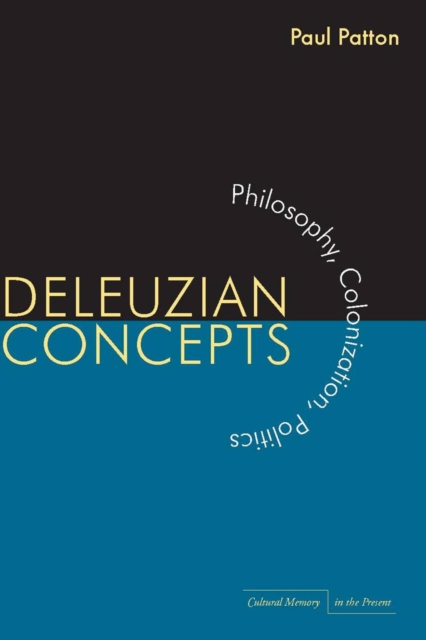
Deleuzian concepts : philosophy, colonization, politics
These essays provide important interpretations and analyze critical developments of the political philosophy of Gilles Deleuze. They situate his thought in the contemporary intellectual landscape by comparing him with contemporaries such as Derrida, Rorty, and Rawls and show how elements of his philosophy may be usefully applied to key contemporary issues including colonization and decolonization, the nature of liberal democracy, and the concepts and critical utopian aspirations of political philosophy. Patton discusses Deleuze's notion of philosophy as the creation of concepts and shows how this may be helpful in understanding the nature of political concepts such as rights, justice, and democracy. Rather than merely commenting on or explaining Deleuze's thought, Patton offers a series of attempts to think with Deleuzian concepts in relation to other philosophers and other problems. His book represents a significant contribution to debates in contemporary political theory, continental philosophy, and Deleuzian studies.
eBook

RAWLS AND THE LEGITIMACY OF AUSTRALIAN GOVERNMENT
Questions the legitimacy of the government of the Commonwealth of Australia whose authority is derived from acts of colonisation - Indigenous peoples live under a constitution which makes no mention of their prior occupation of the land or their distinctive identities – the political liberalist philosophy of John Rawls suggests a conception of justice and a corresponding conception of legitimacy that is political rather than procedural or moral - social co-operation in a democratic society does not rely upon any particular comprehensive moral, religious or philosophical doctrines.
Journal Article