
Catalogue Search | MBRL


Are you sure you want to remove the book from the shelf?

{{itemTitle}}
55
result(s) for
"Paul Dobraszczyk"
Sort by:


Future Cities
Bringstogether architecture, fiction, film, and visual art toreconnectthe imaginary city with the real, proposing a future for humanity that is firmly grounded in the present and the diverse creative practices already at our fingertips. Though reaching ever further toward the skies, today's cities are overshadowed by multiple threats: climate change, overpopulation, social division, and urban warfare all endanger our metropolitan way of life. The fundamental tool we use to make sense of these uncertain city futures is the imagination. Architects, artists, filmmakers, and fiction writers have long been inspired to imagine cities of the future, but their speculative visions tend to be seen very differently from scientific predictions: flights of fancy on the one hand versus practical reasoning on the other. In a digital age when the real and the fantastic coexist as near equals, it is especially important to know how these two forces are entangled, and how together they may help us best conceive of cities yet to come. Exploring a breathtaking range of imagined cities—submerged, floating, flying, vertical, underground, ruined, and salvaged— Future Cities teases out the links between speculation and reality, arguing that there is no clear separation between the two. In the Netherlands, prototype floating cities are already being built; Dubai's recent skyscrapers resemble those of science-fiction cities of the past; while makeshift settlements built by the urban poor in the developing world are already like the dystopian cities of cyberpunk.
eBook

Animal architecture : beasts, buildings and us
A spider spinning its web in a dark corner. Wasps building a nest under a roof. There's hardly any part of the built environment that can't be inhabited by nonhumans, and yet we are extremely selective about which animals we keep in or out. This book imagines new ways of thinking about architecture and the more-than-human and asks how we might design with animals and the other lives that share our spaces in mind. 'Animal Architecture' is a provocative exploration of how to think about building in a world where humans and other animals are already entangled, whether we acknowledge it or not.
Book

Animal Architecture
A provocative call for architects to remember and embrace the nonhuman lives that share our spaces. A spider spinning its web in a dark corner. Wasps building a nest under a roof. There's hardly any part of the built environment that can't be inhabited by nonhumans, and yet we are extremely selective about which animals we keep in or out. This book imagines new ways of thinking about architecture and the more-than-human and asks how we might design with animals and the other lives that share our spaces in mind. Animal Architecture is a provocative exploration of how to think about building in a world where humans and other animals are already entangled, whether we acknowledge it or not.
eBook


Ornament and Purity: Macfarlane’s Drinking Fountains
IN VICTORIAN towns and cities, public drinking fountains were perceived as signs of purity and temperance, moral agents in the street that would promote better behaviour.1 This kind of symbolism had a long history: in the ancient world, water, and particularly water from fountains, was associated with fertility, purity, and abundance; later, the Christian tradition emphasized water’s role as a symbol of chastity and its power as a cleansing agent, both moral and spiritual. [...]Macfarlane’s new drinking fountain was beautiful and alluring in its ornamentation but also “humane” in that it was far less expensive than a stone fountain because it could be mass-produced and provided a morally pure and improving source of refreshment for both people and animals. The high moral tone of the ceremony was apparently brought down by the sale of free beer by an enterprising publican, which resulted, according the Glasgow Herald, in “a demoralising scene” in front of outraged representatives of the local temperance group (“Presentation of a Water Fountain”). In drawing directly on this Moorish motif and its symbolic power, Macfarlane was identifying his own products as aesthetically literate and also celebrating their part in bringing a new abundance of water, symbolically charged as both pure and alluringly exotic, to the working classes in Britain’s towns and cities.
Journal Article
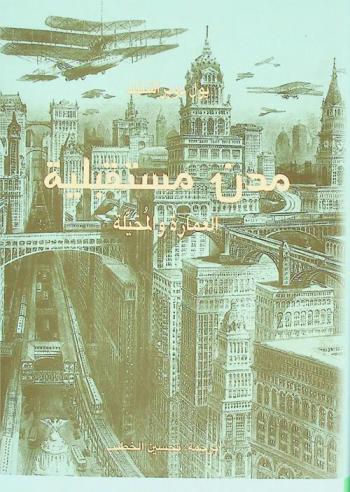
مدن مستقبلية : العمارة والمخيلة
يتناول كتاب (مدن مستقبلية : العمارة والمخيلة) والذي قام بتأليفه (پول دوبراشتيك) في حوالي (380) صفحة من القطع المتوسط موضوع (الإنشاءات وتخطيط المدن) مستعرضا المحتويات التالية : وتبدأ بالمقدمة : مدن مستقبلية حقيقية ومتخيلة، وتنقسم محتويات الكتاب إلى ثلث أقسام الأول : المدن الغير راسية وتتكون من : 1. مغمورة بالماء : بطاقات بريدية من المستقبل، 2. عائمة [فوق الماء] : يوتوبيات مدينية ومائية، 3. مجوقلة : العمارة وحلم الطيران، الثاني : مدن عمودية وتتكون من : 1. ناطحات السحاب : من الأيقونة إلى التجربة، 2. تحت سطح الأرض : الأمن والثورة، الثالث : مدن مدمرة وتتكون من : 1. مدمرة التوسع العمراني، والكارثة، والأنتروبيا، 2. متجدد : إنقاذ ما تبقى.
Book


Global undergrounds
Rest your eyes long enough on the skylines of Delhi, Guangzhou, Jakarta—even Chicago or London—and you will see the same remarkable transformation, building after building going up with the breakneck speed of twenty-first-century urbanization. But there is something else just as transformative that you won't see: sprawling networks of tunnels rooting these cities into the earth. Global Undergrounds offers a richly illustrated exploration of these subterranean spaces, charting their global reach and the profound—but often unseen—effects they have on human life. The authors shine their headlamps into an astonishing diversity of manmade underground environments, including subway systems, sewers, communications pipelines, storage facilities, and even shelters. There they find not only an extraordinary range of architectural approaches to underground construction but also a host of different cultural meanings. Underground places can evoke fear or hope; they can serve as sites of memory, places of work, or the hidden headquarters of resistance movements. They are places that can tell a city's oldest stories or foresee its most distant futures. They are places—ultimately—of both incredible depth and breadth, crucial to all of us topside who work as urban planners, geographers, architects, engineers, or any of us who take subway trains or enjoy fresh water from a faucet. Indeed, as the authors demonstrate, the constant flux within urban undergrounds—the nonstop circulation of people, substances, and energy—serves all city dwellers in myriad ways, not just with the logistics of day-to-day life but as a crucial part of a city's mythology.
eBook