
Catalogue Search | MBRL


Are you sure you want to remove the book from the shelf?

{{itemTitle}}
2,655
result(s) for
"Paul Gilbert"
Sort by:

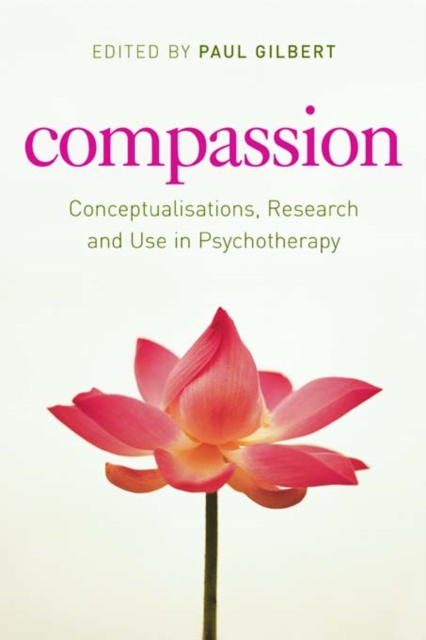
Compassion: Conceptualisations, Research and Use in Psychotherapy
What is compassion, how does it affect the quality of our lives and how can we develop compassion for ourselves and others?Humans are capable of extreme cruelty but also considerable compassion. Often neglected in Western psychology, this book looks at how compassion may have evolved, and is linked to various capacities such as sympathy, empathy, forgiveness and warmth. Exploring the effects of early life experiences with families and peers, this book outlines how developing compassion for self and others can be key to helping people change, recover and develop ways of living that increase well-being.Focusing on the multi-dimensional nature of compassion, international contributors: explore integrative evolutionary, social constructivist, cognitive and Buddhist approaches to compassion consider how and why cruelty can flourish when our capacities for compassion are turned off, especially in particular environments focus on how therapists bring compassion into their therapeutic relationship, and examine its healing effects describe how to help patients develop inner warmth and compassion to help alleviate psychological problems. Compassion provides detailed outlines of interventions that are of particular value to psychotherapists and counsellors interested in developing compassion as a therapeutic focus in their work. It is also of value to social scientists interested in pro-social behaviour, and those seeking links between Buddhist and Western psychology.
eBook


Newborn antibodies to SARS-CoV-2 detected in cord blood after maternal vaccination – a case report
Background
Maternal vaccination for Influenza and Tetanus, Diphtheria, acellular Pertussis (TDaP) have been well studied in terms of safety and efficacy for protection of the newborn by placental passage of antibodies. Similar newborn protection would be expected after maternal vaccination against severe acute respiratory syndrome coronavirus 2 (SARS-CoV-2), the virus responsible for coronavirus disease 2019 (COVID-19). There is a significant and urgent need for research regarding safety and efficacy of vaccination against SARS-CoV-2 during pregnancy.
Case presentation
A vigorous, healthy, full-term female was born to a COVID-19 naïve mother who had received a single dose of messenger RNA (mRNA) vaccine for SARS-CoV-2 3 weeks prior to delivery. IgG cord blood antibodies were detected to SARS-CoV-2 at the time of birth.
Conclusion
Here, we report the first known case of an infant with SARS-CoV-2 IgG antibodies detectable in cord blood after maternal vaccination.
Journal Article


Strategies to maintain recovery from alcohol problems during the COVID-19 pandemic: Insights from a mixed-methods national survey of adults in the United States
The COVID-19 pandemic has been associated with poorer mental health and, in some cases, increased alcohol consumption; however, little is known about the pandemic’s effects on people in recovery from alcohol use disorder (AUD), especially how they have coped with novel stressors. Our mixed-methods study investigated strategies used to maintain recovery during the pandemic, with attention to variation by gender. We analyzed data obtained in fall 2020 from an online US national survey of adults with resolved AUD (n = 1,492) recruited from KnowledgePanel, a probability-based cohort of non-institutionalized adults maintained by Ipsos for internet-based research. Participants endorsed possible coping strategies on a 19-item choose-all-that-apply list, which were analyzed using chi-square tests. In addition, 1,008 participants provided text responses to an open-ended question about their strategies to maintain recovery during the pandemic, which were coded and analyzed using an inductive, thematic approach. The majority of our sample met criteria for severe lifetime AUD (72.9%), reported being in recovery more than five years (75.5%), and had never used specialty AUD services or mutual-help groups (59.7%). The ordering of the coping strategies was quite similar for women and men; however, the top strategy (talking with family and friends by phone, text, or video) was endorsed more frequently by women than men (49.7% vs. 36.1%; p < .001). Among qualitative themes, “staying connected” was the most common. It was dominated by statements about family, with women mentioning children more often than men. Among other themes, “cognitive strategies” mirrored established therapeutic modalities, and “active pursuits” aligned with many recent recommendations for service providers working with substance-using populations during the pandemic. A minority of participants invoked “willpower” for recovery or stated that pandemic restrictions helped by reducing exposure to relapse risks. These findings shed light on recovery mechanisms during the COVID-19 pandemic and suggest potential intervention targets to support recovery during other catastrophic events, such as natural disasters.
Journal Article

Bertram and his fabulous animals
First published in 1937, this is a collection of ten stories \"about a boy named Bertram who goes on adventures that involve fantastical animals\"-- Provided by publisher.
Book

High-School Students Rarely Use E-Cigarettes Alone: A Sociodemographic Analysis of Polysubstance Use Among Adolescents in the United States
Abstract
Introduction
Most adolescents reporting e-cigarette use have also used combustible tobacco; however, the extent to which they use other substances is less clear. This study assessed e-cigarette use with tobacco, alcohol, or cannabis and quantified the risk of polysubstance use among adolescents overall and by sociodemographic characteristics.
Aims and Methods
Using 2017 Youth Behavioral Risk Factor Surveillance System data from adolescents (grades 9–12) with complete substance use information (n = 11 244), we examined e-cigarette poly-use status (none [referent], e-cigarettes only, or e-cigarettes + other substances). We estimated the prevalence of substance use and modeled odds of e-cigarette use, alone or with other substances, by several sociodemographic characteristics. Analyses were completed in Stata version 15.1 using survey procedures to account for the complex survey design.
Results
Approximately 12% of adolescents reported past 30-day e-cigarette use. Almost all (93%) e-cigarette users also reported other substance use; alcohol appeared most frequently in combinations. Odds of e-cigarette single use and e-cigarette poly-use (vs. no use) were higher for males and adolescents with lower grades (odds ratios [ORs] = 1.44–2.31). Racial/ethnic minorities had lower odds of e-cigarette poly-use than White peers (ORs = 0.18–0.61), and bisexual (vs. straight) adolescents were more likely to be e-cigarette poly-users (OR = 1.62). E-cigarette use increased from 9th grade (7%) to 12th grade (16%).
Conclusions
Polysubstance use is highly prevalent among adolescents who use e-cigarettes. Therefore, e-cigarette screening should include the assessment of other substances, especially alcohol. Early and comprehensive prevention efforts to reduce e-cigarette and other substance use could have a substantial beneficial impact on population health over time.
Implications
This study extends knowledge about e-cigarette use among adolescents by exploring its use with alcohol, cannabis, and other tobacco products. We found that e-cigarettes were very rarely used alone, and our analysis identified several sociodemographic factors associated with greater odds of e-cigarette polysubstance use. In response, we recommend that prevention interventions address multiple substances concurrently, screen repeatedly to detect new initiation as age increases, focus on e-cigarette use as a less stigmatized entry point to discussions of substance use, and target priority population subgroups.
Journal Article

The World War I book
Combining authoritative, exciting text and bold images, The World War I Book explores the historical background of the war, its causes, all of the key events across the major theatres of conflict, and its aftermath. Using the original, graphic-led approach of the series, entries profile more than 90 of the key events during and surrounding the conflict -- from the growing tensions between Europe's major powers to the assassination of Archduke Franz Ferdinand, the German invasion of Belgium, the endless slaughter in the trenches, the American entry into the war, the Russian Revolution, the Armistice, and the creation of the League of Nations.
BOOK

Evolution and depression: issues and implications
Depression is well recognized to be rooted in the down-regulation of positive affect systems. This paper reviews some of the social and non-social theories that seek to explain the potential adaptive advantages of being able to tone down positive affect, and how dysfunctions in such affect control can occur in some contexts. Common to most evolutionary theories of depression is the view that loss of control over aversive events and/or major resources/rewards exert downward pressure on positive affect. Social theories, however, suggest that it is loss of control over the social environment that is particularly depressogenic. Two evolutionary theories (the attachment-loss, and the defeat-loss theories) are briefly reviewed and their interaction considered. It is suggested that phenotypes for toning down positive affect, in the face of loss of control, may become more severe in the context of socially hostile, unsupportive and/or excessively competitive environments. The paper briefly considers how human competencies for self-evaluation in relation to others, rumination, self-criticism, and modern social contexts can accentuate dysfunctional expressions of affect regulation.
Journal Article