
Catalogue Search | MBRL


Are you sure you want to remove the book from the shelf?

{{itemTitle}}
4
result(s) for
"Peers, Laura L. (Laura Lynn)"
Sort by:

This is our life : Haida material heritage and changing museum practice
\"In September 2009, twenty-one members of the Haida Nation came to Oxford and London to work with several hundred heritage treasures at the Pitt Rivers Museum and the British Museum. The encounter set a new course for the relationships between the custodians of these cultural artifacts and the indigenous people for whom the objects are a direct link to their past. Emotional and illuminating, tense and challenging, it was a transformative visit that none would soon forget. Featuring contributions from Haida people -- weavers, carvers, language speakers, youth, and Elders -- and museum staff -- curators, conservators, and collections management staff -- who participated in the project, and a rich selection of illustrations, This Is Our Life details the remarkable story of the Haida Project, from the planning to the visit itself and through the years that followed. A fascinating look at the meaning behind objects, the value of repatriation, and the impact of historical trajectories like colonialism, this is also a tender story of the understanding that grew between the Haida visitors and museum staff, as conflicting ideas about subjects as difficult as the repatriation of human remains and the white-gloved institutional approach to handling historical objects became a two-way dialogue.\" -- Publisher's website.
Book

Visiting with the ancestors : blackfoot shirts in museum spaces
In 2010, five magnificent Blackfoot shirts, now owned by the University of Oxford’s Pitt Rivers Museum, were brought to Alberta to be exhibited at the Glenbow Museum, in Calgary, and the Galt Museum, in Lethbridge. The shirts had not returned to Blackfoot territory since 1841, when officers of the Hudson’s Bay Company acquired them. The shirts were later transported to England, where they had remained ever since. Exhibiting the shirts at the museums was, however, only one part of the project undertaken by Laura Peers and Alison Brown. Prior to the installation of the exhibits, groups of Blackfoot people—hundreds altogether—participated in special “handling sessions,” in which they were able to touch the shirts and examine them up close. The shirts, some painted with mineral pigments and adorned with porcupine quillwork, others decorated with locks of human and horse hair, took the breath away of those who saw, smelled, and touched them. Long-dormant memories were awakened, and many of the participants described a powerful sense of connection and familiarity with the shirts, which still house the spirit of the ancestors who wore them. In the pages of this beautifully illustrated volume is the story of an effort to build a bridge between museums and source communities, in hopes of establishing stronger, more sustaining relationships between the two and spurring change in prevailing museum policies. Negotiating the tension between a museum’s institutional protocol and Blackfoot cultural protocol was challenging, but the experience described both by the authors and by Blackfoot contributors to the volume was transformative. Museums seek to preserve objects for posterity. This volume demonstrates that the emotional and spiritual power of objects does not vanish with the death of those who created them. For Blackfoot people today, these shirts are a living presence, one that evokes a sense of continuity and inspires pride in Blackfoot cultural heritage.
eBook
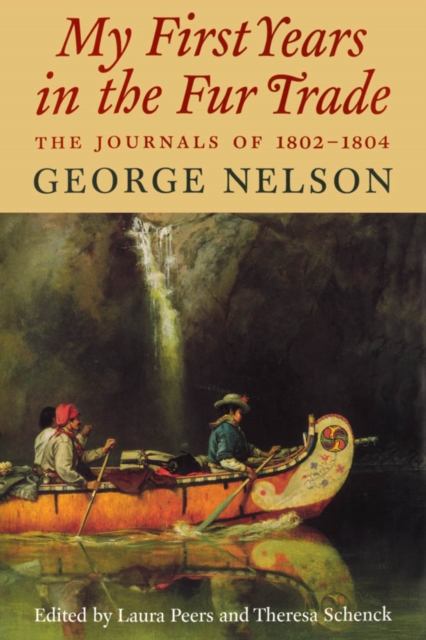
My First Years in the Fur Trade
Captivated by tales of adventure, fifteen-year-old George Nelson left his family in Quebec in 1802 and headed to the Northwest Territory to work for Sir Alexander Mackenzie's XY Company, one of the major fur trade companies of the time. Required to keep a daily log as a fur trade clerk, his growth from homesick lad to experienced fur trader forms the heart of this unique and fascinating journal. He recorded his feelings and thoughts, and was a vital witness to all that went on around him.
eBook
Museums and source communities
This volume combines some of the most influential published research in this emerging field with newly commissioned essays on the issues, problems and lessons involved in collaborating museums and source communities.
Focusing on museums in the UK, North America and the Pacific, the book highlights three areas which demonstrate the new developments most clearly:
the museum as field site or 'contact zone' - a place which source community members enter for purposes of consultation and collaboration
visual repatriation - the use of photography to return images of ancestors, historical moments and material heritage to source communities
exhibition case studies - these are discussed to reveal the implications of cross-cultural and collaborative research for museums, and how such projects have challenged established attitudes and practices.
As the first overview of its kind, this collection will be essential reading for museum
eBook