
Catalogue Search | MBRL


Are you sure you want to remove the book from the shelf?

{{itemTitle}}
132
result(s) for
"Peleg, Yaron"
Sort by:

Secularity and Its Discontents: Religiosity in Contemporary Israeli Culture
This article provides a short history and evaluation of the changes the Jewish religion and Israeli Jews have undergone in Israeli film and television program depictions from the 1970s to the present. The article examines the negative portrayals of religiosity in earlier Israeli films, which were strongly influenced by Zionism's inherent animosity toward Jewish religious expression and practice. It then goes on to note the changes in that portrayal since the year 2000, emphasizing the growing complexity of religious imagery in Israeli films. The article concludes by examining recent television programs, which indicate that Jewish religiosity is comprising an increasingly larger portion of Israeli identity in unprecedented ways.
Journal Article

Brandeis Modern Hebrew
Written by the core faculty of the Hebrew Program at Brandeis University, Brandeis Modern Hebrew is an accessible introduction to the Hebrew language for American undergraduates and high school students. Its functional and contextual elements are designed to bring students from the beginner level to the intermediate level, and to familiarize them with those linguistic aspects that will prepare them to function in advanced stages. This volume reflects some of the main principles that have shaped the Brandeis Hebrew curriculum during the past decade. These include: • an emphasis on the learner's ability to use the target language in all four skills areas: speaking, listening, reading, and writing • an effort to contextualize each unit within a specific subject or theme • exposing the student to authentic and semi-authentic materials (texts written by native speakers) • exploring different elements from Israeli and Jewish culture in the language drills, reading passages, and in selections of sources from the Hebrew literary canon The text in this edition comprises a short introduction to the instructor, 11 units, supplementary Hebrew proficiency guidelines, and a vocabulary list. Audio-visual components for all reading passages are available online for download.
eBook
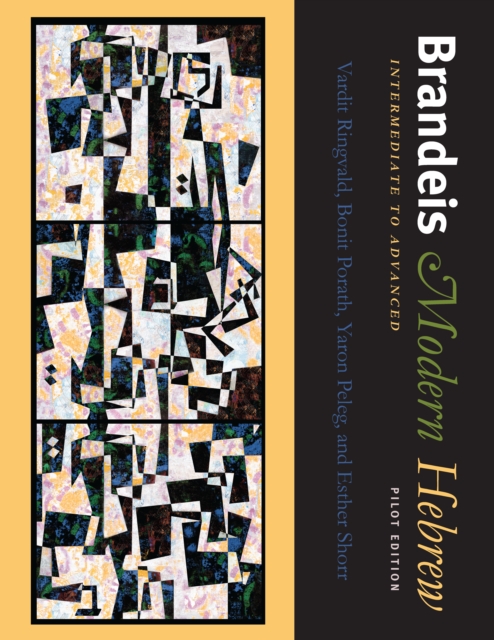
Brandeis Modern Hebrew, Intermediate to Advanced: Pilot Edition
Written by the core faculty of the Hebrew program at Brandeis University, the pilot edition of Brandeis Modern Hebrew, Intermediate to Advanced serves as a sequel to the well-known volume for beginners. It contains the functional and contextual elements to bring users' Hebrew language proficiency to the intermediate level and introduce students to skills they need to become advanced in their use of the language. This volume reflects key principles of the Brandeis University Hebrew curriculum. These include: • Placing emphasis on the learner's ability to use Hebrew in four skill areas: listening, reading, speaking, and writing • Contextualizing each unit within a specific subject or theme • Exposing the student to authentic materials and exploring aspects of Israeli and Jewish culture through language drills and reading passages.
eBook
Israeli Film and Television
After decades-if not almost a whole century-of poor public relations, religious Jews are suddenly crowding the screens of movie theaters, televisions, and computers.
Journal Article
Marking a New Holy Community: God's Neighbors and the Ascendancy of a New Religious Hegemony in Israel
Meni Ya'ish's 2012 film God's Neighbors marks a significant cultural moment in the legitimation of Jewish religiosity in Israel and records an important moment in the country's metamorphosis in recent years, marking a change from a secular, liberal society to a more fundamentalist religious one. The film demonstrates this change in three interrelated ways. First, by combining Jewish religiosity with a powerful and aggressive Israeli Mizrahi masculine identity, the film re-legitimizes Jewish religiosity, presents it as attractive and sexy, and declares it as the new Israeli hegemony. Second, by abstaining from killing members of a rival Arab gang, the film symbolically minimizes the conflict between Jews and Arabs and advances the importance of mythical Jewish time over Zionist historical time. Finally, by ending happily with a union between Avi and his girl Miri, the film provides a neat closure that offers an alluringly simple hasidic-like tale to Jewish life in Israel today. As such, the film marks the decline of Israeli Statism and the rise of alternative redemptive narratives in Israel that are primarily religious.
Journal Article
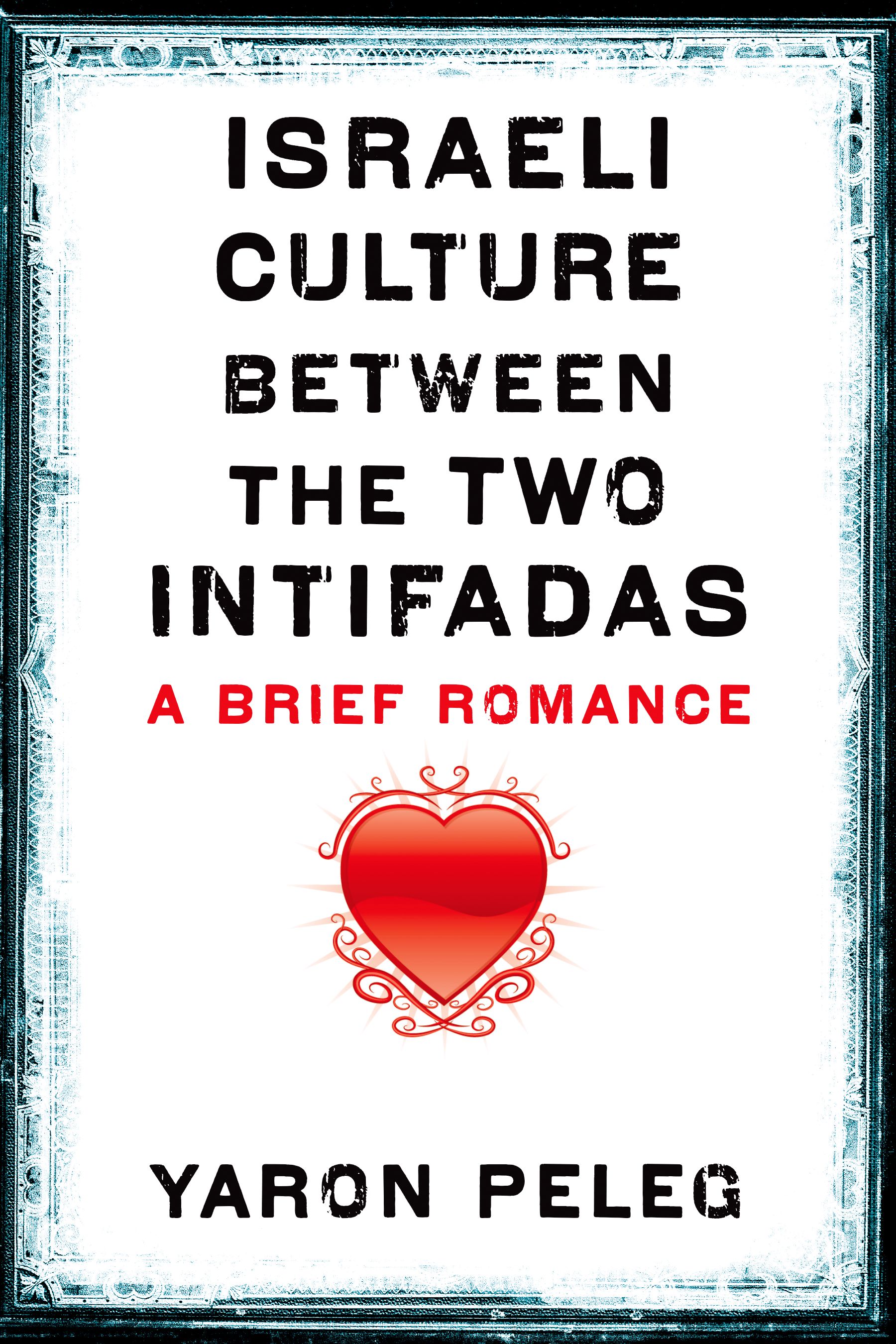
Israeli Culture between the Two Intifadas
Over the past two decades, profound changes in Israel opened its society to powerful outside forces and the dominance of global capitalism. As a result, the centrality of Zionism as an organizing ideology waned, prompting expressions of anxiety in Israel about the coming of a post-Zionist age. The fears about the end of Zionism were quelled, however, by the Palestinian uprising in 2000, which spurred at least a partial return to more traditional perceptions of homeland. Looking at Israeli literature of the late twentieth century, Yaron Peleg shows how a young, urban class of Israelis felt alienated from the Zionist values of their forebears, and how they adopted a form of escapist romanticism as a defiant response that replaced traditional nationalism. One of the first books in English to identify the end of the post-Zionist era through inspired readings of Hebrew literature and popular media, Israeli Culture between the Two Intifadas examines Israel's ambivalent relationship with Jewish nationalism at the end of the twentieth century.
eBook

Israeli culture between the two Intifadas : a brief romance
An intriguing portrait of Israel’s “Generation X,” and the perceived decline in Zionism among contemporary urban Israeli youth between the Palestinian uprisings that began in 1987 and 2000
eBook
Toward a Jewish Religious Realism in Israeli Cinema
The article examines changes in the relationship between film and religion in contemporary Israeli cinema by looking at three films that exemplify these changes, Ushpizin (Gidi Dar, 2004), The Wedding Plan (Rama Burshtein, 2016), and Tikkun (Avishai Sivan, 2015). As a pioneering religious film, Ushpizin introduced two cinematic elements that were developed by subsequent Israeli films dealing with religion or faith. The first element draws its inspiration from the romantic comedy genre and is visible in The Wedding Plan, a romantic comedy that demonstrates the partiality of Israeli religious cinema to a genre that has been marginal in local cinema until recently. The second element explores the power of cinema to convey transcendent, spiritual, or meditative sensibilities in Tikkun, an arthouse film that begins to articulate a new cinematic vocabulary of Jewish religious sensibilities.
Journal Article
Genres in Jewish and Israeli Cinema
[...]Lee Weinberg's article looks at the intersections between Israeli art history and Israeli television series, as well as at their recent international success, to understand what makes contemporary Israeli art and media works accessible to international audiences, and how this recent success reflects changes in Israeli and Jewish constructions of identity.
Journal Article

Heroic Conduct: Homoeroticism and the Creation of Modern, Jewish Masculinities
This article reexamines Daniel Boyarin's assertion regarding the masculinization of Jewish culture during the early stages of Zionism. Although it supports the claim that Zionists wished to create a more masculine Jew, it refutes Boyarin's argument about the queer or homosexual anxiety that accompanied the process. By looking at a variety of literary texts from the past century, the article shows how Hebrew authors were oblivious to the equation of Jewishness with homosexuality. In addition, it shows the endurance of the masculinization model in the way that contemporary gay literature in Israel has adopted it in reverse-by seeking to normalize Israeli gay men through masculine, military associations.
Journal Article