
Catalogue Search | MBRL


Are you sure you want to remove the book from the shelf?

{{itemTitle}}
118
result(s) for
"Peng, Ito"
Sort by:

Mental and Physical Wellbeing of Carer–Employees in Canada
Today, an increasing number of Canadian adults are providing unpaid care to their family members and friends while working full or part-time. We conducted a national survey of unpaid caregiving for older people in 2022 to learn who these people are, why they care, and to identify the social, economic, and health impacts of unpaid caregiving. Our findings show that many of these caregivers are also employees. While most research shows that women caregivers and carer-employees experience work-care tension that results in negative mental and physical health outcomes, our results are more mixed. This paper provides descriptive findings of carer-employee’s health and well-being, and compares them to previous research in Canada and abroad. I conclude with policy options for governments and employers to support the health and well-being of carer-employees.
Journal Article

Impacts of COVID-19 on parents with small children in South Korea: survey findings and policy implications
The COVID-19 pandemic has emphasised the importance of care and care work, and exposed pre-existing inequalities. Our survey of the impacts of COVID-19 on parents with small children in South Korea reveals that mothers were much more likely to bear the increased burden of childcare than fathers, which, in turn, had direct and negative impacts on their well-being. We discuss how South Korea’s dualised labour market, gender-biased employment practice, social norms about childcare and instrumental approach to family and care policies may have contributed to the persistent unequal distribution of unpaid care work within households and gender inequality.
Journal Article

Social and political economy of care in Japan and South Korea
Purpose - The two East Asian developmental states of Japan and South Korea share very similar familialistic male breadwinner welfare regimes. However, in the recent years, both countries have made significant social policy reforms that are gradually modulating their familialistic male breadwinner welfare regimes. Both countries have extended public support for the family and women by provisioning, regulating, and coordinating childcare, elder care, and work-family reconciliation programs. At the same time, labour market deregulation reforms have also made employment more insecure, and created greater pressures on women to seek and maintain paid work outside the home. The purpose of this paper is to compare recent social policy reforms in Japan and Korea and discuss their implications for welfare state changes and gender equality. More specifically, it asks whether this signals the end of the old developmental state paradigm and a shift to a more gender equal policy regime.Design methodology approach - To answer this question, the paper examines recent social policy reforms in conjunction with economic and labour market policy reforms that have also been introduced since 1990.Findings - The analysis of social and economic policy reforms in Japan and South Korea shows a combination of both progressive and instrumentalist motivations behind social care expansions in these countries. Social care reforms in both countries were responses to the evident need for more welfare and gender equality determined by the structural and ideational changes that were taking place. But they were also a remodelling of the earlier developmental state policy framework. Indeed, social care expansions were not merely timely family friendly social policies that aimed to address new social risks; they were also important complements to the employment policy reforms that were being introduced at the same time. By investing in the family, the Japanese and Korean governments sought to mobilize women's human capital, encourage higher fertility, and facilitate job creation in social welfare and care services.Originality value - This paper shows how Japanese and South Korean developmental states might be changing and remodelling themselves in the recent decades, and how new social policies are evolving in close coordination with economic and labor market policy reforms.
Journal Article

Listening in Arabic
This article reflects upon three developments emergent from a feminist approach in research with Syrian newcomer mothers in Toronto, Canada. First, a feminist approach shapes how the authors build their research team and facilitate internal meetings as a diverse, multigenerational group open to learning from others. Second, a feminist approach requires that the authors center mothers’ words through the critical practice of ensuring shared Arabic language and local knowledge in the research process. The authors offer excerpts in Arabic and English from participants’ narratives to describe how giving nuance to multiple forms of expression is key to a feminist practice of translation. Third, the authors describe how this approach opens their project to involve a range of participatory-action activities driven by the voices and desires of participants. The authors end by summarizing their ethical and methodological practices in light of inequalities at the intersection of citizenship status, class, nation, race, and other categories of asymmetrical power. These inequalities shape the authors’ attempts to reorganize conventional participant-researcher and student-faculty dynamics in their work together.
Journal Article

Social Investment Policies in Canada, Australia, Japan, and South Korea
This paper compares the social investment policy reforms that have been introduced by the two Anglo-Saxon liberal welfare regimes of Canada and Australia and the two East Asian welfare regimes of Japan and South Korea since the 1990s. The paper examines the causes of these social policy changes, and asks why these seemingly different contexts produce such similar policy idea. While all four countries share similar broad ideational template and language of social investment, they differ in terms of their target groups and policy instruments. Whereas Canada and Australia have focused their social investment policies on children through ECEC (what I call an “invest in the future” model); Japan and South Korea have approached social investment from a more general human capital and economic activation perspective (what I call a “human capital activation” model). As a result, social investment policies in these countries have targeted more broadly on children, women, and the elderly. I argue that these differences in social investment approaches stem from the differences in their social, political and economic contexts, and the political economic legacies.
Journal Article
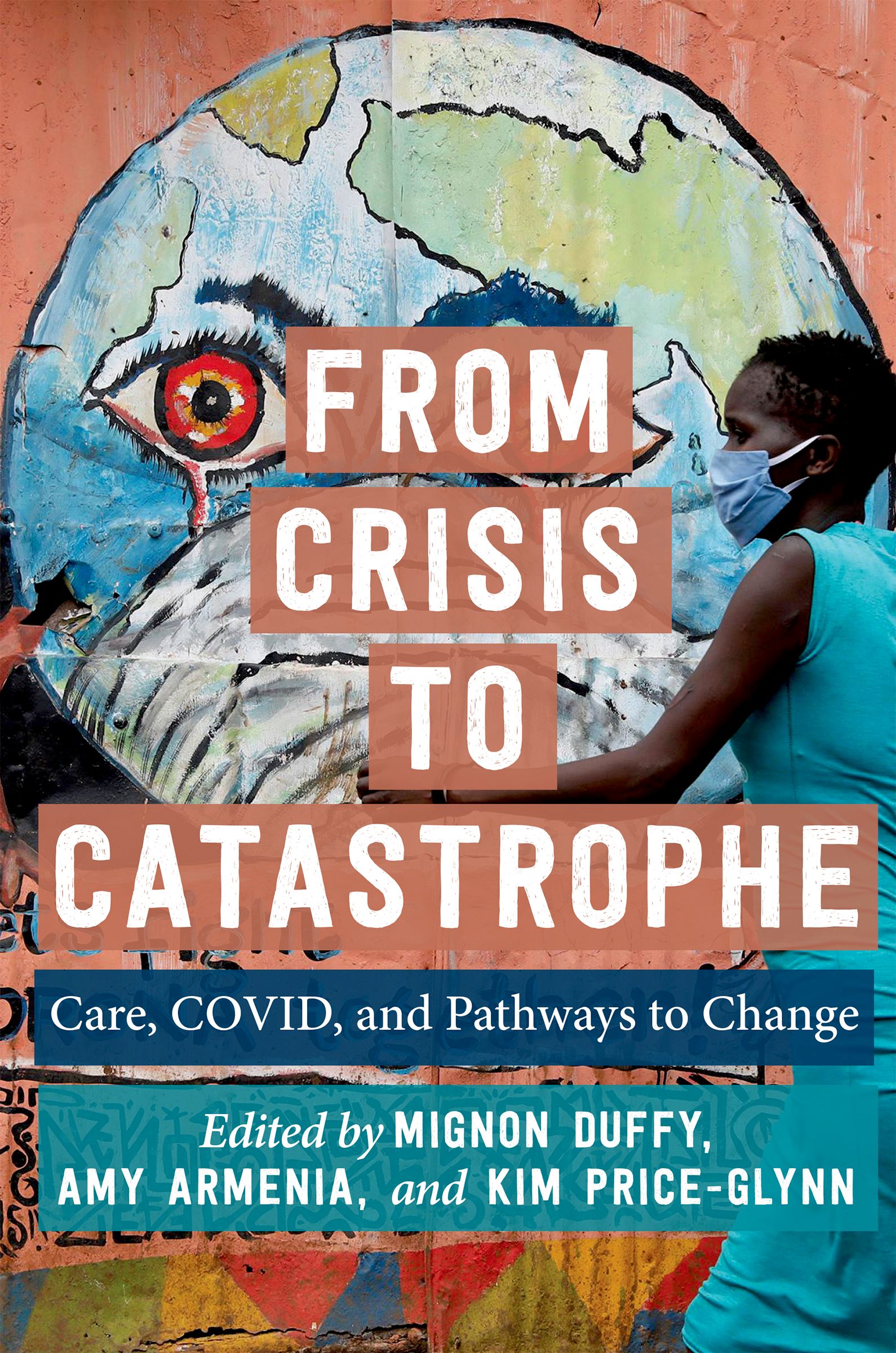
From Crisis to Catastrophe
The COVID pandemic has shaken the material and social foundations of the world more than any event in recent history and has highlighted and exacerbated a longstanding crisis of care. While these challenges may be freshly visible to the public, they are not new. Over the last three decades, a growing body of care scholarship has documented the inadequacy of the social organization of care around the world, and the effect of the devaluation of care on workers, families, and communities. In this volume, a diverse group of care scholars bring their expertise to bear on this recent crisis. In doing so, they consider the ways in which the existing social organization of care in different countries around the globe amplified or mitigated the impact of COVID. They also explore the global pandemic's impact on the conditions of care and its role in exacerbating deeply rooted gender, race, migration, disability, and other forms of inequality.
eBook

Has Multiculturalism Really Failed? A Canadian Muslim Perspective
In recent years, claims that multiculturalism has created segregated communities, encouraged terrorism, and failed to foster shared national identities in western nations have gained popularity. In this paper, we use young Canadian Muslims’ lived experience of multiculturalism to reflect on this debate. Contrary to popular rhetoric, our interviews of 50 young Muslim adults show that many maintain a dual Canadian-Muslim identity by utilizing the ideology of multiculturalism, even though they are increasingly stigmatized for their religion. These findings lead us to problematize the discourse surrounding the ‘failure’ of multiculturalism and to highlight the contradictions within it.
Journal Article
Impacts of COVID-19 on parents with small children in South Korea: survey findings and policy implications
The COVID-19 pandemic has emphasised the importance of care and care work, and exposed pre-existing inequalities. Our survey of the impacts of COVID-19 on parents with small children in South Korea reveals that mothers were much more likely to bear the increased burden of childcare
than fathers, which, in turn, had direct and negative impacts on their well-being. We discuss how South Korea's dualised labour market, gender-biased employment practice, social norms about childcare and instrumental approach to family and care policies may have contributed to the persistent
unequal distribution of unpaid care work within households and gender inequality.
Journal Article

COVID-19, Global Care, and Migration
Covid-19 has put the spotlight on the importance of care and highlighted the preexisting inequalities delineated by carework. As older people and frontline care workers succumb to the coronavirus and parents struggle to manage work and childcare under lockdown conditions, we are reminded of the human costs of unmet care, the deleterious consequences of work–family imbalances, and the hazards and hardship associated with carework. We are also reminded of carework’s utter invisibility. Throughout the world, older people have overwhelmingly fallen victim, and along with them frontline care workers. In Canada, over 80 percent of all COVID-related deaths in 2020
Book Chapter

The expansion of social care and reform
. A falling fertility rate, increasing longevity, government “social investment” strategies to achieve the transformation from industrial to post‐industrial economy, and increased state support to help women balance family and work responsibilities – all these influences have produced mixed results for the poorly paid female care workers in low‐status jobs in the Republic of Korea. The author summarizes policy changes and reports on interviews with childcare and elder‐care workers, policy experts and researchers, showing that though increased regulation and expansion of public childcare have led to some improvements, the deregulation and marketization of elder‐care have resulted in worsening conditions for elder‐care workers.
Journal Article