
Catalogue Search | MBRL


Are you sure you want to remove the book from the shelf?

{{itemTitle}}
4
result(s) for
"Perry, Adele, author"
Sort by:

Structures of indifference : an indigenous life and death in a Canadian city
\"Structures of Indifference examines an Indigenous life and death in a Canadian city, and what it reveals about the ongoing history of colonialism. At the heart of this story is a thirty-four-hour period in September 2008. During that day and half, Brian Sinclair, a middle-aged, non-Status Anishinaabeg resident of Manitoba's capital city, arrived in the emergency room of the Health Sciences Centre, Winnipeg's major downtown hospital, was left untreated and unattended to, and ultimately died from an easily treatable infection. His death reflects a particular structure of indifference born of and maintained by colonialism. McCallum and Perry present the ways in which Sinclair, once erased and ignored, came to represent diffuse, yet singular and largely dehumanized ideas about Indigenous people, modernity, and decline in cities. This story tells us about ordinary indigeneity in the City of Winnipeg through Sinclair's experience and restores the complex humanity denied him in his interactions with Canadian health and legal systems, both before and after his death. Structures of Indifference completes the story left untold by the inquiry into Sinclair's death, the 2014 report of which omitted any consideration of underlying factors, including racism and systemic discrimination.\"--Provided by publisher.
Book
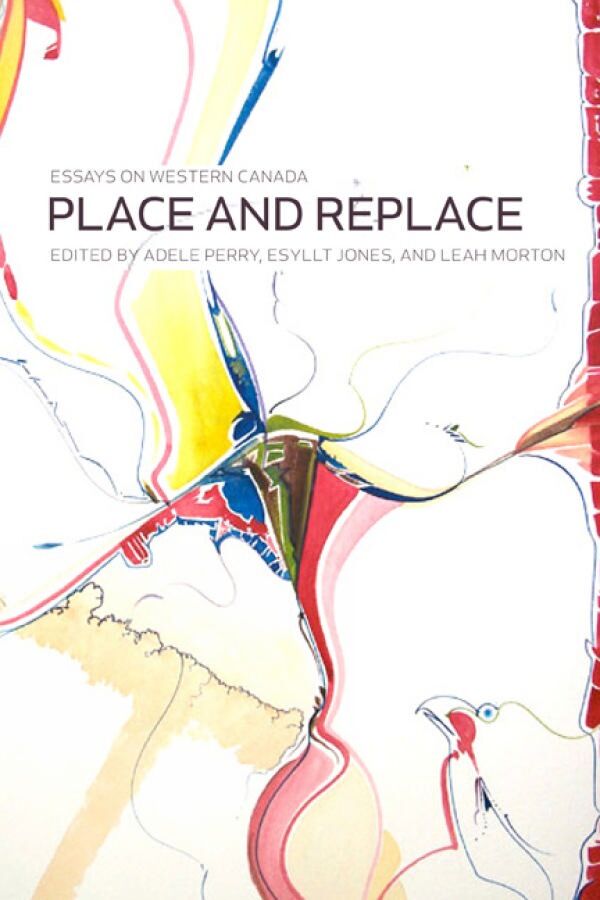
Place and Replace
Place and Replace is a collection of recent interdisciplinary research into Western Canada that calls attention to the multiple political, social, and cultural labours performed by the concept of \"place.\" The book continues a long-standing tradition of situating questions of place at the centre of analyses of Western Canada's cultures, pasts, and politics, while making clear that place is never stable, universal, or static.The essays here confirm the interests and priorities of Western Canadian scholarship that have emerged over the past forty years and remind us of the importance of Indigenous peoples, dispossession, and colonialism; of migration, race and ethnicity; of gender and women's experiences; of the impact of the natural and built environment; and the impact of politics and the state.
eBook
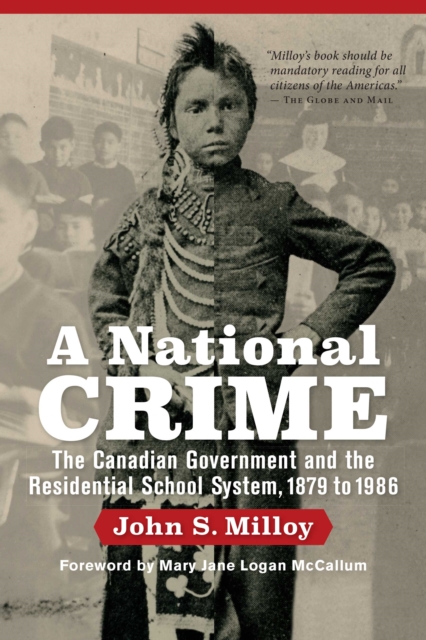
A National Crime
\"I am going to tell you how we are treated. I am always hungry.\"—Edward B., a student at Onion Lake School (1923)
\"[I]f I were appointed by the Dominion Government for the express purpose of spreading tuberculosis, there is nothing finer in existance that the average Indian residential school.\"—N. Walker, Indian Affairs Superintendent (1948)
For over 100 years, thousands of Aboriginal children passed through the Canadian residential school system. Begun in the 1870s, it was intended, in the words of government officials, to bring these children into the \"circle of civilization\"; the results, however, were far different. More often, the schools provided an inferior education in an atmosphere of neglect, disease, and often abuse.
Using previously unreleased government documents, historian John S. Milloy provides a full picture of the history and reality of the residential school system. He begins by tracing the ideological roots of the system, and follows the paper trail of internal memoranda, reports from field inspectors, and letters of complaint. In the early decades, the system grew without planning or restraint. Despite numerous critical commissions and reports, it persisted into the 1970s, when it transformed itself into a social welfare system without improving conditions for its thousands of wards.
A National Crime shows that the residential system was chronically underfunded and often mismanaged, and documents in detail how this affected the health, education, and well-being of entire generations of Indigenous children.
eBook
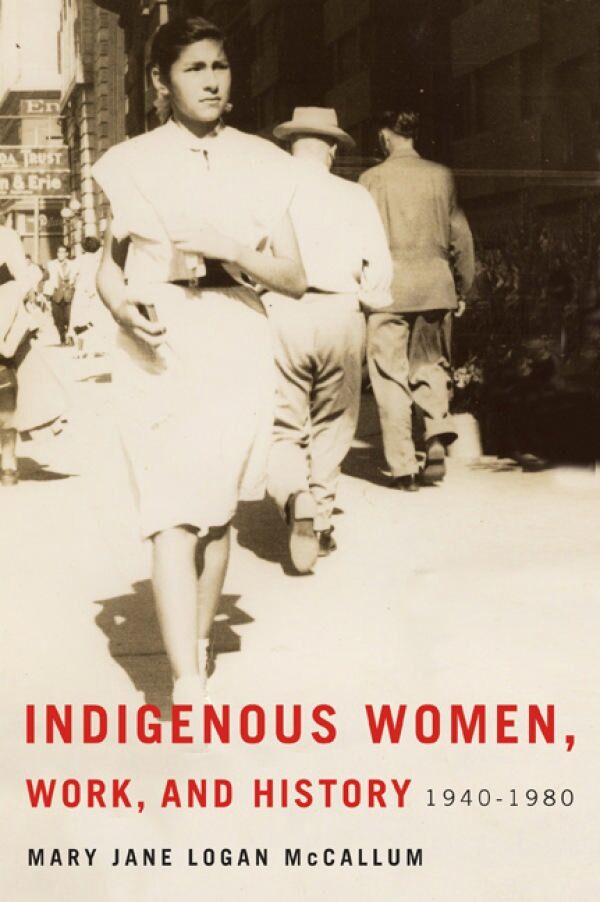
Indigenous Women, Work, and History
When dealing with Indigenous women's history we are conditioned to think about women as private-sphere figures, circumscribed by the home, the reserve, and the community. Moreover, in many ways Indigenous men and women have been cast in static, pre-modern, and one-dimensional identities, and their twentieth century experiences reduced to a singular story of decline and loss. In Indigenous Women, Work, and History, historian Mary Jane Logan McCallum rejects both of these long-standing conventions by presenting case studies of Indigenous domestic servants, hairdressers, community health representatives, and nurses working in \"modern Native ways\" between 1940 and 1980. Based on a range of sources, including the records of the Departments of Indian Affairs and National Health and Welfare, interviews, and print and audio-visual media, McCallum shows how state-run education and placement programs were part of Canada's larger vision of assimilation and extinguishment of treaty obligations. Conversely, she also shows how Indigenous women link these same programs to their social and cultural responsibilities of community building and state resistance. By placing the history of these modern workers within a broader historical context of Aboriginal education and health, federal labour programs, post-war Aboriginal economic and political developments, and Aboriginal professional organizations, McCallum challenges us to think about Indigenous women's history in entirely new ways.
eBook