
Catalogue Search | MBRL


Are you sure you want to remove the book from the shelf?

{{itemTitle}}
2,577
result(s) for
"Peter, Lauren"
Sort by:
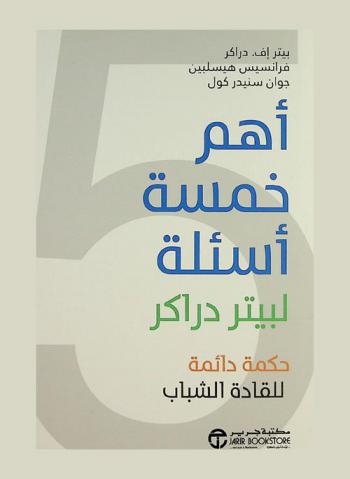
أهم خمسة أسئلة لبيتر دراكر : حكمة دائمة للقادة الشباب
كثيرا ما سأل بيتر إف. دراكر الأشخاص الذين عمل معهم سؤالا بسيطا : كيف تريدون أن يتذكركم الناس ؟. وفي معهد فرانسيس هيسبين للقيادة، وافقنا بالإجماع على مدى أهمية أن نلعب دورا في إلهام الجيل التالي من القادة. وفي عام 2009، اشترك معهد هيسبين مع جامعة بيتسبرج في إطلاق مشروع أكاديمية هيسبين العالمية للقيادة الطلابية والمشاركة المدنية، الذي استقطب 300 طالب موهوب من جميع القارات وعرض عليهم أعمال بيتر دراكر وفرانسيس هيسبين. إن الجيل الأصغر سنا في يومنا هذا-المعروف بجيل الألفية أو الجيل واي، المولود في الفترة ما بين عامي 1980 و 2000-ليس هو الجيل الأكبر بعد، ولكنه أكثر الأجيال تعلما وتنوعا ؛ فقد ضخم حجم التكنولوجيا وسهولة السفر حول العالم من أحلامهم بالعديد من الطرق. وجعلتهم حركة شبكات التواصل الاجتماعي والإعلام الرقمي، بدءا من القنوات المشفرة التقليدية ووصولا إلى مواقع ألفيس بوك وتويتر متواصلين مع بقية العالم بحيث يمكنهم ارتداء الماركات العالمية وكذلك التفاعل مع القضايا حول العالم بطرق استباقية جديدة. كما طوروا شبكات أصدقاء لم تتضمن الجيران أو رفقاءهم في صفوف الرياضة فقط بل تضمنت أصدقاء من أماكن نائية من العالم. ربما لم يلتقوا بهؤلاء الأصدقاء من قبل وجها لوجه، ولكن التواصل فيما بينهم كان له تأثير كبير على حيواتهم، كما نمى لديهم شعورا بالتعاطف العالمي، ولهذا أنا غالبا ما أشير إلى جيل الألفية بأنه الجيل العالمي الأول.
BOOK

Correlates of protection against SARS-CoV-2 in rhesus macaques
Recent studies have reported the protective efficacy of both natural
1
and vaccine-induced
2
–
7
immunity against challenge with severe acute respiratory syndrome coronavirus 2 (SARS-CoV-2) in rhesus macaques. However, the importance of humoral and cellular immunity for protection against infection with SARS-CoV-2 remains to be determined. Here we show that the adoptive transfer of purified IgG from convalescent rhesus macaques (
Macaca mulatta
) protects naive recipient macaques against challenge with SARS-CoV-2 in a dose-dependent fashion. Depletion of CD8
+
T cells in convalescent macaques partially abrogated the protective efficacy of natural immunity against rechallenge with SARS-CoV-2, which suggests a role for cellular immunity in the context of waning or subprotective antibody titres. These data demonstrate that relatively low antibody titres are sufficient for protection against SARS-CoV-2 in rhesus macaques, and that cellular immune responses may contribute to protection if antibody responses are suboptimal. We also show that higher antibody titres are required for treatment of SARS-CoV-2 infection in macaques. These findings have implications for the development of SARS-CoV-2 vaccines and immune-based therapeutic agents.
Adoptive transfer of purified IgG from convalescent macaques protects naive macaques against SARS-CoV-2 infection, and cellular immune responses contribute to protection against rechallenge with SARS-CoV-2.
Journal Article
Antibody and TLR7 agonist delay viral rebound in SHIV-infected monkeys
The latent viral reservoir is the critical barrier for the development of a cure for HIV-1 infection. Previous studies have shown direct antiviral activity of potent HIV-1 Env-specific broadly neutralizing antibodies (bNAbs) administered when antiretroviral therapy (ART) was discontinued, but it remains unclear whether bNAbs can target the viral reservoir during ART. Here we show that administration of the V3 glycan-dependent bNAb PGT121 together with the Toll-like receptor 7 (TLR7) agonist vesatolimod (GS-9620) during ART delayed viral rebound following discontinuation of ART in simian–human immunodeficiency virus (SHIV)-SF162P3-infected rhesus monkeys in which ART was initiated during early acute infection. Moreover, in the subset of monkeys that were treated with both PGT121 and GS-9620 and that did not show viral rebound after discontinuation of ART, adoptive transfer studies and CD8-depletion studies also did not reveal virus. These data demonstrate the potential of bNAb administration together with innate immune stimulation as a possible strategy for targeting the viral reservoir.
In monkeys infected with an AIDS-like virus, a combination of a broadly neutralizing antibody and an immune stimulator during antiretroviral therapy suppressed viral rebound after antiretroviral drug discontinuation.
Journal Article

Anti-HPV16 Antibody Titers Prior to an Incident Cervical HPV16/31 Infection
The goal of this study was to investigate the serological titers of circulating antibodies against human papillomavirus (HPV) type 16 (anti-HPV16) prior to the detection of an incident HPV16 or HPV31 infection amongst vaccinated participants. Patients were selected from a prospective post-HPV vaccine longitudinal cohort at Mount Sinai Adolescent Health Center in Manhattan, NY. We performed a nested case–control study of 43 cases with incident detection of cervical HPV16 (n = 26) or HPV31 (n = 17) DNA who had completed the full set of immunizations of the quadrivalent HPV vaccine (4vHPV). Two control individuals whom had received three doses of the vaccine (HPV16/31-negative) were selected per case, matched on age at the first dose of vaccination and follow-up time in the study: a random control, and a high-risk control that was in the upper quartile of a sexual risk behavior score. We conducted an enzyme-linked immunosorbent assay (ELISA) for the detection of immunoglobulin G (IgG) antibodies specific to anti-HPV16 virus-like particles (VLPs). The results suggest that the average log antibody titers were higher among high-risk controls than the HPV16/31 incident cases and the randomly selected controls. We show a prospective association between anti-HPV16 VLP titers and the acquisition of an HPV16/31 incident infection post-receiving three doses of 4vHPV vaccine.
Journal Article

First-in-human randomized controlled trial of an oral, replicating adenovirus 26 vector vaccine for HIV-1
Live, attenuated viral vectors that express HIV-1 antigens are being investigated as an approach to generating durable immune responses against HIV-1 in humans. We recently developed a replication-competent, highly attenuated Ad26 vector that expresses mosaic HIV-1 Env (rcAd26.MOS1.HIV-Env, \"rcAd26\"). Here we present the results of a first-in-human, placebo-controlled clinical trial to test the safety, immunogenicity and mucosal shedding of rcAd26 given orally.
Healthy adults were randomly assigned to receive a single oral dose of vaccine or placebo at 5:1 ratio in a dosage escalation of 10^8 to 10^11 rcAd26 VP (nominal doses) at University of Rochester Medical Center, Rochester, NY, USA. Participants were isolated and monitored for reactogenicity for 10 days post-vaccination, and adverse events were recorded up to day 112. Rectal and oropharyngeal secretions were evaluated for shedding of the vaccine. Humoral and cellular immune responses were measured. Household contacts were monitored for secondary vaccine transmission.
We enrolled 22 participants and 11 household contacts between February 7 and June 24, 2015. 18 participants received one dose of HIV-1 vaccine and 4 participants received placebo. The vaccine caused only mild to moderate adverse events. No vaccine-related SAEs were observed. No infectious rcAd26 viral particles were detected in rectal or oropharyngeal secretions from any participant. Env-specific ELISA and ELISPOT responses were undetectable. No household contacts developed vaccine-induced HIV-1 seropositivity or vaccine-associated illness.
The highly attenuated rcAd26.MOS1.HIV-Env vaccine was well tolerated up to 10^11 VP in healthy, HIV-1-uninfected adults, though the single dose was poorly immunogenic suggesting the replicative capacity of the vector was too attenuated. There was no evidence of shedding of infectious virus or secondary vaccine transmission following the isolation period. These data suggest the use of less attenuated viral vectors in future studies of live, oral HIV-1 vaccines.
ClinicalTrials.gov NCT02366013.
Journal Article

Defining the determinants of protection against SARS-CoV-2 infection and viral control in a dose-down Ad26.CoV2.S vaccine study in nonhuman primates
Despite the rapid creation of Severe Acute Respiratory Syndrome Coronavirus 2 (SARS-CoV-2) vaccines, the precise correlates of immunity against severe Coronavirus Disease 2019 (COVID-19) are still unknown. Neutralizing antibodies represent a robust surrogate of protection in early Phase III studies, but vaccines provide protection prior to the evolution of neutralization, vaccines provide protection against variants that evade neutralization, and vaccines continue to provide protection against disease severity in the setting of waning neutralizing titers. Thus, in this study, using an Ad26.CoV2.S dose-down approach in nonhuman primates (NHPs), the role of neutralization, Fc effector function, and T-cell immunity were collectively probed against infection as well as against viral control. While dosing-down minimally impacted neutralizing and binding antibody titers, Fc receptor binding and functional antibody levels were induced in a highly dose-dependent manner. Neutralizing antibody and Fc receptor binding titers, but minimally T cells, were linked to the prevention of transmission. Conversely, Fc receptor binding/function and T cells were linked to antiviral control, with a minimal role for neutralization. These data point to dichotomous roles of neutralization and T-cell function in protection against transmission and disease severity and a continuous role for Fc effector function as a correlate of immunity key to halting and controlling SARS-CoV-2 and emerging variants.
Journal Article
Rapid seeding of the viral reservoir prior to SIV viraemia in rhesus monkeys
Reservoirs of virus infection represent the most important reason why HIV-1 cannot be cured with current antiretroviral drugs; now the refractory viral reservoir is shown to be seeded as early as 3 days after infection in a monkey model, even before the virus is detected in the blood.
Early HIV-1 reservoir formation
Reservoirs of virus infection, impervious to antiviral drugs, are a serious obstacle to attempts to eradicate human immunodeficiency virus type 1 (HIV-1). Dan Barouch and colleagues explore the timing of the formation of these reservoirs in a monkey model. They find that antiviral treatment as early as three days after infection of macaques with simian immunodeficiency virus — prior to the onset of viraemia — fails to prevent the seeding of viral reservoirs, and the virus eventually rebounds when drug treatment is discontinued.
The viral reservoir represents a critical challenge for human immunodeficiency virus type 1 (HIV-1) eradication strategies
1
,
2
,
3
,
4
,
5
. However, it remains unclear when and where the viral reservoir is seeded during acute infection and the extent to which it is susceptible to early antiretroviral therapy (ART). Here we show that the viral reservoir is seeded rapidly after mucosal simian immunodeficiency virus (SIV) infection of rhesus monkeys and before systemic viraemia. We initiated suppressive ART in groups of monkeys on days 3, 7, 10 and 14 after intrarectal SIV
MAC251
infection. Treatment with ART on day 3 blocked the emergence of viral RNA and proviral DNA in peripheral blood and also substantially reduced levels of proviral DNA in lymph nodes and gastrointestinal mucosa as compared with treatment at later time points. In addition, treatment on day 3 abrogated the induction of SIV-specific humoral and cellular immune responses. Nevertheless, after discontinuation of ART following 24 weeks of fully suppressive therapy, virus rebounded in all animals, although the monkeys that were treated on day 3 exhibited a delayed viral rebound as compared with those treated on days 7, 10 and 14. The time to viral rebound correlated with total viraemia during acute infection and with proviral DNA at the time of ART discontinuation. These data demonstrate that the viral reservoir is seeded rapidly after intrarectal SIV infection of rhesus monkeys, during the ‘eclipse’ phase, and before detectable viraemia. This strikingly early seeding of the refractory viral reservoir raises important new challenges for HIV-1 eradication strategies.
Journal Article

Induction of HIV-1–Specific Mucosal Immune Responses Following Intramuscular Recombinant Adenovirus Serotype 26 HIV-1 Vaccination of Humans
Background. Defining mucosal immune responses and inflammation to candidate human immunodeficiency virus type 1 (HIV-1) vaccines represents a current research priority for the HIV-1 vaccine field. In particular, it is unclear whether intramuscular immunization can elicit immune responses at mucosal surfaces in humans. Methods. In this double-blind, randomized, placebo-controlled clinical trial, we evaluated systemic and mucosal immune responses to a candidate adenovirus serotype 26 (Ad26) vectored HIV-1 envelop (Env) vaccine in baseline Ad26-seronegative and Ad26-seropositive healthy volunteers. Systematic mucosal sampling with rectal Weck-Cel sponges and rectal biopsies were performed. Results. Intramuscular immunization elicited both systemic and mucosal Env-specific humoral and cellular immune responses in the majority of subjects. Individuals with preexisting Ad26-specific neutralizing antibodies had vaccine-elicited immune responses comparable to those of subjects who were Ad26 seronegative. We also observed no increase in activated total or vector-specific mucosal CD4⁺ T lymphocytes following vaccination by either histopathology or flow cytometry. Conclusions. These data demonstrate that a single intramuscular administration of this Ad26-vectored HIV-1 Env vaccine elicited both systemic and mucosal immune responses in humans. Induction of antigen-specific humoral and cellular mucosal immunity was not accompanied by a detectable increase in mucosal inflammation.
Journal Article

Gut microbiota, circulating inflammatory markers and metabolites, and carotid artery atherosclerosis in HIV infection
Background
Alterations in gut microbiota have been implicated in HIV infection and cardiovascular disease. However, how gut microbial alterations relate to host inflammation and metabolite profiles, and their relationships with atherosclerosis, have not been well-studied, especially in the context of HIV infection. Here, we examined associations of gut microbial species and functional components measured by shotgun metagenomics with carotid artery plaque assessed by B-mode carotid artery ultrasound in 320 women with or at high risk of HIV (65% HIV +) from the Women’s Interagency HIV Study. We further integrated plaque-associated microbial features with serum proteomics (74 inflammatory markers measured by the proximity extension assay) and plasma metabolomics (378 metabolites measured by liquid chromatography tandem mass spectrometry) in relation to carotid artery plaque in up to 433 women.
Results
Fusobacterium nucleatum
, a potentially pathogenic bacteria, was positively associated with carotid artery plaque, while five microbial species (
Roseburia hominis
,
Roseburia inulinivorans
,
Johnsonella ignava
,
Odoribacter splanchnicus
,
Clostridium saccharolyticum
) were inversely associated with plaque. Results were consistent between women with and without HIV.
Fusobacterium nucleatum
was positively associated with several serum proteomic inflammatory markers (e.g., CXCL9), and the other plaque-related species were inversely associated with proteomic inflammatory markers (e.g., CX3CL1). These microbial-associated proteomic inflammatory markers were also positively associated with plaque. Associations between bacterial species (especially
Fusobacterium nucleatum
) and plaque were attenuated after further adjustment for proteomic inflammatory markers. Plaque-associated species were correlated with several plasma metabolites, including the microbial metabolite imidazole-propionate (ImP), which was positively associated with plaque and several pro-inflammatory markers. Further analysis identified additional bacterial species and bacterial
hutH
gene (encoding enzyme histidine ammonia-lyase in ImP production) associated with plasma ImP levels. A gut microbiota score based on these ImP-associated species was positively associated with plaque and several pro-inflammatory markers.
Conclusion
Among women living with or at risk of HIV, we identified several gut bacterial species and a microbial metabolite ImP associated with carotid artery atherosclerosis, which might be related to host immune activation and inflammation.
C3iH5Kb-7Cp2aWsNqgxHA4
Video Abstract
Journal Article

Personal neoantigen vaccines induce persistent memory T cell responses and epitope spreading in patients with melanoma
Personal neoantigen vaccines have been envisioned as an effective approach to induce, amplify and diversify antitumor T cell responses. To define the long-term effects of such a vaccine, we evaluated the clinical outcome and circulating immune responses of eight patients with surgically resected stage IIIB/C or IVM1a/b melanoma, at a median of almost 4 years after treatment with NeoVax, a long-peptide vaccine targeting up to 20 personal neoantigens per patient (
NCT01970358
). All patients were alive and six were without evidence of active disease. We observed long-term persistence of neoantigen-specific T cell responses following vaccination, with ex vivo detection of neoantigen-specific T cells exhibiting a memory phenotype. We also found diversification of neoantigen-specific T cell clones over time, with emergence of multiple T cell receptor clonotypes exhibiting distinct functional avidities. Furthermore, we detected evidence of tumor infiltration by neoantigen-specific T cell clones after vaccination and epitope spreading, suggesting on-target vaccine-induced tumor cell killing. Personal neoantigen peptide vaccines thus induce T cell responses that persist over years and broaden the spectrum of tumor-specific cytotoxicity in patients with melanoma.
Personalized neoantigen vaccination in patients with melanoma elicits durable and specific memory T cell clones that have cytotoxic gene signatures and can diversify to include nonvaccine neoantigen specificities.
Journal Article