
Catalogue Search | MBRL


Are you sure you want to remove the book from the shelf?

{{itemTitle}}
5,609
result(s) for
"Phillips, Tom"
Sort by:


Sex-specific differences in the mechanisms for enhanced thromboxane A2-mediated vasoconstriction in adult offspring exposed to prenatal hypoxia
Background
Prenatal hypoxia, a common pregnancy complication, leads to impaired cardiovascular outcomes in the adult offspring. It results in impaired vasodilation in coronary and mesenteric arteries of the adult offspring, due to reduced nitric oxide (NO). Thromboxane A
2
(TxA
2
) is a potent vasoconstrictor increased in cardiovascular diseases, but its role in the impact of prenatal hypoxia is unknown. To prevent the risk of cardiovascular disease by prenatal hypoxia, we have tested a maternal treatment using a nanoparticle-encapsulated mitochondrial antioxidant (nMitoQ). We hypothesized that prenatal hypoxia enhances vascular TxA
2
responses in the adult offspring, due to decreased NO modulation, and that this might be prevented by maternal nMitoQ treatment.
Methods
Pregnant Sprague–Dawley rats received a single intravenous injection (100 µL) of vehicle (saline) or nMitoQ (125 µmol/L) on gestational day (GD)15 and were exposed to normoxia (21% O
2
) or hypoxia (11% O
2
) from GD15 to GD21 (term = 22 days). Coronary and mesenteric arteries were isolated from the 4-month-old female and male offspring, and vasoconstriction responses to U46619 (TxA
2
analog) were evaluated using wire myography. In mesenteric arteries, L-NAME (pan-NO synthase (NOS) inhibitor) was used to assess NO modulation. Mesenteric artery endothelial (e)NOS, and TxA
2
receptor expression, superoxide, and 3-nitrotyrosine levels were assessed by immunofluorescence.
Results
Prenatal hypoxia resulted in increased U46619 responsiveness in coronary and mesenteric arteries of the female offspring, and to a lesser extent in the male offspring, which was prevented by nMitoQ. In females, there was a reduced impact of L-NAME in mesenteric arteries of the prenatal hypoxia saline-treated females, and reduced 3-nitrotyrosine levels. In males, L-NAME increased U46619 responses in mesenteric artery to a similar extent, but TxA
2
receptor expression was increased by prenatal hypoxia. There were no changes in eNOS or superoxide levels.
Conclusions
Prenatal hypoxia increased TxA
2
vasoconstrictor capacity in the adult offspring in a sex-specific manner, via reduced NO modulation in females and increased TP expression in males. Maternal placental antioxidant treatment prevented the impact of prenatal hypoxia. These findings increase our understanding of how complicated pregnancies can lead to a sex difference in the programming of cardiovascular disease in the adult offspring.
Graphical Abstract
Highlights
Prenatal hypoxia increases thromboxane-mediated vasoconstrictor responses in both coronary and mesenteric arteries from the adult female and male offspring. This was more pronounced in females, and was prevented by maternal placental antioxidant treatment in pregnancy.
The mechanisms for the increased thromboxane-mediated vasoconstrictor responses by prenatal hypoxia exposure were sex-specific, where females had reduced nitric oxide modulation of vasoconstriction, while males had increased thromboxane receptor expression.
There are sex-specific differences on how prenatal hypoxia impairs vascular function in the adult offspring. Placenta-targeted therapies in pregnancy should be considered to improve cardiovascular outcomes in the offspring later life but should take the sex of the fetus into consideration.
Plain language summary
Prenatal hypoxia, when the fetus does not receive enough oxygen, is a common problem during pregnancy that impacts the developing fetus. It is associated with an increased risk of cardiovascular disease in the offspring in adulthood. While the mechanisms are not fully understood, the blood vessel function in the offspring may be impacted by prenatal hypoxia. We hypothesize that prenatal hypoxia increases the constriction of the blood vessels in the offspring. The placenta, an essential organ for fetal development, supplies oxygen and nutrients to the fetus. In prenatal hypoxia pregnancies, the placenta does not work properly. We have been studying a placental treatment (called nMitoQ) to improve placenta function and thereby the blood vessel function of the offspring. We used a rat model of prenatal hypoxia, where pregnant rats (dams) were placed in a low oxygen environment (hypoxia) during the last trimester of pregnancy. Control rats were kept in normal oxygen conditions. The dams were treated with nMitoQ, or with saline (control). Next, we studied the blood vessels of the offspring in adulthood. We found that prenatal hypoxia increases the constriction of the blood vessels, which was prevented by treating the dams with nMitoQ. Interestingly, this impact was more severe in females compared to males, and the mechanisms were different between the sexes. This study helps in the understanding of how complicated pregnancies can impair cardiovascular health in the offspring, and in a potential development of targeted and sex-specific therapies for those offspring at high risk for future cardiovascular disease.
Journal Article

البشر : موجز تاريخ الفشل وكيف أفسدنا كل شيء
يتناول كتاب (البشر : موجز تاريخ الفشل وكيف أفسدنا كل شيء) والذي قام بتأليفه (توم فيليبس) في حوالي (254) صفحة من القطع المتوسط المحتويات التالية : ما سبب حماقة التفكير؟، يا لها من بيئة رائعة، الحياة تجد دوما طريقة للبقاء، فلنتبع القائد، قوة الشعب، الحرب ما فائدها؟، حفلة استعمارية رائعة للغاية، دليل رئيس غبي لتحقيق الديمقراطية، حرارة التكنولوجيا.
Book

Sex-Specific Effects of Prenatal Hypoxia and a Placental Antioxidant Treatment on Cardiac Mitochondrial Function in the Young Adult Offspring
Prenatal hypoxia is associated with placental oxidative stress, leading to impaired fetal growth and an increased risk of cardiovascular disease in the adult offspring; however, the mechanisms are unknown. Alterations in mitochondrial function may result in impaired cardiac function in offspring. In this study, we hypothesized that cardiac mitochondrial function is impaired in adult offspring exposed to intrauterine hypoxia, which can be prevented by placental treatment with a nanoparticle-encapsulated mitochondrial antioxidant (nMitoQ). Cardiac mitochondrial respiration was assessed in 4-month-old rat offspring exposed to prenatal hypoxia (11% O2) from gestational day (GD)15–21 receiving either saline or nMitoQ on GD 15. Prenatal hypoxia did not alter cardiac mitochondrial oxidative phosphorylation capacity in the male offspring. In females, the NADH + succinate pathway capacity decreased by prenatal hypoxia and tended to be increased by nMitoQ. Prenatal hypoxia also decreased the succinate pathway capacity in females. nMitoQ treatment increased respiratory coupling efficiency in prenatal hypoxia-exposed female offspring. In conclusion, prenatal hypoxia impaired cardiac mitochondrial function in adult female offspring only, which was improved with prenatal nMitoQ treatment. Therefore, treatment strategies targeting placental oxidative stress in prenatal hypoxia may reduce the risk of cardiovascular disease in adult offspring by improving cardiac mitochondrial function in a sex-specific manner.
Journal Article


The Effectiveness of Alcohol Screening and Brief Intervention in Emergency Departments: A Multicentre Pragmatic Cluster Randomized Controlled Trial
Alcohol misuse is common in people attending emergency departments (EDs) and there is some evidence of efficacy of alcohol screening and brief interventions (SBI). This study investigated the effectiveness of SBI approaches of different intensities delivered by ED staff in nine typical EDs in England: the SIPS ED trial.
Pragmatic multicentre cluster randomized controlled trial of SBI for hazardous and harmful drinkers presenting to ED. Nine EDs were randomized to three conditions: a patient information leaflet (PIL), 5 minutes of brief advice (BA), and referral to an alcohol health worker who provided 20 minutes of brief lifestyle counseling (BLC). The primary outcome measure was the Alcohol Use Disorders Identification Test (AUDIT) status at 6 months. Of 5899 patients aged 18 or more presenting to EDs, 3737 (63·3%) were eligible to participate and 1497 (40·1%) screened positive for hazardous or harmful drinking, of whom 1204 (80·4%) gave consent to participate in the trial. Follow up rates were 72% (n = 863) at six, and 67% (n = 810) at 12 months. There was no evidence of any differences between intervention conditions for AUDIT status or any other outcome measures at months 6 or 12 in an intention to treat analysis. At month 6, compared to the PIL group, the odds ratio of being AUDIT negative for brief advice was 1·103 (95% CI 0·328 to 3·715). The odds ratio comparing BLC to PIL was 1·247 (95% CI 0·315 to 4·939). A per protocol analysis confirmed these findings.
SBI is difficult to implement in typical EDs. The results do not support widespread implementation of alcohol SBI in ED beyond screening followed by simple clinical feedback and alcohol information, which is likely to be easier and less expensive to implement than more complex interventions.
Current Controlled Trials ISRCTN 93681536.
Journal Article

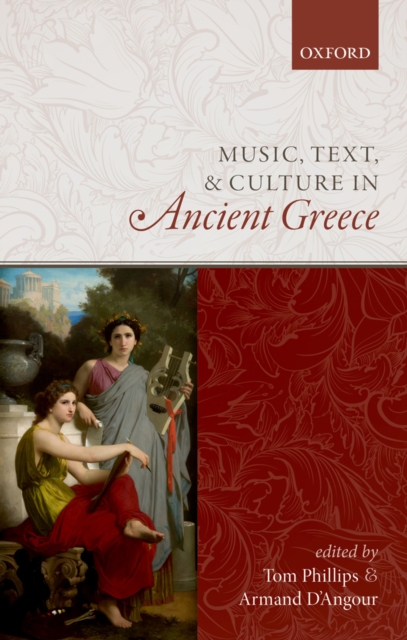
Music, text, and culture in ancient Greece
This book explores the interaction between music and poetry in ancient Greece. Although scholars have long recognized the importance of music to ancient performance culture, little has been written on the specific effects that musical accompaniment and features such as rhythmical structure and melody would have created in individual poems. The chapters in the first half of the volume engage closely with the evidential and interpretative challenges that this issue poses, and propose original readings of a range of texts, including Homer, Pindar, and Euripides, as well as later poets such as Seikilos and Mesomedes. While they emphasize different formal features, they argue collectively for a two-way relationship between music and language. Attention to the musical features of poetic texts, insofar as we can reconstruct them, enables us to better understand not only their effects on audiences, but also the various ways in which they project and structure meaning. In part two, the focus shifts to ancient attempts to conceptualize interractions between words and music; the essays in this section analyse the contested place that music occupied in Plato, Aristotle, Plutarch, and other critical writers of the Hellenistic and Imperial periods. Thinking about music is shown to influence other domains of intellectual life, such as literary criticism, and to be vitally informed by ethical concerns.
eBook

Wonder Woman
\"From his co-creation, with Marv Wolfman, of THE NEW TEEN TITANS in the 80s and his work on CRISIS ON INFINITE EARTHS and WONDER WOMAN to his mega-successful JLA/AVENGERS, Pérez's work has thrilled comics fans for over three decades. Wonder Woman's first assignment in this new series takes her to Man's World, to teach humanity the ways of the goddess Gaea--no matter who objects. This omnibus collects the start of Perez's acclaimed run on Wonder Woman, presenting a thrilling new vision of the Amazon Warrior\"-- Provided by publisher.
Book
What the Coachman Said: Servants and Servanthood in Mansfield Park
Mrs. Norris, however, is a special case, and Austen makes it clear in what follows that she is not advocating any change in the social order. Fanny has no aversion to work, but the inversion of class order shocks her to the core.1 Casting off her timidity, she begins to act and speak on her own behalf—joining a library and making an apprentice of her younger sister Susan, to teach her the ordered ways of Mansfield Park. The story lands in the newspaper, and Fanny reads it in Portsmouth—her first word of the scandal that will undo all the Crawfords’ designs on Mansfield Park, Edmund, and herself (509ff). Burke defends the class structure of English society but will not “confine power, authority, and distinction to blood, and names, and titles.”
Journal Article