
Catalogue Search | MBRL


Are you sure you want to remove the book from the shelf?

{{itemTitle}}
44
result(s) for
"Pilgrim, Sarah"
Sort by:

Black Panther : prelude
Wakanda. The most technologically advanced nation in the world is protected by the mighty Black Panther! Learn how T'challa became the legendary hero of Wakanda in this all-new tale set in the Marvel Cinematic Universe! See how the mantle was passed to the future king, in a time when super heroes were just emerging in the larger world.
Book

The Intersections of Biological Diversity and Cultural Diversity
There is an emerging recognition that the diversity of life comprises both biological and cultural diversity. In the past, however, it has been common to make divisions between nature and culture, arising partly out of a desire to control nature. The range of interconnections between biological and cultural diversity are reflected in the growing variety of environmental sub-disciplines that have emerged. In this article, we present ideas from a number of these sub-disciplines. We investigate four bridges linking both types of diversity (beliefs and worldviews, livelihoods and practices, knowledge bases and languages, and norms and institutions), seek to determine the common drivers of loss that exist, and suggest a novel and integrative path forwards. We recommend that future policy responses should target both biological and cultural diversity in a combined approach to conservation. The degree to which biological diversity is linked to cultural diversity is only beginning to be understood. But it is precisely as our knowledge is advancing that these complex systems are under threat. While conserving nature alongside human cultures presents unique challenges, we suggest that any hope for saving biological diversity is predicated on a concomitant effort to appreciate and protect cultural diversity.
Journal Article
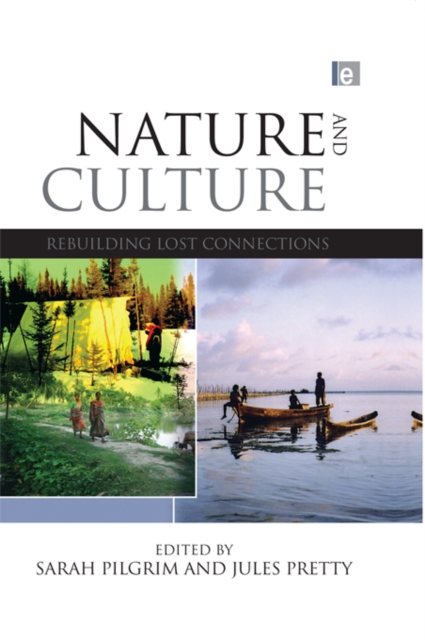
Nature and Culture
There is a growing recognition that the diversity of life comprises both biological and cultural diversity. But this division is not universal and, in many cases, has been deepened by the common disciplinary divide between the natural and social sciences and our apparent need to manage and control nature.
This book goes beyond divisive definitions and investigates the bridges linking biological and cultural diversity. The international team of authors explore the common drivers of loss, and argue that policy responses should target both forms of diversity in a novel integrative approach to conservation, thus reducing the gap between science, policy and practice. While conserving nature alongside human cultures presents unique challenges, this book forcefully shows that any hope for saving biological diversity is predicated on a concomitant effort to appreciate and protect cultural diversity.
eBook

Maximizing Utilization of Peer Specialists in Community Mental Health: The Next Step in Implementation
The successful implementation of peer support services in community mental health centers requires the maximum utilization of peer specialists in order to meet the needs of the consumer, the agency and the peer specialist so that they receive the full benefits of their employment. This study identifies factors that positively and negatively impact the referral to and utilization of peer support services by traditional providers and strategies for achieving optimal utilization.
Journal Article

Exploring Body Image, Contraceptive Use, and Sexual Health Outcomes Among an Ethnically Diverse Sample of Women
This cross-sectional study examined the links between body appreciation, contraceptive use, and sexual health outcomes. Body appreciation has been shown to influence contraceptive use in homogenous samples of women. However, a common problem in body image literature is a lack of racial and ethnic diversity with regard to sample; this study was able to take steps toward overcoming that limitation. A sample of 499 women aged 18–56 (
M
= 26.24; SD = 6.15) was recruited via Reddit.com—White (29.3%,
n
= 120), Asian (19%,
n
= 78), Black (17.3%,
n
= 73), multiracial (13.9%,
n
= 57), and Latina (13.9%,
n
= 57). Covariates included race/ethnicity, body size as measured by body mass index, relationship status, age, sexual orientation, and education level. Results indicated that higher levels of body appreciation were related to a higher likelihood of using non-barrier contraception. Regarding the covariates, race, relationship status, age, and education were related to non-barrier contraceptive use and age was related to dual contraceptive use. Further exploration is needed to determine how body appreciation may affect contraceptive use and sexual health outcomes and how these differ by race/ethnicity.
Journal Article

cross-regional assessment of the factors affecting ecoliteracy: implications for policy and practice
The value of accumulated ecological knowledge, termed ecoliteracy, is vital to both human and ecosystem health. Maintenance of this knowledge is essential for continued support of local conservation efforts and the capacity of communities to self- or co-manage their local resources sustainably. Most previous studies have been qualitative and small scale, documenting ecoliteracy in geographically isolated locations. In this study, we take a different approach, focusing on (1) the primary factors affecting individual levels of ecoliteracy, (2) whether these factors shift with economic development, and (3) if different knowledge protection strategies are required for the future. We compared non-resource-dependent communities in the United Kingdom with resource-dependent communities in India and Indonesia (n = 1250 interviews). We found that UK residents with the highest levels of ecoliteracy visited the countryside frequently, lived and grew up in rural areas, and acquired their knowledge from informal word-of-mouth sources, such as parents and friends, rather than television and schooling. The ecoliteracy of resource-dependent community members, however, varied with wealth status and gender. The least wealthy families depended most on local resources for their livelihoods and had the highest levels of ecoliteracy. Gender roles affected both the level and content of an individual's ecoliteracy. The importance of reciprocal oral transfer of this knowledge in addition to direct experience to the maintenance of ecoliteracy was apparent at all sites. Lessons learned may contribute to new local resource management strategies for combined ecoliteracy conservation. Without novel policies, local community management capacity is likely to be depleted in the future.
Journal Article

Commentary: Are biofuel policies opening up the channels to world trade?
According to the World Bank, the price of food increased by 83% between 2005 and 2008. By taking a step back from international agricultural markets to focus on homegrown trade, industrialized countries may inadvertently allow the world food market to regain some sense of balance and fair trade.
Journal Article

Nature and culture : rebuilding lost connections / edited by Sarah Pilgrim and Jules Pretty
There is a growing recognition that the diversity of life comprises both biological and cultural diversity. But this division is not universal and, in many cases, has been deepened by the common disciplinary divide between the natural and social sciences and our apparent need to manage and control nature. This book goes beyond divisive definitions and investigates the bridges linking biological and cultural diversity. The authors explore the common drivers of loss, and argue that policy responses should target both forms of diversity in a novel integrative approach to conservation, thus reducing the gap between science, policy and practice. While conserving nature alongside human cultures presents unique challenges, this book forcefully shows that any hope for saving biological diversity is predicated on a concomitant effort to appreciate and protect cultural diversity.
eBook

Social Work and Sexual Health
Sexual health has been a focus of interdisciplinary professionals for centuries. The social work profession, however, did not and has not completely committed itself to the field of sexuality despite the fit between sexual health, sexuality, and social work. This chapter will guide you through the history of the Social Work Profession as it relates to human sexuality and sexual health. From the time of Settlement houses to the world of online \"hook-ups\", sexuality has been identified as a vital aspect of any individual's life course. Social workers work within, around, and in collaboration with other professionals to address and intervene in issues of sexuality and sexual health. However, our profession must commit to this practice and policy area to improve the lives of our clients while working towards equality in sexual health.
Book Chapter