
Catalogue Search | MBRL


Are you sure you want to remove the book from the shelf?

{{itemTitle}}
4
result(s) for
"Pisters, Patricia, author"
Sort by:

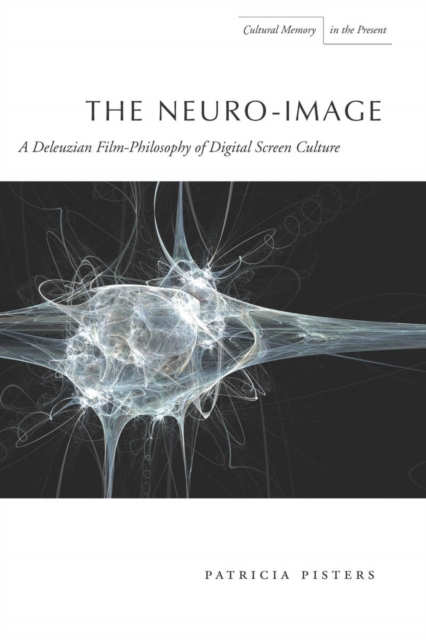
The neuro-image : a Deleuzian film-philosophy of digital screen culture
Arguing that today's viewers move through a character's brain instead of looking through his or her eyes or mental landscape, this book approaches twenty-first-century globalized cinema through the concept of the \"neuro-image.\" Pisters explains why this concept has emerged now, and she elaborates its threefold nature through research from three domains—Deleuzian (schizoanalytic) philosophy, digital networked screen culture, and neuroscientific research. These domains return in the book's tripartite structure. Part One, on the brain as \"neuroscreen,\" suggests rich connections between film theory, mental illness, and cognitive neuroscience. Part Two explores neuro-images from a philosophical perspective, paying close attention to their ontological, epistemological, and aesthetic dimensions. Political and ethical aspects of the neuro-image are discussed in Part Three. Topics covered along the way include the omnipresence of surveillance, the blurring of the false and the real and the affective powers of the neo-baroque, and the use of neuro-images in politics, historical memory, and war.
eBook
Lessen van Hitchcock, herziene editie
This book offers a comprehensive overview of the most important theoretical visions on film, television, and new media The works of the legendary film director and producer Alfred Hitchcock that cover an extensive period have had a huge influence on film and television history. His work forms the main theme in this excellent introduction and provides the starting point for different methods of analysis and interpretation in modern film theory. Based on existing extensive studies and publications concerning Hitchcock, several theoretical approaches such as author theory, semiotics, gender theory and postmodernism are illustrated and compared. In conclusion Patricia Pisters connect the results with the contemporary developments in the media landscape.
eBook