
Catalogue Search | MBRL


Are you sure you want to remove the book from the shelf?

{{itemTitle}}
1,924
result(s) for
"Plato"
Sort by:
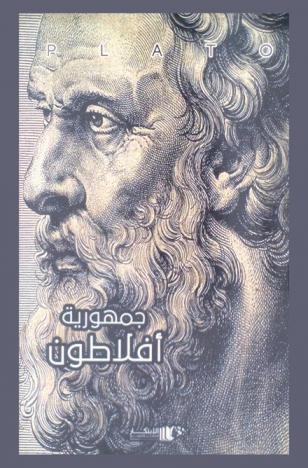
جمهورية أفلاطون
هو عبارة عن حوار فلسفي سياسي، يعرض من خلاله أفلاطون رؤيته للدولة المثالية أو المدينة الفاضلة السقراطية؛ فسقراط هو المحاور الرئيس، وحوله شخصيات عدة يجادلها وتجادله، وتتحدد مع تصاعد الجدال ملامح جمهورية أفلاطون المتخيلة. في جمهورية أفلاطون ينتمي كل فرد من أفراد المجتمع إلى طبقة محددة، ويعمل في مجال تخصص محدد، ويتحقق التوازن بين القوى الثلاث التي يتكون منها المجتمع: القوة العاقلة، والقوة الغضبية والقوة الشهوانية. وبينما يحاول تقديم تعريف للحاكم العادل ويقابله بالحاكم المستبد، يقسم الحكومات إلى أربعة أنواع: الأرستقراطية، والأوليغاركية، والديمقراطية، والاستبدادية. وهو من جهة يعلن ميله إلى الملكية الدستورية، ومن جهة أخرى يقر بأن العدالة المطلقة تظل عصية على التحقق.
Book

Current State of Semi-Solid Net-Shape Die Casting
Semi-solid processing of alloys is nearing the end of its fifth decade in existence. This promising manufacturing route has undergone a number of changes over the past five decades and apart from certain successful industrial applications, it appeared that it had become a niche technology with limited applications, notably in the automotive and consumer product markets. Nevertheless, despite the strong competition of traditional casting and in particular die-casting processes, and the emergence of Additive Manufacturing (AM), there seems to be a resurgence in demand for Net-Shape Die Casting of Semi-solid alloys as testified by the high numbers of delegates at the 15th SSM Conference at Shenzhen, China in September 2018. What follows is a brief review of the historical development of the process as well as more recent developments with an eye to future prospects.
Journal Article
Theaetetus and Sophist
\"Plato's Theaetetus and Sophist are two of his most important dialogues, and are widely read and discussed by philosophers for what they reveal about his epistemology and particularly his accounts of belief and knowledge. Although they form part of a single Platonic project, these dialogues are not usually presented as a pair, as they are in this new and lively translation. Offering a high standard of accuracy and readability, the translation reveals the continuity between these dialogues and others in the Platonic corpus, especially the Republic. Christopher Rowe's supporting introduction and notes help the reader to follow the arguments as they develop, explaining their structure, context and interpretation. This new edition challenges current scholarly approaches to Plato's work and will pave the way for fresh interpretations both of Theaetetus and Sophist and of Plato's writings in general\"-- Provided by publisher.
BOOK


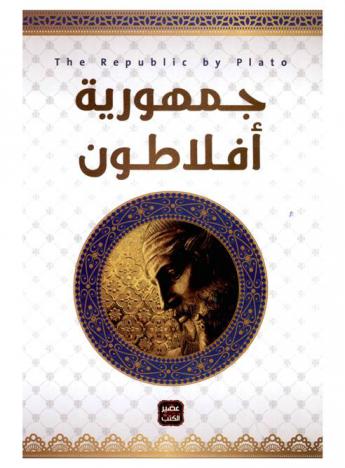
جمهورية أفلاطون / أفلاطون ؛ ترجمة حنا خباز
الكتاب عبارة عن حوار فلسفي سياسي، يعرض من خلاله أفلاطون رؤيته للدولة المثالية أو المدينة الفاضلة السقراطية ؛ فسقراط هو المحاور الرئيس، وحوله شخصيات عدة يجادلها وتجادله، وتتحدد مع تصاعد الجدال ملامح جمهورية أفلاطون المتخيلة. في جمهورية أفلاطون ينتمي كل فرد من أفراد المجتمع إلى طبقة محددة، ويعمل في مجال تخصص محدد، ويتحقق التوازن بين القوى الثلاث التي يتكون منها المجتمع: القوة العاقلة، والقوة الغضبية، والقوة الشهوانية. وبينما يحاول تقديم تعريف للحاكم العادل ويقابله بالحاكم المستبد، يقسم الحكومات إلى أربعة أنواع: الأرستقراطية، والأوليغاركية، والديمقراطية، والاستبدادية. وهو من جهة يعلن ميله إلى الملكية الدستورية، ومن جهة أخرى يقر بأن العدالة المطلقة تظل عصية على التحقق.
BOOK

Plato's \Letters\
In Plato's \"Letters\"
, Ariel Helfer provides to readers, for the first time, a
highly literal translation of the
Letters , complete with extensive
notes on historical context and issues of manuscript
transmission. His analysis presents a necessary
perspective for readers who wish to study Plato's Letters
as a work of Platonic philosophy.
Centuries of debate over the provenance and significance of
Plato's Letters have led to the common view that the
Letters is a motley collection of jewels and scraps from
within and without Plato's literary estate. In a series of original
essays, Helfer describes how the Letters was written as a
single work, composed with a unity of purpose and a coherent
teaching, marked throughout by Plato's artfulness and insight and
intended to occupy an important place in the Platonic corpus.
Viewed in this light, the Letters is like an unusual epistolary
novel, a manner of semifictional and semiautobiographical
literary-philosophic experiment, in which Plato sought to provide
his most demanding readers with guidance in thinking more deeply
about the meaning of his own career as a philosopher, writer, and
political advisor.
Plato's \"Letters\" not only defends what Helfer calls
the \"literary unity thesis\" by reviewing the scholarly history
pertaining to the Platonic letters but also brings out the
political philosophic lessons revealed in the Letters. As a result,
Plato's \"Letters\" recovers and rehabilitates what has been
until now a minority view concerning the Letters ,
according to which this misunderstood Platonic text will be of
tremendous new importance for the study of Platonic political
philosophy.
eBook

Euthyphro ; Apology ; Crito ; Phaedo
\"Plato of Athens, who laid the foundations of the Western philosophical tradition and in range and depth ranks among its greatest practitioners, was born to a prosperous and politically active family circa 427 BC. In early life an admirer of Socrates, Plato later founded the first institution of higher learning in the West, the Academy, among whose many notable alumni was Aristotle. Traditionally ascribed to Plato are thirty-five dialogues developing Socrates' dialectic method and composed with great stylistic virtuosity, together with the Apology and thirteen letters. The four works in this volume recount the circumstances of Socrates' trial and execution in 399 BC. In Euthyphro, set in the weeks before the trial, Socrates and Euthyphro attempt to define holiness. In Apology, Socrates answers his accusers at trial and unapologetically defends his philosophical career. In Crito, a discussion of justice and injustice explains Socrates' refusal of Crito's offer to finance his escape from prison. And in Phaedo, Socrates discusses the concept of an afterlife and offers arguments for the immortality of the soul. This edition, which replaces the original Loeb edition by Harold North Fowler, offers text, translation, and annotation that are fully current with modern scholarship.\"-- Publisher's description.
BOOK

GENTZEN'S OVERVIEW OF CALCULI AND REDUCTIONS IN CONSISTENCY PROOFS
Gentzen's sequent calculi were a part of his consistency program, the ultimate aim of which was a proof of the consistency of analysis. Among Gentzen's series of shorthand notes there was one titled WKR in which various sequent calculi and cut elimination procedures are examined. Nothing of this series has survived, but there is instead a late summary Gentzen wrote of it in 1944. In this article, these calculi and reductions are described in the context of Gentzen's consistency program, followed by an English translation of his manuscript that is written in what is known as the unified German shorthand (einheitliche Kurzschrift).
Journal Article