
Catalogue Search | MBRL


Are you sure you want to remove the book from the shelf?

{{itemTitle}}
12
result(s) for
"Plokhy, Serhii, 1957- author"
Sort by:

Lost kingdom : the quest for empire and the making of the Russian nation, from 1470 to the present
\"In 2014, Russia annexed the Crimea and attempted to seize a portion of Ukraine. While the world watched in outrage, this blatant violation of national sovereignty was only the latest iteration of a centuries-long effort to expand Russian boundaries and create a pan-Russian nation. In Lost Kingdom, award-winning historian Serhii Plokhy argues that we can only understand the confluence of Russian imperialism and nationalism today by delving into the nation's history. Spanning over 500 years, from the end of the Mongol rule to the present day, Plokhy shows how leaders from Ivan the Terrible to Joseph Stalin to Vladimir Putin exploited existing forms of identity, warfare, and territorial expansion to achieve imperial supremacy. An authoritative and masterful account of Russian nationalism, Lost Kingdom chronicles the story behind Russia's belligerent empire-building quest\"-- Provided by publisher.
Book

The Cossack Myth
In the years following the Napoleonic Wars, a mysterious manuscript began to circulate among the dissatisfied noble elite of the Russian Empire. Entitled The History of the Rus', it became one of the most influential historical texts of the modern era. Attributed to an eighteenth-century Orthodox archbishop, it described the heroic struggles of the Ukrainian Cossacks. Alexander Pushkin read the book as a manifestation of Russian national spirit, but Taras Shevchenko interpreted it as a quest for Ukrainian national liberation, and it would inspire thousands of Ukrainians to fight for the freedom of their homeland. Serhii Plokhy tells the fascinating story of the text's discovery and dissemination, unravelling the mystery of its authorship and tracing its subsequent impact on Russian and Ukrainian historical and literary imagination. In so doing he brilliantly illuminates the relationship between history, myth, empire and nationhood from Napoleonic times to the fall of the Soviet Union.
eBook

The man with the poison gun : a Cold War spy story
\"In the fall of 1961, a KGB agent defected to West Germany. The slim 30-year-old man in police custody had papers in the name of an East German ... but claimed that his real name was Bogdan Stashinsky, and he was a citizen of the Soviet Union ... He had traveled on numerous occasions to Munich, where he singlehandedly tracked down and killed two enemies of the communist regime. He used a new, specially designed secret weapon--a spray pistol delivering liquid poison that, if fired into the victim's face, killed him without leaving any trace ... Stashinsky escaped ... and crossed into West Berlin just hours before the Berlin Wall was erected. In 1962, after spilling his secrets to the CIA, Stashinky was put on trial in what would be the most publicized assassination case in Cold War history\"--Provided by publisher.
Book

Ukraine's Maidan, Russia's War
In early 2014, sparked by an assault by their government on peaceful students, Ukrainians rose up against a deeply corrupt, Moscow-backed regime.Initially demonstrating under the banner of EU integration, the Maidan protesters proclaimed their right to a dignified existence; they learned to organize, to act collectively, to become a civil society.
eBook

Forgotten bastards of the Eastern Front : American airmen behind Soviet lines and the collapse of the Grand Alliance
\"At the conference held in Tehran in November 1943, American officials proposed to their Soviet allies a new operation in the effort to defeat Nazi Germany. The Normandy Invasion was already in the works; what American officials were suggesting until then was for the US Air Force to establish bases in Soviet-controlled territory, in order to \"shuttle-bomb\" the Germans from the Eastern front. For all that he had been pushing for the United States and Great Britain to do more to help the war effort--the Soviets were bearing the heaviest burden in terms of casualties--Stalin balked at the suggestion of foreign soldiers on Soviet soil. His concern was that they would inflame regional and ideological differences. Eventually in early 1944, Stalin was persuaded to give in, and Operation Baseball and then Frantic were initiated in the Poltova region (in what is today Ukraine). As Plokhy's book shows, what happened on these airbases mirrors the nature of the Grand Alliance itself. While both sides were fighting for the same goal, Germany's unconditional surrender, differences arose that no common purpose could overcome. Soviet secret policeman watched over the operations, shadowing every move, and eventually trying to prevent fraternization between American servicemen and local women. A catastrophic air raid by the Germans revealed the limitations of Soviet air defenses. Relations soured and the operations went south. The story of the American bases foreshadowed the eventual collapse of the Grand Alliance and the start of the Cold War. Using previously inaccessible archives, Allies and Adversaries offers a bottom-up history of the Grand Alliance, showing how it first began to fray on the airfields of World War II.\"-- Provided by publisher.
Book

After empire : nationalist imagination and symbolic politics in Russia and Eurasia in the twentieth and twenty-first century
Igor Torbakov explores the nexus between various forms of Russian political imagination and the apparently cyclic process of decline and fall of Russias imperial polity over the last hundred years.While Russias historical process is by no means unique, two features of its historical development stand out.
eBook
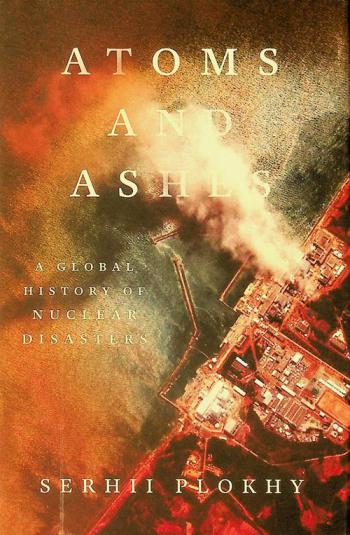
Atoms and ashes : a global history of nuclear disasters
\"A chilling account of seventy years of nuclear catastrophes, by the author of the \"definitive\" (Economist) Cold War history, Nuclear Folly. Nuclear energy was embraced across the globe at the height of the nuclear industry in the 1960s and 1970s; today, there are 440 nuclear reactors operating throughout the world, with nuclear power providing 10 percent of world electricity. Yet as the world seeks to reduce carbon emissions to combat climate change, the question arises: Just how safe is nuclear energy? Atoms and Ashes recounts the dramatic history of nuclear accidents that have dogged the industry in its military and civil incarnations since the 1950s. Through the stories of six terrifying major incidents-Bikini Atoll, Kyshtym, Windscale, Three Mile Island, Chernobyl, and Fukushima-Cold War expert Serhii Plokhy explores the risks of nuclear power, both for military and peaceful purposes, while offering a vivid account of how individuals and governments make decisions under extraordinary circumstances. Atoms and Ashes provides a crucial perspective on the most dangerous nuclear disasters of the past, in order to safeguard our future\"-- Provided by publisher.

Ukraine and Europe
Ukraine and Europe challenges the popular perception of Ukraine as a country torn between Europe and the east. Twenty-two scholars from Europe, North America, and Australia explore the complexities of Ukraine's relationship with Europe and its role the continent's historical and cultural development.
eBook

The Russo-Ukrainian war : the return of history
\"Despite repeated warnings from the White House, Russia's invasion of Ukraine in February 2022 shocked the world. Why did Putin start the war--and why has it unfolded in previously unimaginable ways? Ukrainians have resisted a superior military; the West has united, while Russia grows increasingly isolated. Serhii Plokhy, a leading historian of Ukraine and the Cold War, offers a definitive account of this conflict, its origins, course, and the already apparent and possible future consequences\"-- Provided by publisher.
Book
