
Catalogue Search | MBRL


Are you sure you want to remove the book from the shelf?

{{itemTitle}}
457
result(s) for
"Pollan, Michael"
Sort by:

Cooked : a natural history of transformation
\"In Cooked, Pollan explores the previously uncharted territory of his own kitchen. Here, he discovers the enduring power of the four classical elements--fire, water, air, and earth--to transform the stuff of nature into delicious things to eat and drink. In the course of his journey, he discovers that the cook occupies a special place in the world, standing squarely between nature and culture. Both realms are transformed by cooking, and so, in the process, is the cook\"-- Provided by publisher.
Book

Food politics
We all witness, in advertising and on supermarket shelves, the fierce competition for our food dollars. In this engrossing exposé, Marion Nestle goes behind the scenes to reveal how the competition really works and how it affects our health. The abundance of food in the United States--enough calories to meet the needs of every man, woman, and child twice over--has a downside. Our over-efficient food industry must do everything possible to persuade people to eat more--more food, more often, and in larger portions--no matter what it does to waistlines or well-being. Like manufacturing cigarettes or building weapons, making food is big business. Food companies in 2000 generated nearly
eBook

The omnivore's dilemma : a natural history of four meals
\"What should we have for dinner? Ten years ago, Michael Pollan confronted us with this seemingly simple question and, with The Omnivore's Dilemma, his brilliant and eye-opening exploration of our food choices, demonstrated that how we answer it today may determine not only our health but our survival as a species. In the years since, Pollan's revolutionary examination has changed the way Americans think about food. Bringing wide attention to the little-known but vitally important dimensions of food and agriculture in America, Pollan launched a national conversation about what we eat and the profound consequences that even the simplest everyday food choices have on both ourselves and the natural world. Ten years later, The Omnivore's Dilemma continues to transform the way Americans think about the politics, perils, and pleasures of eating.\"-- Provided by publisher.
Book
Brilliant green : the surprising history and science of plant intelligence
Are plants intelligent? Can they solve problems, communicate, and navigate their surroundings? Or are they passive, incapable of independent action or social behavior? Philosophers and scientists have pondered these questions since ancient Greece, most often concluding that plants are unthinking and inert: they are too silent, too sedentary -- just too different from us. Yet discoveries over the past fifty years have challenged these ideas, shedding new light on the extraordinary capabilities and complex interior lives of plants. In Brilliant Green, Stefano Mancuso, a leading scientist and founder of the field of plant neurobiology, presents a new paradigm in our understanding of the vegetal world. Combining a historical perspective with the latest in plant science, Mancuso argues that, due to cultural prejudices and human arrogance, we continue to underestimate plants. In fact, they process information, sleep, remember, and signal to one another -- showing that, far from passive machines, plants are intelligent and aware. Through a survey of plant capabilities from sight and touch to communication, Mancuso challenges our notion of intelligence, presenting a vision of plant life that is more sophisticated than most imagine. Plants have much to teach us, from network building to innovations in robotics and man-made materials -- but only if we understand more about how they live. Part botany lesson, part manifesto, Brilliant Green is an engaging and passionate examination of the inner workings of the plant kingdom. Financial support for the translation of this book has been provided by SEPS: Segretariato Europeo Per Le Pubblicazioni Scientifiche.
eBook

On writing : What illuminates a story?
When it comes to writing a story, it's important to find a way to have an experience that will illuminate the narrative for readers - that is, an experience that fills you, the writer, with wonder and gives you a fresh take on things. A good way to make a nonfiction story rich is by tackling the subject with different lenses, by circling it from different points of views. Good storytelling is about taking readers on a journey. This said, instead of leading with your conclusion, begin from the time when you were naive about the subject at hand, and, as you relay the different things you learn, you will help your readers, in a down-to-earth way, move toward knowing more, too.
Streaming Video

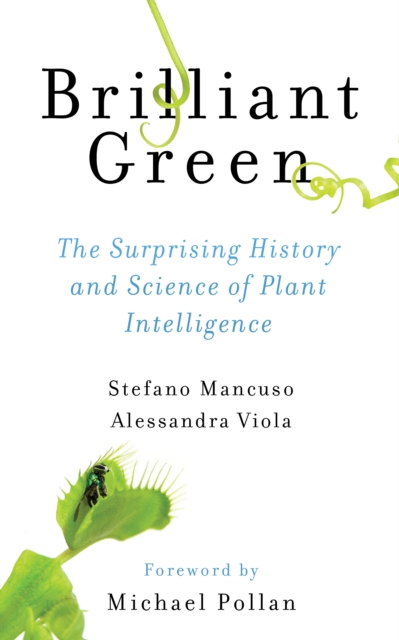
Brilliant Green
Are plants intelligent? Can they solve problems, communicate, and navigate their surroundings? Or are they passive, incapable of independent action or social behavior? Philosophers and scientists have pondered these questions since ancient Greece, most often concluding that plants are unthinking and inert: they are too silent, too sedentary -- just too different from us. Yet discoveries over the past fifty years have challenged these ideas, shedding new light on the extraordinary capabilities and complex interior lives of plants.In Brilliant Green, Stefano Mancuso, a leading scientist and founder of the field of plant neurobiology, presents a new paradigm in our understanding of the vegetal world. Combining a historical perspective with the latest in plant science, Mancuso argues that, due to cultural prejudices and human arrogance, we continue to underestimate plants. In fact, they process information, sleep, remember, and signal to one another -- showing that, far from passive machines, plants are intelligent and aware. Through a survey of plant capabilities from sight and touch to communication, Mancuso challenges our notion of intelligence, presenting a vision of plant life that is more sophisticated than most imagine.Plants have much to teach us, from network building to innovations in robotics and man-made materials -- but only if we understand more about how they live. Part botany lesson, part manifesto, Brilliant Green is an engaging and passionate examination of the inner workings of the plant kingdom.Financial support for the translation of this book has been provided by SEPS: Segretariato Europeo Per Le Pubblicazioni Scientifiche.
eBook

PBS NewsHour. Why we shouldn’t let the food industry dictate our diets
Michael Pollan's bestselling book \"In Defense of Food\" was a call to arms for making real food a bigger part of Americans' diets. Now he takes that push to PBS with a new documentary. He joins Jeffrey Brown to discuss why we’ve lost the true definition of food and how to take back control from the food industry.
Streaming Video