
Catalogue Search | MBRL


Are you sure you want to remove the book from the shelf?

{{itemTitle}}
57
result(s) for
"Porta, Ana Maria"
Sort by:
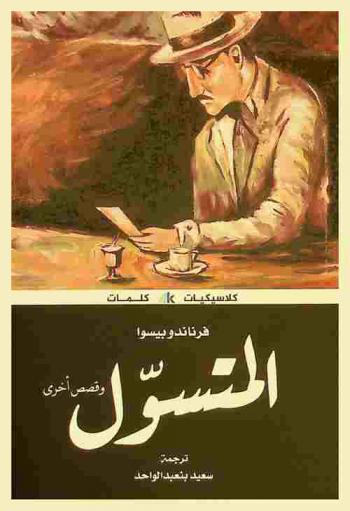
المتسول وقصص أخرى
يضم كتاب \"المتسول وقصص أخرى\" اثنى عشرة نص لم ينشر من قبل للكاتب والشاعر فرناندو بيسوا، تشكل جزءا يسيرا من النثر التخيلي الذي تركه الكاتب. إنها قصص فلسفية أو فكرية -كمْ يسميها بيسوا نفسه- ومفارقة لأن الحالات التي تقدمها تتعارض مع الحس المشترك، بعضها على شكل حكايات ذات مغزى، وأخرى ذات شكل مختلف. تقدم هذه القصص حوارات فلسفية على لسان حكماء يتخذون وجوها مختلفة وأقنعة متعددة، كالمتسول والزاهد والسكير، ويعرضون حكمتهم على من يصادفهم في الطريق، طريق التعلم وتكوين الذات. مثلا، قد يكون طريق السالك الذي يصادف رجلا ذا ملابس سوداء، أو طريق ذلك البحار الذي يحاور شخصا غريبا على رصيف الميناء. تعرض هذه النصوص السردية وجها مختلفا عن بيسوا، وقد تدهش القارئ بعمقها الفلسفي وجرأتها في طرح المواضيع المختلفة التي كانت تشغل الكاتب.
Book

Basque health service- Osakidetza integrates care
Introduction: Basque Health Service´s integrated intervention for multimorbid population program participates to ACT@Scale. The aging of the population and the increase in chronic patients represent a huge challenge for the sustainability of healthcare systems.Short description of practice change implemented: The public healthcare provider is Osakidetza which includes all hospitals and primary care centers organized in 13 Integrated Care Organizations ICOs.Osakidetza has a target population of more than 2 million inhabitants.Aging and chronic conditions account for 80% of the medical consultations, 75% of the total health budget.Aim and theory of change: the program follows the multi-organizational structured collaborative quality improvement methods based on Plan-Do-Study-ActPDSA cycle.Applying the PDSA methodology, the program has been working on:Define a common integrated care pathwayClarify the necessary actors and rolesStandardize and systematize the process of empowering patients and caregivers and assess the empowerment impactEvaluate the care pathway effectivenessTraining sessions on several aspects related to the care pathwayTargeted population and stakeholders: Population based stratification identifyes Multimorbid patients. Moreover, at least two of these conditions must be diagnosed: Chronic Obstructive Pulmonary Disease COPD, diabetes mellitus both insulin-dependent and noninsulin-dependent or Congestive Heart Failure CHF.Stakeholders 34: team dynamics experts-3; internists -6; implementation experts-2; managerial team-12; Healthcare Directorate representative-1; project manager-1; local organizations representatives-9.Timeline: Three years: Baseline phase-March’16-Sept’16; Learning cycle-Sept’16-Sept’17; Coaching cycle-Sept’17-Sept’18; Dissemination phase-Sept’18-March’19Comments on sustainability: Osakidetza runs on public founding. Multimorbid patient’s care pathway is one of the priority areas of the strategic plan that the Health Department and Osakidetza have for 2017-2020.Comments on transferability: Scale it up to a total of 12 ICOs, which in terms of number of patients means from 4944 to 14516 patients.Conclusions: The team has defined and described the roles and actions needed within the integrated care, and it has created a homogeneous pathway for multimorbid patient’s integrated care. The team has tackle down the problematic of patient empowerment. The team has been able to generate an empowerment protocol for patients/caregivers and an empowerment evaluation method has been established.Discussions: The expected result of Basque Country is to scale the program and reaching a total of almost 15000 patients by 2019. This would mean:1- Impacting: reach critical-mass in numbers of users within the region; reduce in resources utilization2- Engaging: get the endorsement of end-users and professionals; increase empowerment of patients and caregivers; equality of the service offered3 Ensuring sustainability: increase the number of professionals using the service as their usual practice; the generated pathway takes into account the local resources available and the local differences in terms of organizational structure.Lessons learned: In order to achieve our aim we consider that one of the most important factors has been to build a multidisciplinary team, composed by stakeholders of distinct levels macro, meso and micro with varied roles and representatives of all organizations where the intervention was expected to be implemented. In addition, the Collaborative Methodology gave the opportunity to define the intervention needed in a structured way.
Journal Article
“Looking from the other side”: Using Design Thinking for Strategic Projects at the Basque Health Service
Introduction and description of the practice implemented: The Basque Country has been implementing integrating care policies since 2010 (1). One of the cornerstones of this strategy has been the launch of 13 Integrated Health Care Organisations (IHOs) to integrate under the same structure Primary and Secondary Care Services (2). Nevertheless, structural integration does not deliver better care by its own; and in 2015 the Basque Health Service (BHS) launched a project called IntegraSarea (Network for Integration in Basque) to facilitate cultural change and to create a shared narrative of what integration means based on a People Centred Care approach (3).More than 100 people including managers, patients, carers and health professionals across the Basque Country have been part of this network and the rest of the health workforce (30.000 people) is informed via newsletter, fb and twitter in order to have the maximum amount of people onboard.In this context Design Thinking was chosen to be the method used to help health professionals think “out of the box” and analyse the challenges the health system faces from a user/patient perspective. To reach this goal, four different workshops involving more than 100 people were conducted.Methodology: (Theory of change) Design Thinking (DT) is a methodology that originates from Service Design and was first used in urban planning in 1987 (4). Nowadays the shift to the customer-in-the center of the process is one factor that has motivated companies and other institutions to use Design Thinking as a method to improve and re-design processes from a user perspective.Although the term has changed across time (5) it is widely accepted that DT is a methodology for problem-solving and has five basic steps (see figure 1): empathize, define, ideate, prototype and test.Its use in the health sector is still to be developed and has a huge potential since there is often a gap between patient experience & expectations and the care provided. The latter can be outstanding following traditional indicators of efficacy and efficiency (ie: hip replacement with no complications) and the former could still be bad (ie: despite replacement patient cannot walk due to pain).In the Basque context DT has been fully applicable since the challenges the health sector faces demand multidisciplinary teams and consensus to be successfully implemented, and these are two aspects that DT helps to build.Discussion: Four workshops were designed based on three key areas (Person Cantered Care, care pathways and community networks). After an introductory session on DT, each participant had to carry out fieldwork using different qualitative and ethnographic techniques to identify improvement areas from a patient perspective.This has allowed each Organisation in the BHS to have several of its professionals trained on this methodology, which will have a snowball effect in the future. Moreover, it should be emphasized the importance of inviting patients/users into internal strategic and training projects, which brings in different views and also challenges the status quo of \"everything for the patient without the patient\".Conclusion: The methodology has been strongly accepted by the participants of the workshops like a valid instrument to identify the gaps between patient experience & expectations and the care provided.The Final Report of the workshops details all 52 actions that are proposed to tackle the improvement areas identified and will be presented at the Conference.References:1- Osakidetza/Basque Health Service. Líneas estratégicas y planes de acción 2013-2016 [Strategic Lines and Action Plans 2013-2016]. 2013. [In Spanish] [cited 2015 24 Oct] Available from: http://www.osakidetza.euskadi.net/r85-ckserv01/es/contenidos/informacion/osk_publicaciones/es_publi/adjuntos/estrategia/lineasEstrategicasOsakidetza.pdf2- Toro Polanco N, Berraondo Zabalegui I, Pérez Irazusta I, Nuño Solinis R, Del Río Cámara M. Building integrated care systems: a case study of Bidasoa Integrated Health Organisation. International Journal of Integrated Care. 2015;15(2). DOI: http://doi.org/10.5334/ijic.17963- WHO. WHO global strategy on people-centred and integrated health services. 2015. [cited 2016 22 Dec] Available from: http://apps.who.int/iris/bitstream/10665/180984/1/WHO_HIS_SDS_2015.20_eng.pdf?ua=1&ua=14- Rowe P. Design Thinking. 1987.The MIT Press [cited 2016 22 Dec] Available from: https://mitpress.mit.edu/txbkreq/1901245- Linda Naiman. Creativity at Work [cited 2016 22 Dec] Available from: http://www.creativityatwork.com/design-thinking-strategy-for-innovation/
Journal Article
“Counting the intangible”: The use of evaluation tools and indicators to measure integrated care outcomes in the Basque Country
Introduction: There is currently the debate about how to measure the elements that are key to “successful integrated care”, which are the outcomes that should be achieved and which evaluation tools can be used.The Basque Country has been implementing integrating care policies since 2010. One of the cornerstones of this strategy has been the launch of 13 Integrated Care Organisations (ICOs) to integrate under the same structure Primary and Secondary Care Services (1). Since 2014, changes have been introduced in the metrics of the Contract-Programme (CP) that regulates de relationship between the Ministry of Health (commissioner) and each ICO (health providers). These changes, based on Kelly and Hurst (2), are both qualitative and quantitative and aim to provide the Ministry of Heath with a new framework to evaluate the success of all integrated care policies being implemented.Moreover, one of the new indicators being introduced in the new Contract Programme is IEMAC-ARCHO (3), which is an instrument with 75 items for ICOs to perform a self-assessment in terms of their degree of implementation of chronic care management models and is based on the Chronic Care Model (4).Aims, objectives and results: In this abstract we would like to explore the co-relation in the evolution of the results of both the CP and IEMAC across time.In order to do that we have selected some of the actions/policies behind the new indicators in the CP (see in Figure 1) such as: (i) the provision of case managers and liaison nurses, (ii) systematized agreements with ”outsiders” such as social and community care, (iii) unified health care records, (iv) patient empowerment and participation among others. All these elements aim to improve continuity of care and improve the experience of care across settings.On the other hand in Figure 2 shows the results from 20 evaluations using IEMAC sessions that were conducted with 18 ICOs. Each session was run by health professionals and managers from both levels of care (Primary and Hospital Care) and actors from other areas such as mental health and social care were also represented. The self assessment o IEMAC allows each ICO to identify areas of improvement, define a plan and implement it following what the CP requests.Conclusions: Integrated care is a dynamic process that involves cultural change and measuring that can be rather hard. However evaluation tools are necessary for tracking the evolution of key aspects for integrated care and the various changes that occur when implementing integrated care policies.Looking at the results we can observe a positive evolution of both CP indicators and IEMAC-ARCHO, which indicates good degree of achievement of the policies implemented by the Ministry of Health.In addition to being useful for evaluation purposes, both the CP and IEMAC are powerful tools to identify line of actions and improvement areas that can be supported by the Ministry of Health.References:1- Toro Polanco N, Berraondo Zabalegui I, Pérez Irazusta I, Nuño Solinis R, Del Río Cámara M. Building integrated care systems: a case study of Bidasoa Integrated Health Organisation. International Journal of Integrated Care. 2015;15(2). DOI: http://doi.org/10.5334/ijic.17962- Kelley E, Hurts J. Health Care Quality Indicators Project. Conceptual framework Paper. Organization for Economic Co-operation and Development Health Working. Papers No 23, 20063- IEMAC. Assessment of Readiness for Chronicity in Heath Care Organisations. [cited 2016 24 Oct] Available from: http://www.iemac.es/internacional.asp4- Coleman K, Austin BT, Brach C, Wagner EH. \"Evidence on the Chronic Care Model in the new millennium\". Health Aff (Millwood). 2009 Jan-Feb;28(1):75-85
Journal Article
Design and implementation of an empowering program for the gypsy population in the Basque country
An introduction: The life expectancy of the general population in the Basque Country is around 80 years, while in the case of gypsy people it is below 60 years. A number of unhealthy eating habits and hygiene habits very common in the gypsy community are among the reasons for these marked differences. These have been some of the triggers for the Basque Government's Department of Health, Osakidetza and the Basque Gypsy community to work together in the development of an initiative that improves health education and contributes to the empowerment of the Gypsy community.Short description of practice change implemented: The Active Patient Program (APP) is a self-care education program that contributes to raising the health status of chronic patients. During 2016, a working group with representatives of the APP and the gypsy associations has worked on adapting the course \"Caring for my health\" to the socio-cultural context of the Gypsy people, emerging in the \"Caring for the health of the Gypsy people\" new course.One of the key points is that the workshops are facilitated by two trained leaders, both of whom are non-health professionals belonging to the gypsy community, so it is easier for the message to reach its objectives and increase attendees’ motivation to improve their living habits.Aim and theory of change: Health education and specifically the empowerment of patients and citizens through structured educational interventions have proven to be a very effective action in engaging people in the self-management of their own health conditions.Targeted population, stakeholders and timeline: All the Gypsy associations of the Basque Country were invited to participate in the initiative. During November and December 2016, 24 gypsies, all of them very active members of Gypsy associations in the Basque Country, have been accredited as facilitators of the workshop \"Caring for the health of the Gypsy people\". There are 12 workshops scheduled for the first quarter of 2017, expected to be attended by around 150 gypsies.Highlights: The training experience has been very positive for both the workshop trainers and the future facilitators.Lessons learned: This new program is aimed at people of gypsy ethnicity who want to improve their general health status.Discussions: Once the results have been evaluated in terms of acquired knowledge, perceived utility and overall satisfaction with the workshop, it will be assessed whether it is worthwhile to extend the program to other groups of gypsies and with what characteristics it should be done.Comments on sustainability and transferability: In a first phase we plan to implement the program in the Basque Country and, if the experience is positive, it could be transferred to other Autonomous Communities of Spain.Conclusions: They consider this methodology very useful for working with any kind of community, althouh some adaptations appeared as necessary for any particular cultural group. We show you a video made to show the program between them https://youtu.be/H4ulZUXI_ZA
Journal Article

Effects of Erbium:YAG laser combined with vaginal estriol therapy in postmenopausal women with Genitourinary Syndrome of Menopause: protocol for a randomised, double-blind, controlled trial
IntroductionGenitourinary syndrome of menopause (GSM) is a chronic, oestrogen-deficient condition that is frequently underdiagnosed and undertreated. Although low-dose vaginal estriol improves epithelial trophism and microbial balance, a substantial proportion of women report persistent symptoms. High-quality randomised evidence evaluating combined therapeutic strategies remains scarce. Energy-based modalities, including the erbium:YAG (Er:YAG) laser (λ=2940 nm), have been proposed as adjunctive treatments. This trial aims to assess the efficacy of Er:YAG laser therapy combined with vaginal estriol compared with estriol alone in postmenopausal women with GSM.Methods and analysisThis is a single-centre, randomised, double-blind, controlled clinical trial. Postmenopausal women aged 45–70 years with vaginal pH ≥5.0 and at least one moderate GSM symptom (Visual Analogue Scale ≥4) will be eligible. Exclusion criteria include current systemic or local hormone therapy, previous vaginal energy-based treatment, abnormal cervical cytology and body mass index ≥35 kg/m2. All participants will receive vaginal estriol cream (0.5 mg per dose) daily for 14 days, followed by twice-weekly administration for 16 weeks. Participants will be randomised (1:1) to receive either estriol plus sham Er:YAG laser or estriol plus active Er:YAG laser. Three laser sessions will be delivered at approximately 4-week intervals. Assessments will occur at baseline, monthly during treatment and 4 months after the final session. The primary outcome is the Vulvovaginal Health Index, with the primary endpoint defined as the change from baseline to 4 months post-treatment, reflecting sustained effect. Secondary outcomes include GSM symptom severity, vaginal microbiome composition (16S rRNA sequencing), quality of life (Menopause Rating Scale) and sexual function (Female Sexual Function Index). Data will be analysed using repeated-measures analysis of variance or appropriate non-parametric tests, with significance set at p<0.05.Ethics and disseminationEthical approval has been obtained from the Human Research Ethics Committee of UNINOVE. Written informed consent will be obtained. Findings will be disseminated via peer-reviewed journals and scientific meetings.Trial registration numberNCT06873971.
Journal Article

Assessment of photodynamic therapy with annatto and led for the treatment of halitosis in mouth-breathing children: Randomized controlled clinical trial
To assess the effectiveness of antimicrobial photodynamic therapy (aPDT) employing an annatto-based (20%) dye combined with blue LED for the treatment of halitosis in mouth-breathing children.
Fifty-two children six to twelve years of age with diagnoses of mouth breathing and halitosis (score of ≥ 3 on portable breath meter) Breath Alert™ (Tanita Corporation®-Japan), were randomly allocated to two groups (n = 26). Group 1: brushing, dental floss and aPDT applied to middle third of the dorsum of the tongue. Group 2: brushing, dental floss and tongue scraper. Breath meter results before, immediately after treatment as well as seven and 30 days after treatment were compared. The hypothesis of normality in the data was discarded by the Shapiro-Wilk test (p < 0.05) and for statistical analysis the Wilcoxon and Mann-Whitney tests were used.
A significant difference was found between the pre-treatment reading and all other readings (p < 0.05) in both groups, suggesting the effectiveness of the proposed treatments. No significant difference was found between the post-treatment reading and two follow-up readings, suggesting the maintenance of the effect of treatment over time (p > 0.05). However, significant differences were found between groups for all post-treatment assessments (p < 0.0001 for all comparisons), indicating greater effectiveness with aPDT. No association was found between the initial reading and the presence of coated tongue.
Antimicrobial photodynamic therapy using annatto and blue LED proved to be a viable therapeutic option for the treatment of halitosis in mouth-breathing children.
Journal Article

Rising rural body-mass index is the main driver of the global obesity epidemic in adults
Body-mass index (BMI) has increased steadily in most countries in parallel with a rise in the proportion of the population who live in cities
1
,
2
. This has led to a widely reported view that urbanization is one of the most important drivers of the global rise in obesity
3
–
6
. Here we use 2,009 population-based studies, with measurements of height and weight in more than 112 million adults, to report national, regional and global trends in mean BMI segregated by place of residence (a rural or urban area) from 1985 to 2017. We show that, contrary to the dominant paradigm, more than 55% of the global rise in mean BMI from 1985 to 2017—and more than 80% in some low- and middle-income regions—was due to increases in BMI in rural areas. This large contribution stems from the fact that, with the exception of women in sub-Saharan Africa, BMI is increasing at the same rate or faster in rural areas than in cities in low- and middle-income regions. These trends have in turn resulted in a closing—and in some countries reversal—of the gap in BMI between urban and rural areas in low- and middle-income countries, especially for women. In high-income and industrialized countries, we noted a persistently higher rural BMI, especially for women. There is an urgent need for an integrated approach to rural nutrition that enhances financial and physical access to healthy foods, to avoid replacing the rural undernutrition disadvantage in poor countries with a more general malnutrition disadvantage that entails excessive consumption of low-quality calories.
Contrary to the view that urbanization is a major driver of the global rise in obesity, the global increase in body-mass index is shown to be mostly due to increases in the body-mass indexes of rural populations.
Journal Article

RNASEH2B loss and PARP inhibition in advanced prostate cancer
BACKGROUNDClinical trials have suggested antitumor activity from PARP inhibition beyond homologous recombination deficiency (HRD). RNASEH2B loss is unrelated to HRD and preclinically sensitizes to PARP inhibition. The current study reports on RNASEH2B protein loss in advanced prostate cancer and its association with RB1 protein loss, clinical outcome, and clonal dynamics during treatment with PARP inhibition in a prospective clinical trial.METHODSWhole tumor biopsies from multiple cohorts of patients with advanced prostate cancer were interrogated using whole-exome sequencing (WES), RNA-Seq (bulk and single nucleus), and IHC for RNASEH2B and RB1. Biopsies from patients treated with olaparib in the TOPARP-A and TOPARP-B clinical trials were used to evaluate RNASEH2B clonal selection during olaparib treatment.RESULTSShallow codeletion of RNASEH2B and adjacent RB1 - colocated at chromosome 13q14 - was common, deep codeletion infrequent, and gene loss associated with lower mRNA expression. In castration-resistant prostate cancer (CRPC) biopsies, RNASEH2B and RB1 mRNA expression correlated, but single nucleus RNA-Seq indicated discordant loss of expression. IHC studies showed that loss of the 2 proteins often occurred independently, arguably due to stochastic second allele loss. Pre- and posttreatment metastatic CRPC (mCRPC) biopsy studies from BRCA1/2 WT tumors, treated on the TOPARP phase II trial, indicated that olaparib eradicated RNASEH2B-loss tumor subclones.CONCLUSIONPARP inhibition may benefit men suffering from mCRPC by eradicating tumor subclones with RNASEH2B loss.TRIAL REGISTRATIONClinicaltrials.gov NCT01682772.FUNDINGAstraZeneca; Cancer Research UK; Medical Research Council; Cancer Research UK; Prostate Cancer UK; Movember Foundation; Prostate Cancer Foundation.
Journal Article

Effects of photobiomodulation on cellular viability and cancer stem cell phenotype in oral squamous cell carcinoma
Oral squamous cell carcinoma (OSCC) is the most common head and neck malignancy; it has been shown that cancer stem cells (CSC) are present in OSCC and associated with tumor growth, invasion, metastasis, and therapeutic resistance. Photobiomodulation (PBM) is an alternative tool for oncologic treatment adverse effects such as oral mucositis (OM); however, controversy exists regarding the undesirable effects of PBM on tumor or CSC. This study aimed to evaluate in vitro, the effects of PBM, with the same dosimetric parameters as those used in the clinic for OM prevention and treatment, on OSCC cellular viability, as well as PBM’s effect on CSC properties and its phenotype. OSCC cell lines were submitted to single or daily PBM with 3 J/cm2 and 6 J/cm2 and then the cellular viability was evaluated by MTT, NRU (neutral red uptake), and CVS (crystal violet staining). The CSC populations were evaluated by clonogenic formation assay, flow cytometry, and RT-qPCR. The single PBM with the 3 J/cm2 group was associated with increased cellular viability. Daily PBM with 3 J/cm2 and 6 J/cm2 was associated with a significant decrease in cellular viability. Additionally, daily PBM was not able to promote CSC self-renewal or the CD44high/ESAlow and CD44high/ESAhigh cellular phenotypes. Moreover, a decrease in the number of spheres and in the expression of the CSC related gene BMI1 was observed after daily PBM with 6 J/cm2. Daily PBM with 3 J/cm2 and 6 J/cm2 showed an inhibitory effect on cellular viability and was not able to promote the CSC self-renewal or phenotype.
Journal Article