
Catalogue Search | MBRL


Are you sure you want to remove the book from the shelf?

{{itemTitle}}
1,029
result(s) for
"Porter, Brian"
Sort by:

Carpentry and joinery
This third edition of Carpentry and Joinery is a series of three books which together provide an authoritative but thoroughly practical guide to carpentry and joinery for students following City & Guilds and CITB courses, NVQ candidates, and a wide range of amateurs and professionals. The first volume deals with the fundamentals of the subject from topics such as timber and wood preservation and protection, to a detailed outline of the tools available and information on the basic woodworking joints, adhesives and fixing devices. The second and third volumes show how to apply this fundamental knowledge. Details of craft theory, associated studies and practical procedures are integrated throughout each text. In this new edition chapters have been reorganized to produce a more coherent, student-focused course. All references to the building regulations and current legislation have been updated, and developments in current best practice have been incorporated.--Publisher's description.
Book

AI-generated poetry is indistinguishable from human-written poetry and is rated more favorably
As AI-generated text continues to evolve, distinguishing it from human-authored content has become increasingly difficult. This study examined whether non-expert readers could reliably differentiate between AI-generated poems and those written by well-known human poets. We conducted two experiments with non-expert poetry readers and found that participants performed below chance levels in identifying AI-generated poems (46.6% accuracy, χ
2
(1, N = 16,340) = 75.13, p < 0.0001). Notably, participants were more likely to judge AI-generated poems as human-authored than actual human-authored poems (χ
2
(2, N = 16,340) = 247.04, p < 0.0001). We found that AI-generated poems were rated more favorably in qualities such as rhythm and beauty, and that this contributed to their mistaken identification as human-authored. Our findings suggest that participants employed shared yet flawed heuristics to differentiate AI from human poetry: the simplicity of AI-generated poems may be easier for non-experts to understand, leading them to prefer AI-generated poetry and misinterpret the complexity of human poems as incoherence generated by AI.
Journal Article
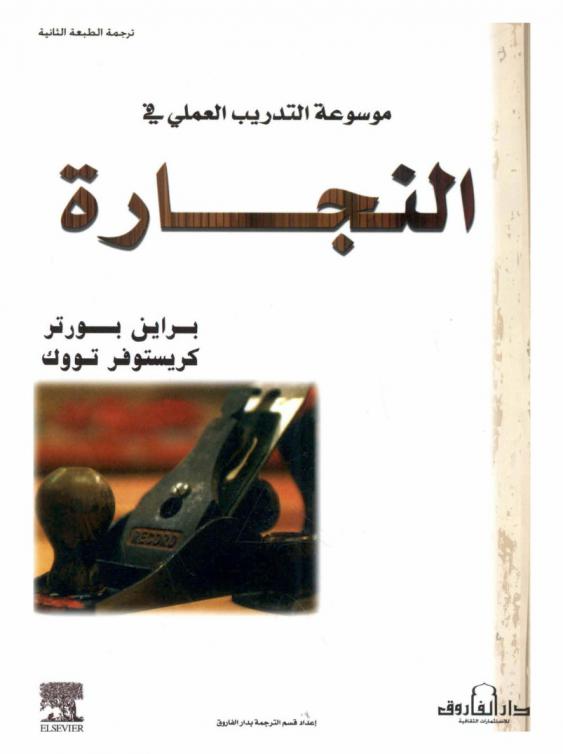
موسوعة التدريب العملي في النجارة
يعتبر هذا الكتاب بمثابة دليل إرشادي للطلاب الذين يطمحون للحصول على المؤهلات التي تساعدهم في العمل لمجال النجارة كما يغطي الكتاب العديد من الموضوعات مثل التكسية والشبابيك والأبواب والبوابات والسلالم والحوائط والتغليف وتركيب الحشوات في الحوائط ولوازم النجارة وكيفية تدعيم المباني وعمليات الإصلاح والصيانة كما أنه يوضح للقارئ كيفية تطبيق النظريات الأساسية عمليا بأسلوب واضح وسهل الفهم.
Reference book

Efficacy, safety, and tolerability of secukinumab in patients with active ankylosing spondylitis: a randomized, double-blind phase 3 study, MEASURE 3
Background
Secukinumab, an anti–interleukin-17A monoclonal antibody, improved the signs and symptoms of ankylosing spondylitis (AS) in two phase 3 studies (MEASURE 1 and MEASURE 2). Here, we present 52-week results from the MEASURE 3 study assessing the efficacy and safety of secukinumab 300 and 150 mg subcutaneous maintenance dosing, following an intravenous loading regimen.
Methods
A total of 226 patients were randomized to intravenous secukinumab 10 mg/kg (baseline, weeks 2 and 4) followed by subcutaneous secukinumab 300 mg (IV-300 mg) or 150 mg (IV-150 mg) every 4 weeks, or matched placebo. Patients in the placebo group were re-randomized to subcutaneous secukinumab at a dose of 300 or 150 mg at week 16. The primary endpoint was the Assessment of SpondyloArthritis international Society criteria for 20% improvement (ASAS20) response rate at week 16 in the IV-300 mg or IV-150 mg versus placebo. Other endpoints assessed through week 52 included improvements in ASAS40, ASAS 5/6, Bath Ankylosing Spondylitis Disease Activity Index, and ASAS partial remission responses, as well as the change from baseline in high-sensitivity C-reactive protein levels. Statistical analyses followed a predefined hierarchical hypothesis testing strategy to adjust for multiplicity of testing, with non-responder imputation used for binary variables and mixed-model repeated measures for continuous variables.
Results
The primary efficacy endpoint was met; the ASAS20 response rate was significantly greater at week 16 in the IV-300 mg (60.5%;
P
< 0.01) and IV-150 mg (58.1%;
P
< 0.05) groups versus placebo (36.8%). All secondary endpoints were met at week 16, except ASAS partial remission in the IV-150 mg group. Improvements achieved with secukinumab in all clinical endpoints at week 16 were also sustained at week 52. Infections, including candidiasis, were more common with secukinumab than with placebo during the placebo-controlled period. During the entire treatment period, pooled incidence rates of
Candida
infections and grade 3–4 neutropenia were 1.8% for both of these adverse events in secukinumab-treated patients.
Conclusions
Secukinumab (300 mg and 150 mg dose groups) provided rapid, significant and sustained improvement through 52 weeks in the signs and symptoms of patients with AS. The safety profile was consistent with previous reports, with no new or unexpected findings.
Trial registration
ClinicalTrials.gov,
NCT02008916
. Registered on 8 December 2013. EUDRACT 2013-001090-24. Registered on 24 October 2013). The study was not retrospectively registered.
Journal Article

Secukinumab in non-radiographic axial spondyloarthritis: subgroup analysis based on key baseline characteristics from a randomized phase III study, PREVENT
Background
To investigate the efficacy of secukinumab in patients with active non-radiographic axial spondyloarthritis (nr-axSpA) grouped by disease activity as assessed by C-reactive protein (CRP) levels and/or magnetic resonance imaging (MRI) scores, human leukocyte antigen (HLA)-B27 status, and sex.
Methods
The phase III PREVENT study randomized (1:1:1) 555 patients to receive subcutaneous secukinumab 150 mg with (LD) or without (NL) loading dose or placebo weekly, followed by every 4 weeks starting at week 4. Here, we report the results of a post hoc analysis reporting the efficacy outcomes (pooled secukinumab) to 16 weeks by CRP, MRI, HLA-B27, and sex.
Results
Efficacy differences between the secukinumab and the placebo groups were highest in the CRP+, MRI+, HLA-B27+, and male subgroups, particularly for Ankylosing Spondylitis Disease Activity Score-CRP inactive disease and Assessment of SpondyloArthritis international Society (ASAS) partial remission outcomes. ASAS40 response rates in the CRP+/MRI+ subgroup was 52.3% (secukinumab) versus 21.8% (placebo;
P
< 0.0001) at week 16. ASAS40 response rates (secukinumab versus placebo) were 43.9% versus 32.6% in HLA-B27+, 32.7% versus 16.4% in HLA-B27− subgroups, 51.2% versus 30.8% in male, and 31.7% versus 25.3% in female patients, respectively.
Conclusions
Secukinumab improved the signs and symptoms of nr-axSpA across patients grouped by CRP (+/−) and/or MRI (+/−) status, HLA-B27 (+/−) status, and sex. The highest treatment differences between secukinumab and placebo were observed in patients with both elevated CRP and evidence of sacroiliitis on MRI. Treatment difference was minimal between HLA-B27 (+) and (−) subgroups. Male patients had higher relative responses than female patients.
Trial registration
ClinicalTrials.gov
,
NCT02696031
. Registered on 02 March 2016
Journal Article
موسوعة التدريب العملي في النجارة
يعتبر هذا الكتاب دليل شامل للدارسين والمحترفين في كل ما يتعلق بأعمال النجارة حيث يتميز الكتاب بأنه يقدم منهجا متكاملا ومترابطا ويركز على الطلبة الدارسين تم تحديثه وفقا لمتطلبات العمل الحديثة وقوانين المباني المتبعة وكتاب مزود بشرح واف للتقنيات المهمة والأدوات والمنتجات والمواد المستخدمة في النجارة ويتضمن عددا كبيرا من الرسومات والصور التوضيحية.
Book

Paradoxical Tuberculosis Immune Reconstitution Inflammatory Syndrome (TB-IRIS) in HIV Patients with Culture Confirmed Pulmonary Tuberculosis in India and the Potential Role of IL-6 in Prediction
The incidence, manifestations, outcome and clinical predictors of paradoxical TB-IRIS in patients with HIV and culture confirmed pulmonary tuberculosis (PTB) in India have not been studied prospectively.
HIV+ patients with culture confirmed PTB started on anti-tuberculosis therapy (ATT) were followed prospectively after anti-retroviral therapy (ART) initiation. Established criteria for IRIS diagnosis were used including decline in plasma HIV RNA at IRIS event. Pre-ART plasma levels of interleukin (IL)-6 and C-reactive protein (CRP) were measured. Univariate and multivariate logistic regression models were used to evaluate associations between baseline variables and IRIS.
Of 57 patients enrolled, 48 had complete follow up data. Median ATT-ART interval was 28 days (interquartile range, IQR 14-47). IRIS events occurred in 26 patients (54.2%) at a median of 11 days (IQR: 7-16) after ART initiation. Corticosteroids were required for treatment of most IRIS events that resolved within a median of 13 days (IQR: 9-23). Two patients died due to CNS TB-IRIS. Lower CD4(+) T-cell counts, higher plasma HIV RNA levels, lower CD4/CD8 ratio, lower hemoglobin, shorter ATT to ART interval, extra-pulmonary or miliary TB and higher plasma IL-6 and CRP levels at baseline were associated with paradoxical TB-IRIS in the univariate analysis. Shorter ATT to ART interval, lower hemoglobin and higher IL-6 and CRP levels remained significant in the multivariate analysis.
Paradoxical TB-IRIS frequently complicates HIV-TB therapy in India. IL-6 and CRP may assist in predicting IRIS events and serve as potential targets for immune interventions.
Journal Article


Automation and artificial intelligence in radiation therapy treatment planning
Automation and artificial intelligence (AI) is already possible for many radiation therapy planning and treatment processes with the aim of improving workflows and increasing efficiency in radiation oncology departments. Currently, AI technology is advancing at an exponential rate, as are its applications in radiation oncology. This commentary highlights the way AI has begun to impact radiation therapy treatment planning and looks ahead to potential future developments in this space. Historically, radiation therapist's (RT's) role has evolved alongside the adoption of new technology. In Australia, RTs have key clinical roles in both planning and treatment delivery and have been integral in the implementation of automated solutions for both areas. They will need to continue to be informed, to adapt and to transform with AI technologies implemented into clinical practice in radiation oncology departments. RTs will play an important role in how AI‐based automation is implemented into practice in Australia, ensuring its application can truly enable personalised and higher‐quality treatment for patients. To inform and optimise utilisation of AI, research should not only focus on clinical outcomes but also AI's impact on professional roles, responsibilities and service delivery. Increased efficiencies in the radiation therapy workflow and workforce need to maintain safe improvements in practice and should not come at the cost of creativity, innovation, oversight and safety. This commentary highlights the way AI has begun to impact radiation therapy treatment planning and looks ahead to potential future developments in this space. Radiation therapists will play an important role in how AI‐based automation is implemented into practice in Australia, ensuring its application can truly enable personalised and higher‐quality treatment for patients.
Journal Article